Summary
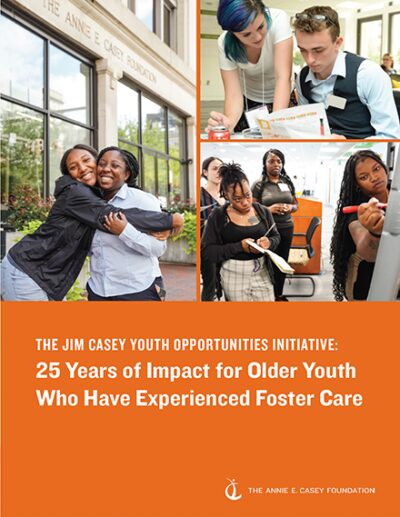
Since 2001, the Jim Casey Initiative and its network have:
- leveraged more than $1.3 billion in private and government investments to support older youth;
- increased visibility for this population, leading to improved policies and practices;
- grown young people’s financial capability through its flagship Opportunity Passport®, a matched savings program that has enabled young people to invest more than $32 million in purchases tied to their life goals — such as buying a car for school and work, paying tuition or renting an apartment — and resulted in more than 22,500 young people receiving financial education;
- trained hundreds of young leaders to use their voices to advocate for themselves and their peers;
- built the longest-running and most comprehensive dataset on older youth who have experienced foster care;
- achieved more than 400 state policy and practice wins that have improved resources and opportunities for older youth; and
- had powerful ripple effects on countless leaders and organizations across the country working to improve outcomes for older youth who experienced foster care.
Highlighted in the report are four areas of accomplishment:
- positive outcomes for young people, including progress in their ability to earn, save and invest in goals;
- data capacity and accountability that shine a light on how young people leaving foster care are doing;
- policy and practice improvements at the state and national levels; and
- ripple effects that have built leadership and influence across the field and across the country.
The report also discusses:
- how older youth who were in and aging out of foster care went from being an invisible population to having an influential voice in reforming child welfare policy and practice;
- how the Foundation’s Jim Casey Initiative taught more than 22,500 young people to save, budget and invest in their futures through Opportunity Passport®, a financial education and matched savings program;
- why the Foundation’s Jim Casey Initiative built and maintains a one-of-its-kind, longitudinal database with a wealth of information on older youth who are in and transitioning from foster care, and shares this data with scholars and policymakers; and
- how professional and personal development programs, including the Jim Casey Fellowship, have trained young people with foster care experience to use their voices to advocate for themselves and their peers.