Summary
Room to Improve in Supporting Older Youth in or Exiting Foster Care
As older youth in foster care approach age 18, child welfare agencies must connect them with supportive, permanent adult caregivers and family and prepare them to transition to adulthood. New federal data confirm that extended foster care after age 18 improves young people’s outcomes. Transition services available before and after exit also can support and sustain a young person’s success. Too few older youth are receiving either type of support. More than half of older youth in foster care are aging out without the anchor of family relationships, resources and opportunities necessary to ensure they thrive.
A new standard of transitional care — one that provides comprehensive, concrete and relational support to every young person who has experienced foster care — is needed. Services such as mentoring, financial literacy, workforce development and educational guidance should not depend on a young person’s pathway out of foster care, placement status or legal designation.
Extended foster care services for young people beyond age 18 produce positive outcomes and should be more consistently and fully integrated or aligned with state and federally funded programs and services that both promote permanent family connections and prepare young people to transition successfully to adulthood.
Evidence on the Benefits of Extended Foster Care
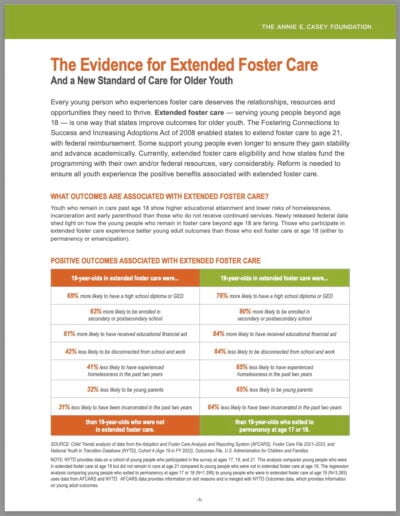
Foster care data from federal sources enables a comparison of outcomes between 19-year-olds in extended foster care and 19-year-olds who were not in extended care. This comparison indicates that 19-year-olds in extended care were:
- 69% more likely to have a high school diploma or GED;
- 41% less likely to have experienced homelessness; and
- 63% more likely to be enrolled in postsecondary education.
Moving From Outcomes to Actions
These findings point to a clear opportunity: The availability and types of support that boost outcomes for youth in extended foster care and prepare them for adulthood could also improve outcomes for eligible young people who are on permanency pathways to adoption, reunification and guardianship.
Greater alignment and consistency in transitional care opportunities are needed so all older youth in foster care can succeed as they transition to adulthood. Also, states must do more to reduce barriers to extended foster care: They can do more to ensure older youth are aware of and receive appropriate extended care and transition services.