

Julia Baez and Assi Sy on Creating Spaces for Baltimore Youth to Connect and Lead
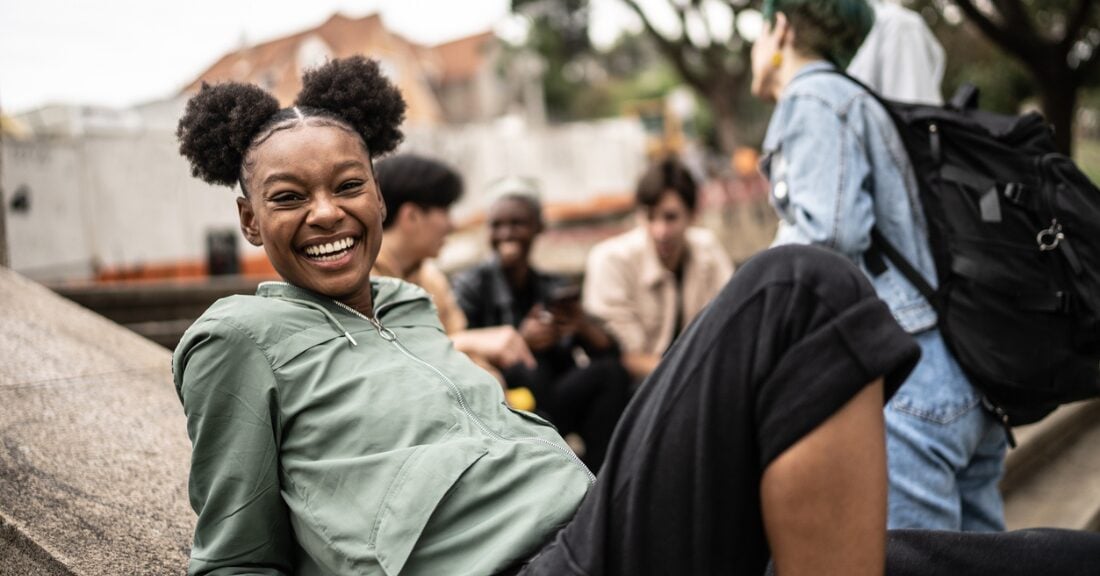
Spending time with friends, exploring new interests and gaining independence are all part of growing up. Science tells us those experiences are especially important during adolescence. Young people need safe, welcoming places where they can spend time together, take healthy risks and figure out who they are.
But that wasn’t always the conversation we heard over the summer, when large gatherings of teens in public spaces made headlines in Baltimore and cities across the country. Much of the attention centered on young people’s behavior and concerns about safety. Far less attention was paid to what young people might be telling us about what they need — or to the role adults play in making sure those needs are met.
“I think that sometimes adults see behaviors before they see the person as a whole,” said Assi Sy, a 21-year-old youth leader with Baltimore’s Promise.
On this episode of CaseyCast, Foundation President and CEO Lisa Lawson spoke with Sy and Julia Baez, CEO of Baltimore’s Promise, about what young people need to thrive, the importance of youth engagement and why their perspectives should shape the programs, policies and systems intended to serve them.
Sy and Baez are working together on Baltimore’s Promise’s Youth Well-Being Landscape Project — the third iteration of the organization’s Youth Opportunities Landscape. The citywide initiative centralizes, aggregates, maps and analyzes the opportunities available to Baltimore residents ages 0 to 24.
Young Baltimoreans are helping lead the work, defining well-being, conducting research, interpreting findings and shaping recommendations for change.
Key Themes From the Conversation
- Why safe spaces matter for young people: It is developmentally appropriate for young people to want to hang out and spend time with their friends. Public spaces such as malls often become gathering places, because young people have limited access to other spaces where they can spend time with friends and be themselves. Baez said Baltimore needs more “third spaces” designed to welcome young people and connect them with opportunities.
- Youth well-being extends beyond any one program or service: Sy described well-being as access to the resources, relationships and opportunities young people need throughout their lives, including stable housing, supportive adults and employment opportunities. “For me, well-being means having access to the tools, resources, relationships and opportunities that allow you not only to be yourself, but to prosper at every stage of your life,” Sy said.
- Accessing resources can be difficult for young people: Even when services exist, young people may not know where to find them or how to determine which information is useful. Sy described searching online for resources and struggling to know where to start, particularly after immigrating to the United States. Schools and other trusted institutions can play an important role in connecting young people with the resources they need.
- How youth voice can shape programs and policies: Baltimore’s Promise employs young people as co-researchers who help develop surveys, analyze data and make sense of the findings. The organization also compensates young people for their time and adapts its own staffing and practices to make meaningful participation possible.
- How systems can help young people thrive: Education, housing, health, workforce and other systems may serve the same young people without being structured to coordinate with one another. Baez said organizations such as Baltimore’s Promise can bring partners together around shared goals. “If one of us wins, we all win,” she said.
Building a Better Youth Well-Being Landscape in Baltimore
The Youth Well-Being Landscape Project builds on Baltimore’s Promise’s earlier work mapping opportunities for young people. Its first analysis found that younger youth had access to four times as many opportunities as older youth. By the next analysis, that gap had narrowed to 2‑to‑1.
Baez hopes the findings lead to better coordination, services that reflect young people’s needs and more opportunities for them to shape decisions about Baltimore’s future.
For Sy, that future means giving young people space to explore their ambitions and a meaningful role in creating the programs and systems intended to serve them.
“Don’t just listen to the young person,” Sy said. “Trust us and give us the information, resources and decision-making power that can help us build the things that are supposed to serve us.”
Learn More
- Learn more about Casey’s work in Baltimore
- Baltimore City Youth Opportunities Landscape
- Youth Grantmakers Select Baltimore Funding Recipients
- Thrive by 25: Casey Foundation Announces Increased Focus on Youth and Young Adults
Listen On
Lisa Lawson: Welcome to CaseyCast, the podcast of the Annie E. Casey Foundation. I'm Lisa Lawson, the Foundation's president and CEO. On this show, we explore what it really takes to build a brighter future for children, youth, and families.
Today, we're talking about young people, what they're experiencing, what they need, and most importantly, what they have to say about it. Over the summer, we saw headlines in cities across the country about large gatherings of teens in public spaces. Those gatherings often sparked concerns about safety and young people's behavior, but those conversations often missed other important questions I think we need to be asking. Questions like, what's going on in young people's lives?
What motivates them? Do they have safe places to gather and connect with each other? And are we as adults creating the kinds of opportunities and experiences young people need to grow and thrive and that they actually want to participate in? At the Casey Foundation, those questions are central to our work.
We know adolescence is a remarkable period of growth and possibility, and we know that young people are experts in their own lives. That's why I'm excited about a new effort underway here in our hometown. Baltimore's Promise is leading a citywide initiative called the Youth Well-Being Landscape Project to better understand the opportunities and supports available to young people and where important gaps remain. But this isn't just adults studying young people.
Young Baltimoreans are helping define what well-being means, conduct the research, make sense of the findings, and shape recommendations for change. Today, we get to hear about that work from two people who are helping make it happen. Julia Baez is the CEO of Baltimore's Promise, a longtime Casey partner that brings together young people, community organizations, funders and public agencies to improve outcomes for Baltimore's youth. Baltimore's Promise is also a key partner in the Casey Foundation's Thrive by 25 effort, which is helping expand opportunities for young people ages 14 to 24 and ensuring they have a voice in the decisions that affect their lives.
With Julia, we also have Assi Sy, a 21-year-old youth leader, storyteller, and emerging public servant. Assi first connected with Baltimore's Promise as a youth grantmaker, helping decide how resources would be invested in organizations serving young people.
She now serves as a youth co-researcher, bringing young people's experiences and perspectives into the youth well-being landscape work. A first-generation college graduate and immigrant to the United States, Assi also works for a Baltimore City agency and uses storytelling to lift up youth leadership, immigrant experiences and the importance of representation.
Julia and Assi, welcome to CaseyCast.
Assi Sy: Thank you for having us.
We're so excited. Well, I'm excited to be here, and I'm sure—
Julia Baez: We're both excited.
We're excited together.
Lisa Lawson: Awesome.
Awesome. Well, Julia, I'm going to start with you.
Let's start with the attention we saw over the summer around teen gatherings. When you think back on the headlines and everything you saw and heard, what do you think was missing from the conversation?
Julia Baez: Thank you, Lisa. I appreciate the question and the opportunity to dig into this conversation a little deeper.
I think one of the things that stands out to me, first of all, was young people themselves. We're often like having these conversations, these problem-solving sessions. We're writing articles, we're doing research, and young people are either never part of that research, they're not in the room, or maybe we have one young person that's supposed to talk about the experience of every young person, and then we make a decision based on that, you know, one conversation.
So I think— What was missing was really making sure that when we were reflecting and talking and strategizing, that we were doing that in an intergenerational way and young people were in the center of that conversation.
I think the other piece that was missing is, these were gatherings often in public places, in places where young people wanted to find an opportunity for community to come together. And we didn't talk about why that was happening.
Like, what was the gap that was sending young people to the mall or to a public event or a concert.
And so what was missing for me is like where we don't have enough conversation around that infrastructure issue.
So we don't have enough of these third spaces, places where young people feel comfortable, welcomed, that speaks to them, that they and their friends can just show up and be themselves. And we don't have enough opportunities that also align to those spaces.
So when we look at the landscape in Baltimore, we know that as young people get older, the investment in them just sort of goes down.
And so we've gotta think about, you know, how we get young people in the room, how we make sure we're thinking about third spaces for this population, and how those spaces are connected to making sure there's real opportunity for kids.
Lisa Lawson: Yeah, it's almost like we forget what it was like to be a young person.
Julia Baez: Yeah.
Lisa Lawson: Through all of that, I thought about myself going to the mall and, you know, I would spend the whole day at the mall and sort of program myself from a Chick-fil-A lunch to a movie to shopping with the $20 I had all day.
Julia Baez: Yeah.
Lisa Lawson: That's what our own childhood is like and was like. And it seems we've forgotten that and don't realize the reality of young people's experiences today.
Assi, I'd love to get your perspective. What did you think as you heard all of this? What were young people talking about? You spend a lot of time using storytelling to lift up young people's experiences.
What did you think or know that the news wasn't talking about or that you thought adults were missing?
Assi Sy: I mean, for me, I think that it's important to note, like you guys were saying, every young person has their own stories, dreams, aspirations, and like definitions for success. And I think that having fun or, you know, just doing things is a part of like that development. I'm thinking of myself when I was, let's say, 12 or 14.
I would want to go to like the park and I may have been loud, you know, a couple of times, and someone would have walked by and be like, why is she so loud?
You know? But it is like I am having fun. I am with my, say, my siblings, my peers.
That is not me being a disturbance. It is me existing within the bounds in, you know, my community or wherever I am at. And I think that sometimes adults see behaviors before they see the person as a whole. Again, this is just a young person, let us say, gathering with friends.
Maybe it is not what you would envision and you are not thinking about, you know, how you were as a young person.
So I think that is an important aspect. I think that young people have really good ideas about, like, what they need and what works for them.
And sometimes what is missing is not, like, the ability.
It is more so, like, the access, opportunity, patience, or even just, like, a platform. And I think that is something that we need more of. Young people don't need adults to tell their stories, that narrative.
Sometimes they just need someone to kind of give that platform, that grace, and that space and patience to allow young people to tell it on their own.
Lisa Lawson: I love that.
You know, we always are talking about we want young people to be off their phones, and we then we talk about an epidemic of loneliness and how, you know, young people don't have the same ability to build in-person connections. And here they are building, you know, trying to build in-person connections. Say more about what it means to you as a young person to be in community with other young people, have a place where you can be together with other young people.
Assi Sy: I think that is so important. I think third spaces are important. I don't think I had access to many third spaces outside of, let's say, like a mall. And when you go to the mall, you know, it's fun, but limited funds, you can't really do much.
So it's sometimes kind of hard to work around that. But I think gathering spaces for young people just to, you know, convene, maybe, you know, eat a snack together or share a meal, play, you know, different card games or things of that sort. I think that is important.
And, you know, younger me, like the things that I was interested in would have been like, I always wanted to be like a gymnast. Was I good at it?
Absolutely not. I injured myself actually a couple of times trying that out.
But I think that also allowed me to kind of explore what I was good and not good at.
Lisa Lawson: Mm-hmm.
Assi Sy: To know, okay, maybe I shouldn't, you know, try to do that handstand again.
Maybe let's, you know, go to the park and walk as an alternative.
But different things like that. And I think that, you know, as I'm growing older, those needs are also changing. Like when I went to college, I had access to, you know, more third spaces, um, like for example a student center where all students can gather and there's like a gaming room, for example, play pool together. And then we can get to know, okay, you're doing this major, oh, that's so cool, I'm interested in that.
And that way you're building community, relationships, friends, and then, um, you can even pick up a skill. Like, I, I don't know why someone let me do this, but they let me cut their hair. Like, that's the skill. I don't need it, but you know, maybe in the future I will, who knows.
So different things like that I think is important and needed.
Lisa Lawson: I love that. You really lifted up that this is a time when we ought to give young people the most opportunities to explore figuring out what they like and who they are. And those were such easy things that I think we ought to really think hard about.
You know, one of the things that we're going to go into deeper is this Youth Well-Being Landscape Project. But before I ask Julia the technical about what we're doing, I want to hear you as a young person say what well-being actually means to you.
Assi Sy: For me, well-being means having access to the tools, resources, relationships, and opportunities that allow you not only to be yourself but to prosper at every stage of your life because you know, I think our needs changes as we grow older and we experience different things.
So well-being to me means having access to those things.
And I think those can look like having stable and affordable housing, 'cause I think a house holds memories, right? It's a safe space that you can go to and grow into, right?
And another big thing for me is like relationships with people not only like my own age, but also adults who can provide that kind of mentorship, guidance, and can connect me to maybe, let’s say, like employment opportunities that allow me to kind of, again, explore, find that purpose, and that actually allows me to, you know, take care of myself and my family.
I think that oftentimes, you know, what I have heard was that I kind of have to pick a career path, let's say. Like, there's not enough room for me to kind of try these different things and figure out, okay, do I like this or not? I think that I've been fortunate enough and I've put myself in rooms where I've been allowed, in a sense, and have worked to kind of gain that experience and perspective and, you know, trying different things. Like, I worked for the city.
It was great. I learned a lot, but I learned that it also wasn't necessarily for me.
And now, you know, I work with the BP team and I'm learning something, you know, totally new. And I think that those experiences are important.
I don't think you should have to pick one. I don't think that exploration should come at a cost of also being able to, like, earn a livable wage. And I think a lot of times it's either or for a lot of folks, and I I just don't think that that needs to be— more access can be kind of provided for that, that allows young people to explore, find their passion, and also get paid to do the things that they love. I don't think you should have to choose.
And unfortunately, a lot of times folks do have to.
Lisa Lawson: I love that. Well, we've heard it from a young person. Julia, why don't you tell us what this Youth Well-Being Landscape Project is gonna tell us at a bigger picture about what well-being means for young people, and why do you think Baltimore needs something like this right now?
Julia Baez: Yes. Oh, I'm like, how do I follow all of those beautiful jewels that Assi just dropped for us?
So the Well-Being Landscape is actually the 3rd iteration of the Baltimore City Youth Opportunities Landscape.
And so we've been working for many years to sort of answer the questions that folks are always asking us, which is what's available, where can I find it?
If I'm a parent, a student, I work in a school, I work in a public agency, like, how do I know what's available? How do I connect the interests of young people? And how do we get that information in a way that also lets us know where the gaps are? What's not available in certain communities or for certain populations?
When we did the first Baltimore City Youth Opportunities Landscape, we found that for every four opportunities for younger youth there was only one opportunity for older youth in the city of Baltimore. And by the time we were able to do that second opportunities landscape, after advocating for policy changes and deeper investment in program opportunities, we now saw that that gap had shrunk in half. And so now instead of 4 to 1, we were seeing 2 to 1 ratio, which showed a much stronger investment in older youth in the city of Baltimore.
And so we were starting to see that gap shrink.
And so for us, we said, listening to young people, partnering with folks like Assi, youth grantmakers, listening to the feedback from young people who were in our workforce programs, that the gap was not just programs. We weren't going to program our way out of the needs that young people were telling us that they had.
We also had to understand the well-being ecosystem. What were the supports and the resources and all the things that Asli just described that were helping young people be successful in any place that they showed up, whether that was work or school or life?
And what we were hearing from young people is that it is just impossible to navigate those systems right now in Baltimore City. Either we can't find the right information, we can't find providers that meet our needs. There isn't a diverse enough set of providers that meet our overall well-being needs to even get close to sort of what young people are saying is necessary for them to be successful.
So we said, let's do some data work.
Let's bring young people in.
Let's define what we even mean by well-being.
So let's make sure we're all using the same definition and let's partner with agencies and nonprofits and adult leaders and other youth leaders to really gather all that information centrally so that we can work with young people to say, what does this mean?
Now that we have this here and it's telling us that we got a lot of resources in this area or this area, but it's not looking great for housing, what's the conversation we need to have now as a city and who needs to come to the table to make sure that this data becomes part of how we advocate for policy change, and each day think about what we can do in our own organizations to make sure that we're providing all of those different supports that young people need to be on that path to economic self-sufficiency.
Lisa Lawson: That's awesome.
So we've heard from Assi what we need. Julia is working to help Baltimore figure out what do we have and how we can build towards what we need. I can imagine it's not so easy to map all of these resources and opportunities, not just in a neighborhood, but across a whole city.
What has that been like trying to get a handle on what exists already?
Julia Baez: Yeah, so one of the things we talk about is data moves at the speed of trust.
And so we're not just out here asking folks for data like, hey, you just wanna send the data over? We're working in partnership with our agencies, our nonprofit leaders, and young people every day to understand what they need from the data.
What questions are they trying to answer? What decisions do our public leaders have to make each day without having more of a bit, like a better picture of the landscape of Baltimore?
And so what we do is work to make sure that any data product is really responsive to our community.
And so I think that's what allows us to get the information in.
And then what we do is we hire the best people we can find. Who are passionate not just about doing data work, but really doing the sensemaking work and doing that in partnership with young people and the community leaders.
And so we actually hire young people on our staff as co-researchers.
And so they're helping to build the survey tools and analyze the data as it comes in and to help to convene the partners who are going to need to work together to make sense of what this information is saying for Baltimore.
And so I think it's our work to make sure that we're building trust and relationship and that the data is backing the stories that young people are already telling us and making sure that we're validating that and affirming that and identifying those places and those gaps that need more attention and more engagement from our city.
Lisa Lawson: Yeah. And Assi you are a young person and are a voice in this moment for other young people who have to navigate that landscape as it exists before we fill in all those gaps, what does that look like from a young person's point of view? If you were a young person or you have a friend who needs help with something, whether it's trying to find a job or get mental health support or just find a safe place to go, where would you start?
Assi Sy: That's a good question. And honestly, sometimes the answer is, I don't know. And I think that because of the position that I'm in now, and the fact that I've been able to kind of be in this ecosystem, I am more aware of certain resources that I can point my friends to. But before then, immigrating here from, uh, my home country to the United States, navigating sometimes those resources were hard because, you know, you're in a new environment, you don't really know many people, and outside of say, school, there weren't many places where, you know, I would have known to look at.
And sometimes my parents also, because, you know, due to language barriers and such things. And a lot of times the adults who, you know, were there to kind of help and provide those supports, I don't think always did it to the best of their abilities.
Lisa Lawson: Mm-hmm.
Assi Sy: And I don't know if it was because there was a lack of those resources, and maybe they were not aware of how to, you know, navigate those things.
But I do think that that is something that is needed. Most of us, you know, young people, we spend a lot of time in schools. And I think that is sometimes the easiest way to reach young people. And maybe it is a thing where schools need access to more resources.
Maybe they need a dedicated person that can really just streamline and connect a young person to the necessary and needed resources. I think that is just very important because sometimes I do not know where to look for some resources.
Sometimes I just have to dig and just click, click. And then sometimes it is hard to kind of synthesize and just know what is good information and what is not because there is just so much out there.
And sometimes you just do not know what you are looking for, honestly.
Lisa Lawson: Right, that makes a lot of sense.
You know, we've as a foundation have worked with Baltimore City Schools to help them implement a community schools model, and the whole purpose of that is to have dedicated navigators within a school to help young people if a family needs housing, if a family needs food, if a young person is looking for other resources.
How can you have, like you said, a school be part of how you navigate that, but we need more than just schools to be navigators for young people.
And thank you for lifting up how important it is to have places and people who can help you navigate all of that.
You know, one of the things we know from our work, and Julia, I know you know, is that young people's lives don't fit neatly into the systems boxes that we give them.
I have very often been talking to Julia, and we might be talking about a workforce program, but she's got to solve, you know, they can't get to the workplace if there's not transportation. They have to eat when they get home. They need housing. We try to put people's lives in certain defined boxes, and those boxes don't even talk to each other all of the time.
Talk to me about what it means to have the need to knit systems together that aren't naturally oriented towards connection and collaborating with one another.
Julia Baez: Yeah, I think the example of community schools is so perfect in this question because you're asking systems who aren't resourced to show up in this way. They're not structured to show up in this way, but we all are sharing a similar result, right? At the end of the day, all of us are talking about the same young person, the same community, the same family, even though we hold different puzzle pieces in terms of the success.
So a lot of the work and why we think organizations like Baltimore's Promise are so important in other communities and across the country is you need someone who's just going to sit in the middle and say, we're going to figure out how to get this done. We're going to problem solve. You don't have to do anything different. We're not asking your agency to take on the work of the school system within the health department, within the workforce system.
We're asking us to get around the table together and agree that there has to be a way of working to get to better outcomes for all of us. If one of us wins, we all win. And I think that's the message that we've really used in Baltimore is like, we got to win together. And we've been trying independently for a long time and it wasn't getting the results we need.
So now let's try a new way of working and see how that leads to better results for kids in our city.
Lisa Lawson: I wrote that down. We got to win together. If one of us wins, we all win.
And thank you for just lifting up, we got to hold these young people as our shared result. I think of it like the blind man and the elephant. I'm not just in charge of an ear, I'm not just in charge of the trunk. I am trying to shepherd a whole person forward to success.
Thank you for noting how important it is to have somebody who's trying to be the connector in all of that because it doesn't naturally happen. Julia, one of the things that stands out for me from what you've said and what Assi said is about the role young people are playing in this work. You aren't just asking them to participate in a focus group and thanks, we'll let you know what we came up with. You're really inviting them to be co-researchers and co-designers.
Why was this important?
How does that work?
How does it ask you to be different as an organization?
Julia Baez: Yeah, I think it is a great question and it connects to your earlier question, which is we have to show up differently in order to make sure that we can facilitate these intergenerational processes.
And that goes from work like having co-researchers to also meeting young people where they are when they're going through our workforce programs. We're not asking them to go find the well-being supports. We're embedding those in their experience.
And so everything meets them where they are, and we have to work at the systems level to do the coordination necessary.
And so for us as an organization, it was the same commitment when we brought young people in as co-researchers. What is the time of day that we're working? How are we making sure that young people can show up in school, out of school, during work hours, out of work hours, what do our staff have to look like? How do we train ourselves?
How do we create the conditions that make sure young people feel like they are heard, they're whole people, and that they can come to us for whatever they need? The thing that I love most is when a young person who's connected to us on sort of one program or another realizes that we're here for all of it. Like, just give us whatever it is that you got and we're gonna work with you on that.
And I feel like those are the moments where I feel that we've shown up in the way that affirms our commitment to really this new way of working and being with young people.
Lisa Lawson: What does it ask of you?
You know, most adults in the workplace aren't asked to partner with young people in this way. We try to do that at the Casey Foundation in lots of different ways.
It's a different way of working. It goes at a different pace, you know, than the other kind. Just for folks who might want to do this but aren't sure how, give us a little window into what that's like.
Julia Baez: Yeah, I think it asks us to work.
It's not a 9 to 5. You're not in the same sort of like traditional hours. You have to be flexible. We do a lot of work on the weekends and the evenings.
We also make sure that we're caring for ourselves and our team. There's a way that you have to really focus on self-care for everybody involved. As we're pouring into young people, they're pouring back into us. And me as a leader, I'm thinking about what that looks like for my staff?
What support do they need? How do we balance that? It takes longer in any participatory project that you're building, whether that's with young people or community stakeholders or different sectors and organizations that come together.
And so it's telling the story of the progress because there are wins all along the way, even if you haven't tackled the big result yet.
And so I think telling those stories, making sure you're celebrating the importance of the collaboration And that we just celebrate the greatness of what it means to hold this space together.
And so our staff are celebrated for their work when they're working in partnership with young people. And we don't think the project is done unless we've done that work.
And so they have the time and the space, and we make sure we're investing.
Our budget reflects this commitment. We pay young people for their time. We make sure they're resourced. And we make sure that our staff are resourced and have the training and support they need to feel like they can facilitate and show up in a way that honors the values of the organization.
Lisa Lawson: That's wonderful. Assi when I have talked about this level of youth partnership, I often talk about it not just as making the outcome better, but also a development opportunity for young people that part of what happens is young people build these skills and see themselves in a different way. I'd love to hear what it has meant to you and what you've heard your peers say about this process, what it's meant to have adults not just ask for your perspective, but to trust you with real decision-making power.
Assi Sy: When I first started at BP as a youth grantmaker, I think I was a senior in high school, almost going to college.
Lisa Lawson: Okay.
Assi Sy: When it first started and I came through the door, I was like, okay, I am ready. I wonder what, you know, this is gonna look like. Like, what does, you know, youth grantmaking mean?
Like, what are we exactly going to do? And then they approached us and they were like, okay, so how do you guys want this to go? Like, this is what you guys are gonna be doing. You are gonna decide where these fundings and make real decisions about money, where money goes.
I was like, oh, seriously? Really?
You know, I, was like, okay, we're really, really doing this.
And I really appreciated that because, you know, not only did the BP team kind of met us where we were and provided us, you know, with so many supports that we can show up in the space how we needed to, to actually make real decisions, it also allowed us to kind of use our own experiences, perspectives, and things like that to shape our RFP, our request for proposals, and what we wanted the outcomes to be and what other services we want young people to have when they are participating in, like, a program.
So just, you know, having the chance to kind of have that input, I was like, wow, like, I, I can do that. Like, you know?
Like, I have really great things to say. And I think that made me realize in a sense my own voice and like what is possible, you know, when you just, you are able to kind of gain that confidence and you have people who are pouring into you and genuinely want to see you succeed.
So being able to recognize like my own possibilities, and I know for my peers, um, you know, a lot of times when I talk about my experience with BP, they're like, wow, really?
Like, you, you got to do that? I'm like, yeah, I can put you in touch. Like, just let me know, you know?.
Lisa Lawson: You’re a connector. That’s awesome. I love it.
Assi Sy: Um, and all the time I'm like, you know, when I see other people, I'm like, I really wish you all had the chance to experience that at the same age and/or even younger. That says so much.
Lisa Lawson: I mean, the line you said about realizing the possibilities for your life, you don't know how much adults who work in this world want to see the young people in our lives feel that. That's thriving to me, is that you see the possibilities in your lives and the skills to hear you articulate. You became a connector. You saw yourself as a leader.
You learned about processes that you didn't know anything about before. That's really awesome. Well, I'm gonna keep our conversation moving and, and ask Julia, now that we understand more about what's happening, help us understand what you expect to be different as a result of this, uh, project. How do you want this to change the way Baltimore invests and supports young people?
Julia Baez: I hope what we learned from this project is, one, how to collaborate a little differently at the systems level. We're not going to necessarily come up with a whole lot of new money in the short term, but there are ways that we can be less duplicative and more coordinated and make sure that the services that we're delivering are actually aligned to what young people need and want.
And so we've been doing things often for so long, we haven't had an opportunity to take a step back and be like, wait, that might not actually be meeting the needs anymore of young people in the city of Baltimore.
So I hope there's sort of a moment of like reckoning and recognition and then some reshuffling that starts to happen to make sure that we're better meeting those needs.
I also think that I'm hoping there's some sort of widespread adoption of this definition of well-being. Young people have defined it. We have the data behind it. We've done fund mapping and fiscal mapping.
And now it's time to say, if this is what well-being looks like, if this is how young people define it, what's the responsibility for each of us to make sure that we're identifying how we support that, how we show up? If we're running a summer program, how do we make sure that that summer program really embodies this definition of well-being, or we're identifying ways to partner with others so that the experience that young people have is a much fuller experience in the city of Baltimore because we now have a better understanding of what the goal is. We've defined it, we've called it out.
Now we can't say we don't know, and we have a baseline to show how we do better.
And so I think just that commitment and that understanding, and then really that personal organizational responsibility to keep moving in that direction towards getting to that place where we're all working under that framework that young people are setting for Baltimore.
Lisa Lawson: Let me ask you to go a little further. What do you imagine Baltimore could be like 5 or 10 years from now with these insights, and what do you think other cities could learn?
Julia Baez: Yeah, I think they're what Baltimore looks like.
I think we have more young people that are accessing opportunities, so when you think about what's the data behind that, we got less young people that are disconnected. More young people are in school, they're working, they're— I think Assi said it best, they're not making choices around being disconnected or being connected to things that they love, that they find joy in, that they're passionate about. I think we show up in rooms in Baltimore and more young people are at the table. We don't walk into spaces that are talking about kids and they're not there.
In the data with us, in the problem solving with us, and thinking about the strategies for improvement.
I also think we'll see more infrastructure investment. This gap around third spaces, convening space for young people, safe, welcoming, loving spaces, we have to address that. And that's going to look like repurposing underused facilities in our community in new and different ways. that allow for this innovation and this space that young people are demanding of us, right?
We heard it 11 years ago in the uprising. It's the same request. It hasn't changed.
And so I think it's incumbent on us now to figure out how we address that infrastructure gap around the space need for young people.
Lisa Lawson: Thank you. Assi, I'm going to ask you what you imagine Baltimore could be like 5 or 10 years from now, what do you want the city and its leaders to prioritize for young people? What would make the biggest difference in your lives?
Assi Sy: I think for me, I'm going to tie it back to, again, that, you know, exploration, right?
Like earlier last year, I took it upon myself to, you know, try something different and new again. I created like a short cinematic film, if you will, where I got to go around the city and talk to different young people and, you know, just get their perspective of, you know, what they envision their life will look like in a couple years or what is inspiring them, like what they want to be.
And some of the things that I was hearing was, you know, people want to be pilots, doctors, musicians, entrepreneurs, etc. And I think that young people have huge dreams and there's so many things that we want to do and want to be able to experience. And a lot of times it's just, you know, having that kind of guidance and also access to those things is very important.
So that is like the future that I'm envisioning, somewhere where a Baltimore where a young person doesn't have to choose between, you know, let's say their dreams and making like a a sustainable income to, you know, live comfortably with their families. Maybe it's also more, you know, again, third spaces for younger youth to convene and just build that community and relationships with other people.
So yeah, that's kind of the Baltimore I envision, a Baltimore that's thriving.
Lisa Lawson: And that sounds like a beautiful Baltimore, I see a beautiful Baltimore.
Well, I'm gonna give you two the mic for one final message message. What's one thing you want listeners to do differently after hearing from you today? Julia, I'll go to you first, and then we'll give Assi the last word.
Julia Baez: I'd like to circle back to the beginning with the end, which is the responsibility of all of us to question the narrative and the stories.
And what, you know, remember what it's like to be a young person and think about your own kids and your own family. And like, what do we want and how do we start there? And how do we challenge these stories that are telling us something very different that we all know from personal experience is not the truth of adolescent development? And really hold that personal responsibility and be more proximate.
You know, if you're not connected to a young person now, how do you volunteer? How do you show up? How do you challenge those stories on a personal level so that you can become an advocate and a champion for the future that Assi just told us is necessary for Baltimore and for all young people.
Lisa Lawson: I love that.
I think proximity is the fastest way to narrative change, that when you are near a young person and you hear their hopes and their dreams and their fears, it's hard for you to believe or even make up a different narrative about who they are.
So that's a wonderful recommendation. OK, Assi. What do you have for us?
Assi Sy: Yeah, mine is similar. I would say do not assume you know what young people need. Again, ask questions, deeply listen to, you know, the things that are being said. And, you know, thinking about how young people can be incorporated in the different conversations that are being held about them in order to make decisions that, you know, impact things in their lives.
So how can they be present in those rooms, provide that input, but also be compensated for that as well, right?
So I think that is what I would want to leave people with, to give young people opportunities to participate in decisions. Again, don’t just listen to the young person. Trust us and give us the information, resources, and decision-making power that can help us build the things that are supposed to serve us.
Lisa Lawson: Wonderful. Every time I talk to young people, I'm always struck with their creativity and their vision and their good intentions and their desire to really help improve the things around them.
So thank you for being an incredible voice for that, Assi. And thank you too, Julia.
I have really enjoyed this conversation. You all are really modeling here in Baltimore how different the picture can look when we stop talking about young people and start talking with them. Then together, I think adults and young people can really bring our resources and ideas and energy together to build something truly different and truly special. Julia and Assi, thank you for sharing your perspectives and for the work that you are doing to help all young people in Baltimore thrive.
And thanks to all of our listeners for joining us on CaseyCast. If you'd like to learn more about today's conversation, you can find show notes at aecf.org/podcast.
Until next time, I wish all of America's kids and all of you a bright future.