



American Indian or Alaska Native Kids Most Likely to Experience Multiple Adverse Events
More than one in three (36%) American Indian or Alaska Native children has had multiple adverse experiences — over twice the U.S. average of 17%, according to data from the National Survey of Children’s Health on the KIDS COUNT Data Center. Black and multiracial kids also have disproportionately high rates of multiple adverse experiences, at about one in four (24%) and one in five (21%), respectively.
What Is an Adverse Childhood Experience?
Adverse experiences are potentially traumatic childhood events, such as parental death, divorce or incarceration, family or neighborhood violence, frequent socioeconomic hardship or living with someone who was mentally ill, suicidal, racially biased or dealing with substance abuse. These experiences can disrupt children’s healthy development and have long-term, harmful effects on physical health, mental and behavioral health, education and other life outcomes. The more adverse and traumatic events a child experiences, the greater the risk of lasting, negative impacts.
The promising news is that adverse childhood experiences and their harmful effects are preventable. Policymakers can work to ensure that effective systems, policies, and services are in place to strengthen under-resourced communities, support families, and provide all children with safe, stable, positive relationships and environments.
Racial Inequities in Experiences of Adverse Events
While adversity is common among U.S. children, with close to one in five kids — or more than 12 million total — having at least two adverse experiences, disparities for American Indian or Alaska Native children are especially stark and have worsened over time. The gap in rates of multiple adverse childhood events for this group compared to the national average widened from 35% vs. 20% in 2016–17 to 36% vs. 17% in 2022–23. Although disparities have persisted for Black and multiracial kids, too, all racial and ethnic groups saw improvements during this period except for American Indian or Alaska Native children.
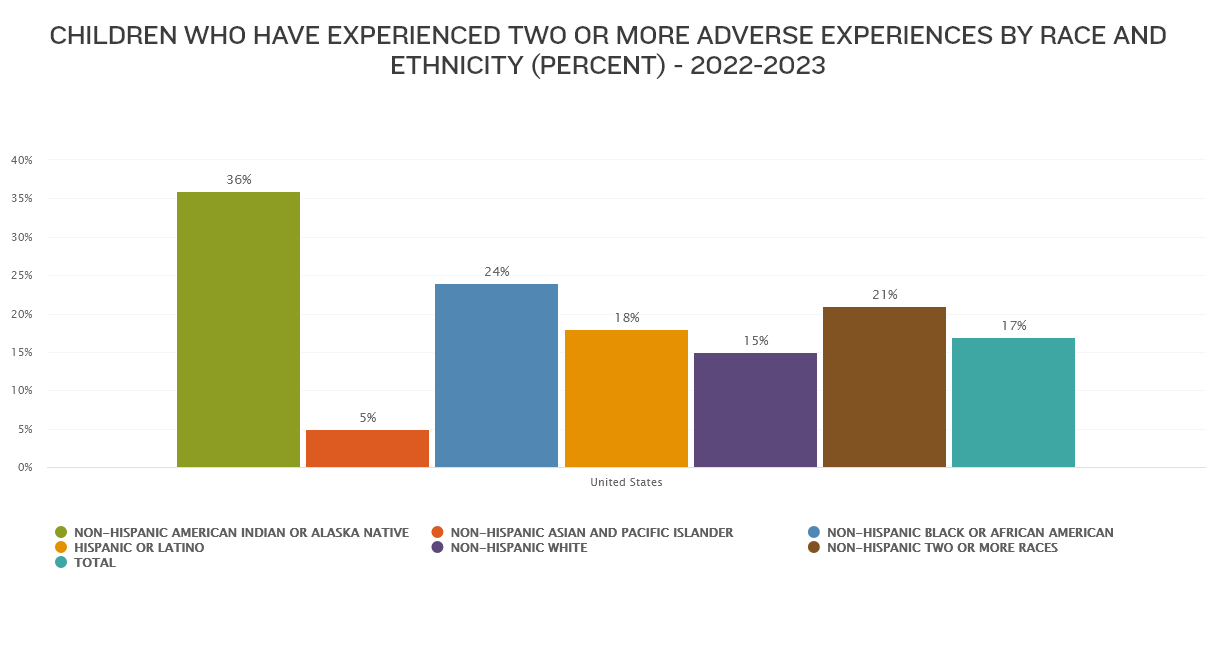
The data demonstrate a need to address the systemic inequities driving these ongoing differences and to increase support for the nation’s most vulnerable children and families. At the same time, the data point to a hopeful trend: The share of Black children with multiple adverse experiences dropped by 8 percentage points — and by 7 percentage points for multiracial children — between 2016–17 and 2022–23.
Where Adverse Childhood Experiences Are Occurring
At the state level, data show varying levels of childhood adversity across the country, from a low of 12% of children having two or more adverse experiences in New Jersey to a high of 25% in Montana in 2022–23. Previous years of data show a similar spectrum. Encouragingly, nearly all states (47) and D.C. saw declines in the share of kids with multiple adverse events between 2016–17 and 2022–23.
Find More Data on Childhood Adversity
Access more data on family and community, poverty and safety issues on the KIDS COUNT Data Center, including: