


Nat Kendall-Taylor on Narrative and Why the Way We Talk About Social Issues Matters
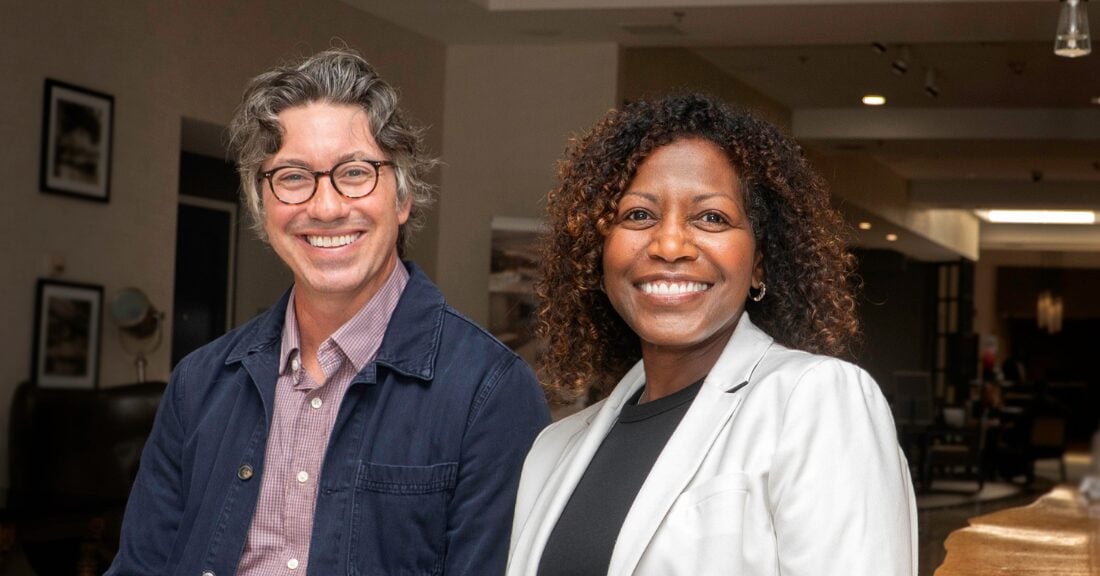
People don’t make decisions based on facts alone. They rely on stories and assumptions to make sense of complex issues like juvenile justice and poverty. Those narratives shape not only what people believe but also the solutions they are willing to support.
“Cultural mindsets are the deep understandings, beliefs, attitudes, ways of thinking that we use to make sense of our social worlds all the time, but we’re not aware that we’re doing it,” said Nat Kendall-Taylor, CEO of the FrameWorks Institute, a research nonprofit that studies how people think and talk about social issues. “They are what we use to make decisions, support solutions, not willingness to engage, unwillingness to engage… People rely on these mindsets that are activated by frames to do their thinking.”
Through decades of research, FrameWorks has shown that the words, values, metaphors and stories people use to explain an issue, known as “framing,” influence how people understand it. Over time, those frames reinforce broader narratives that can either deepen support for effective solutions or make change harder to achieve.
On this episode of CaseyCast, Foundation President and CEO Lisa Lawson talks with Kendall-Taylor about why facts alone rarely change minds, how framing shapes public understanding and how pairing stories with data can build support for solutions that help children, youth and families thrive.
Key Themes From the Conversation
- Narratives shape how people understand social issues: People rely on shared beliefs and assumptions, often without realizing it, to interpret information about topics like poverty and juvenile justice. These narratives influence not only what people believe but also what solutions they support.
- Facts need stories to have impact: Data and research are essential, but they are rarely enough on their own to change public thinking. When facts are presented within a clear narrative that explains why they matter and what they mean, they become far more effective at building understanding and support for action.
- The way issues are framed matters: Small communication choices, including information order, metaphors and even pronouns, shape how audiences interpret information. Effective framing can help people see how systems, relationships and environments influence outcomes instead of attributing success or failure solely to individual effort.
- Adolescence is a period of opportunity, not just risk: Public conversations often portray adolescence as a dangerous stage to survive. Research shows that young people are also highly adaptable, creative and open to growth. Communities play an important role in shaping healthy development, and young people, in turn, strengthen their communities through their contributions.
- Solutions inspire action: Communication that focus only on the scale of problems can leave people feeling overwhelmed or powerless. Highlighting evidence that communities are making progress helps people see that change is possible and builds support for expanding effective solutions.
Why Narrative Change Matters
Effective framing helps people understand the issues affecting young people and build support for solutions. Leaders can strengthen public understanding by:
- pairing data with stories that explain why it matters;
- highlighting evidence that effective solutions are producing results; and
- using language that emphasizes shared opportunity, community and possibility.
“We are good at illustrating how bad it is through data, through stories, through examples,” Kendall-Taylor said. “And we are much less good at providing people with a sense that there’s something we can do about it.”
Learn More
- FrameWorks Institute: Framing Fundamentals
- FrameWorks Institute: Reframing adolescence as a time of growth and opportunity
- Solutions Journalism Network
- Messaging Strategies to Encourage Investment in Young People
Listen On
Lisa Lawson: Welcome to CaseyCast, the podcast of the Annie E. Casey Foundation. I'm Lisa Lawson, the Foundation's president and CEO. On this show, we explore what it really takes to build a brighter future for children, youth and families. Today, we're going to talk about something that sits underneath so much of the work we do but doesn't always get the attention it deserves, and that's the stories we tell. Stories about young people, about families and about opportunity. Stories about who succeeds in this country and why. We should understand how these stories get created because they don't just shape what we believe, they shape what we're willing to do. At the Casey Foundation, we've long understood that the narrative around the issues we work on matters. For years, we've invested not only in research and data to understand what kids and families need to thrive, but also in how those insights are communicated and understood, because data alone isn't always enough to move people to action. How we talk about the issues and how we explain what's going on and what's possible matters just as much. I'm really excited to explore that today with someone who has been at the center of that work. Nat Kendall-Taylor is the CEO of the Frameworks Institute, a longtime Casey grantee. FrameWorks is a nonprofit research organization that studies how people think about social issues and how we can communicate more effectively to build understanding and support for solutions. His work focuses on the mental shortcuts we all use to make sense of complex issues and how those patterns shape public thinking about issues like poverty and opportunity. Nat, it is so wonderful to have you on CaseyCast today.
Nat Kendall-Taylor: Yeah, it's great to be here. That was a fantastic introduction. I am really looking forward to this conversation. And you and I got a chance to talk kind of like on the side of a meeting we were both at and ended up talking for like a half an hour. It was fantastic. And I've been looking forward to continuing that conversation ever since we first had it.
Lisa Lawson: Well, awesome. Let's do that now. So when I met you, I learned that you've been at Frameworks almost your entire career, and I think you are an anthropologist by training. So I would love to hear sort of how you got into this and how you have spent your career helping people understand how stories shape what we believe is possible. What drew you to this in the first place?
Nat Kendall-Taylor: Yes, I've been at FrameWorks for almost 20 years.
Lisa Lawson: Wow.
Nat Kendall-Taylor: I think this fall it'll be 19, so we can say 19. We don't have to give me an extra— I don't need an extra year. But I am an anthropologist by training. For the last almost 20 years, I've been really studying how culture influences, as you said in the intro, the way that people think about complex social issues like early childhood, healthcare, the environment, criminal legal reform, immigration, like these really complex issues. And then, believe it or not, I worked for about 5 or 6 years before I came to Framework. So my pre-Framework life was spent doing kind of like basically the same thing, but in a totally different context. So I studied how families with kids with chronic epilepsy make treatment decisions on the Swahili coast of Kenya. So how families navigate what in this rural district where I worked called Kilifi, navigate really complex situations of having kind of multiple treatments available that have multiple costs and kind of all these different situations. And trying to understand why so few of those families sought biomedical treatment. And the answer, like the answer is on all the issues that I work on now, is culture, right? Culture in terms of the way that it shaped in that case, the way that families thought about what causes seizures and therefore what is appropriate in terms of treatment really was the most powerful thing that guided and shaped their decisions in the same way that the way that people make sense of, do I support this issue or that issue? Am I willing to engage in that solution or the other solution? Culture is one of the most powerful factors in understanding that situation. So I don't work in Kilifi on the Swahili Coast anymore, but I do basically the same thing, really understanding how people use culture in mind to make sense of and navigate and engage with a really, what in our country today and for a while has been a really complex array of pretty significant social issues. And like you said in the intro, we've had the ability, really the privilege to work with Casey. Frameworks has worked with Casey since before I came on. I think the Casey partnership was one of the was kind of happened in the first year that FrameWorks was founded. And we— it's awesome to say, Lisa, that we continue to work with you all 27 years later. So it's really cool. Yeah.
Lisa Lawson: I mean, what you do is the core of what we got to understand is how people understand issues. And if we're going to do this work, we've got to understand how to talk about it. So we're going to talk a lot today about the stories people tell and the patterns behind them, and that FrameWorks You call that narrative, and we often hear people say, we've got to change the narrative. What does that mean? What is the narrative that we are talking about?
Nat Kendall-Taylor: Lisa, I have no idea what that means. So narrative is one of these terms. Part of me is super happy that everybody's talking about narrative and it's on the tip of everybody's tongue. The other half of me is like, oh, geez.
Lisa Lawson: None of them know what they’re talking about.
Nat Kendall-Taylor: Because I've lost the thread. So narrative has become one of these ideas that has grown so everywhere, always ubiquitous, that it is at least in danger of losing any and all meaning it ever once had. So I love this question because, Lisa, it gives me the chance to kind of do a little bit of definition stuff. I know that sounds boring. We'll make it interesting. At the very top of this conversation. So I think, so narrative is one of 3 kind of big concepts that we work with at Frameworks. And I think it's important to understand the 3, but also kind of even more important to understand how they relate, how they come together to do the stuff that you said in the intro to really shape how people think and feel and importantly act on social issues. So the first of those concepts is this idea, and I've probably already said it, of mindsets, of cultural mindsets. So cultural mindsets are like the deep understandings, beliefs, attitudes, ways of thinking that we use to make sense of our social worlds all the time, but we're not aware that we're doing it, right? So these are implicit. These are things like individualism that we use to evaluate the deservingness of different groups of people, or fatalism, the tendency to always these days, when you hear about the next crisis, the youth mental health crisis, the climate crisis, to turn that down and off right away and get out of that conversation. So those are mindsets that really—.
Lisa Lawson: Is that shaped by your family of origin, by what the news you listen to? Where do you get your mindset from?
Nat Kendall-Taylor: Yeah.
Lisa Lawson: Like how you think, where does that come from?
Nat Kendall-Taylor: So it comes from everywhere, right? It comes from a combination of the experiences that you have, and the information and ideas you are exposed to. So you think about it as kind of like the environment of information, the environment of experiences and information that you are part of. And in part, that explains why mindsets are really held in common ways across culture, right? They're based on exposure to a common set of experiences. And by and large, obviously there's differences between individuals and groups, but by and large, we share a lot of those same common experiences and exposures. And mindsets are, frankly, they matter because they shape how we see the world. They shape how we see groups of people. How we evaluate groups of people, how we put groups of people in different places and see ourselves as in or out, a part of or not a part of, how we differentiate all those things. And they are what we use to understand issues. Importantly, they are what we use to feel issues, like to emotionally connect or not. And they are what we use to make decisions, support solutions, not willingness to engage, unwillingness to engage. So mindsets are, and mindsets are what I studied as an anthropologist. That is, as much as my parents didn't think this would be true, that is why I have a job, right? That is why Frameworks hired me 20 years ago is because like that is, that's the stuff that I do, understanding what mindsets are, really having some methods, some ways of studying them. So that's number one. Number 2 is framing, right? So framing, frame as in frameworks, right?
Lisa Lawson: Mm-hm.
Nat Kendall-Taylor: That is central to the work that we do. And framing is really about, and this will make so much no-duh common sense when I say it, framing is about the significance or the implications of the choices that we make all the time in how we say what we have to say. It's the values that we use, the metaphors, right? So values, do we talk about interdependence or individual success? Do we talk about prosperity or do we talk about fairness? Metaphors that we choose and use to explain how issues work. Do we talk about brain and biological development or do we talk about brain architecture? But frames are also, and you know this, we talked about this when we first spoke, Lisa. Frames are also much kind of smaller and more subtle and maybe seemingly insignificant. It's in the way that we kind of use pronouns to talk about groups of people. Are they, are they, they, them, those young people, or are they our young people? Like the choice of those little itty-bitty seemingly throwaway words, the work on framing tells us are not so itty-bitty and throwaway as words. They are incredibly consequential. They shape the mindsets that people use and therefore how people reason and think and emotionally connect and do all this stuff.
Lisa Lawson: Well, you mentioned the word metaphor. Before you tell us what the third is, I use metaphors all the time.
Nat Kendall-Taylor: You do.
Lisa Lawson: I do. I'm known for that. Do metaphors help people understand a frame? Is that the umbrella around the frame? Are metaphors helpful? I guess you're going to help me communicate better if you tell me they do help or they don't help.
Nat Kendall-Taylor: Yeah, I feel like this is the most softball question you could have thrown me, Lisa. You and I both know how powerful metaphors are. You use a lot of metaphors. I can remember at least 2 of them from the talk that I saw you deliver. Or 4 months ago. And metaphors are incredibly powerful explanatory tools. So there are some people, I'm not in this camp, but there are some people who argue that all of our thinking is metaphorical. All of our thinking is analogic, that the only way that we can understand anything is by comparing it to something else, right? I think that's probably a little— A little stretch. That's a little wild and crazy metaphor stuff going on there. But metaphors are incredibly powerful in terms of how we think, and they are extra super duper powerful in allowing us to take something that we don't understand, compare it to something that we do understand, and therefore better understand that thing that before we didn't understand, right? And so a lot of the work that I did in my, in my early days at Frameworks was really about coming up with theories of metaphor and how metaphor fits into practice of communication, coming up with methods that we can use.
Lisa Lawson: Mm-hm.
Nat Kendall-Taylor: To test different metaphors. So it turns out that just because I think a metaphor is awesome does not mean it actually does the stuff in terms of explanation and communications that I want it to. And so we do a lot still to this day in testing different metaphors and observing kind of like what a given metaphor does in terms of the way that people understand information, how they support solutions, kind of the way that metaphors reframe their understanding. So metaphors are incredibly powerful at the specific task of how people understand ideas and information. Great, thank you.
Lisa Lawson: I'm gonna keep using it.
Nat Kendall-Taylor: Yeah, keep doing it, keep doing it, keep doing it. And there's like all kinds of questions. I love the question of like, can there be too much metaphor? And the answer kind of unequivocally is no. So my best example of that, I was driving through Driving to New York one time, drove through Philadelphia, turned on the sports radio. I'm a sports guy, but I heard the following on this sports broadcast. The Philadelphia Eagles Achilles heel reared its ugly head. That is 100%, there's like 7 metaphors in there, right? And when I say that, you understand exactly what it means, right?
Lisa Lawson: Right, what happened.
Nat Kendall-Taylor: So we have an incredible tolerance for metaphor. So I would say, Lisa, don't stop.
Lisa Lawson: Okay, thank you. All right, third, third, third one.
Nat Kendall-Taylor: Which is where you started. I apologize, it's taken me so long to get to kind of complete the loop here. But the third concept is narrative. And the reason why we are so obsessed with narrative is that narratives are these big thematic packages, these big themes that carry multiple frames. I'll give you an example in a second to pull these 3 together and are so powerful Because they move mindsets, right? Narratives as these big thematic packages that multiple organizations and people and issues can use in advance really have the power over time to be kind of shared and advanced and told in ways that activate and potentially shift mindsets over time. So a quick example, and I think this will resonate with some of the work that you do at Casey. So I've recently been doing quite a bit of work in Australia. There is a group of youth justice advocates that's really interested in narrative, in part because they are getting absolutely slammed in the news media. So when you're in Australia, you turn on the news, it is— I 100% guarantee you that in every broadcast there is a story, and it is the same story about a group of young people doing bad stuff, And the answer is kind of for politicians to get tough on crime. Like, we have this narrative.
Lisa Lawson: That sounds like America.
Nat Kendall-Taylor: Yeah, that sounds like America. So in this example, the narrative is youth danger, youth threat. That narrative gets activated, right? It gets birthed into stories through a bunch of very predictable framing decisions, right? So it's always fear is the emotion that's activated, protection is the value that's activated. Very othering. It's always young people depicted in these situations where it's very easy for us to push them over there. In Australia, the coverage is very racialized, right? It's almost always First Nations, Aboriginal, Torres Strait Islander young people that are doing this stuff. And the answer is always the same. The answer is that people in power need to get tough on crime and do what it takes to put these young people further and forever away from the rest of us, right?
Lisa Lawson: Mm-hm.
Nat Kendall-Taylor: So those very predictable framing decisions activate a set of mindsets of othering, of fear, of individualism, of fatalism. And by activating those mindsets, in essence, they kind of cement this common sense around the issue. And the common sense is young people are just by nature, doing bad stuff. It's always certain groups of young people. And the only thing that we can really do because they're inherently bad—.
Lisa Lawson: Is lock them up.
Nat Kendall-Taylor: Is to surveil, right? Is to find them and put them away, further away for longer. And so it's that narrative articulated through those frames that activate those mindsets that create this incredibly tight kind of unbreakable cycle. It's not unbreakable, but it feels that way as someone who's working on these issues. Where the answer just becomes more and more commonsensical to people who are exposed to these things. And obviously the answer, there is an answer, is to start advancing different narratives, is to break that cycle with some categorically different ways of talking about young people. And that is really the work, just to bring this all to a close, that is the work that we do at FrameWorks. And kind of figuring out what those alternative narrative sets of frames are that activate different mindsets that lead people to a different cultural common sense.
Lisa Lawson: And you all are brilliant at it. I don't think there's anybody who works in this field who doesn't use frameworks as a Bible of sorts of, okay, we need to try to influence the country around X. Frameworks is who's going to help you understand why people think the way they think, what are the values under that, and what are new ways you can talk about issues I'd encourage anybody to look at FrameWorks website. It's like a library of how to talk about things. And yes, Casey has been a devoted fan for more than 20 years because you really do help us across the range of our work. We do all kinds of work from work on families and economic opportunity and neighborhoods and youth justice. So you are extraordinary at what you do. Casey is very known for data. And we obviously believe deeply in data and what it tells us about what's really going on in the world. But one thing we learned very early on is that data is not always enough. Why don't facts automatically change people's minds? We hear all kinds of statistics. Help us understand why just giving people the facts about what's going on doesn't help them see the world any differently than they do. Before they hear the facts.
Nat Kendall-Taylor: Yeah, I mean, I would take it even a step further, Lisa, and say data alone is never enough, right? That just presenting the facts rarely leads people to change their thinking about something or kind of improve understanding. But I will say, like, before I bash that, before I take apart all the reasons why, beginning, middling, and ending with data is not effective. I do wanna say, I want everybody to hear this, I think this is really important. And we've been working with Kids Count since near the beginning, Lisa, and this is gonna be important for what I'm about to say. I think data and evidence matter greatly.
Lisa Lawson: They do.
Nat Kendall-Taylor: Right? And I have empirical evidence to suggest that. So we've done a lot of work where we develop narratives, And we test them kind of as narrative without data, and we test them as narrative with data. So where data is being used to make a really particular targeted telegraphed point in a larger story. And I would say without fail, the second one of those options, so narrative with data, is more effective. It's more effective in increasing people's understanding of an issue, of creating even, imagine this, emotional connection. And in kind of shifting and improving people's support for a set of solutions. So I am not here to say that we live in some post-fact, post-truth world. I am very much in the corner of data. But I also believe that all of our data need to be framed, right?
Lisa Lawson: Mm-hm.
Nat Kendall-Taylor: We need to provide data with a place in our story and allow it to do the work that that we know, Lisa, as data nerds, that it can do. And so there's the saying that when the facts don't fit the frame, it's not the frame that gets rejected, it's the facts that gets rejected. And we see this all the time that when you present people with kind of naked numbers or facts without frame, people take those data and they interpret them as—.
Lisa Lawson: Always.
Nat Kendall-Taylor: Through those mindsets. So you give people information about the different rates of incarceration across racial groups for drug-related offenses, and people explain that away using racist mindsets, right? So data are never enough alone to move or correct people's misunderstanding or move their thinking. But I think the trap is that as people, and I'm in this group guilty, I'm not distancing myself from this. But as people who are convinced by data, if you give me data, I'm gonna use that, I'm gonna think about it, it might change my mind. We make this mistake of assuming that kind of like we are our audience, which—.
Lisa Lawson: Right.
Nat Kendall-Taylor: Which—.
Lisa Lawson: We talked about that a lot.
Nat Kendall-Taylor: Which is not true, right?
Lisa Lawson: We're not talking to ourselves, we are talking to people.
Nat Kendall-Taylor: Yeah, I mean, maybe you and I have a conversation where data constitutes 90% of what we talk about, I don't know. That doesn't sound like a super interesting conversation. We definitely won't do that now, Lisa, but For like most people, that's just not how it works, is that people rely on these mindsets that are activated by frames to do their thinking. And so the task here is to find the right pieces of data that make the points that are important to support a larger narrative, a larger argument, and then to really actively keep ourselves from being our worst enemy in terms of framing and kind of using data in the way that is effective for us and our colleagues who work on the same policy issues. And keep that from happening to the way that we publicly communicate about our issues. But again, like I said, I mean, I'm convinced 100%, this is maybe the only thing that I'm 100% sure of on this call, is that we need those data, right? And those data can make our cases, can make our arguments, can make our stories more effective if we know how to use them, if we know the place to kind of slot them into a narrative, to a story structure.
Lisa Lawson: Yeah. Is it the shocking statistic that seems to get people to tie into a different story?
Nat Kendall-Taylor: Yes, yes, really. Yeah.
Lisa Lawson: Or is there something about the data you've learned that makes it more persuasive in a story? You know, you were talking about youth justice and all these narratives. And one of the things I've started saying is that 0.6% of all young people are in the juvenile justice system. 0.6%. Not even 1%. And so, this narrative, like you said, on the news that might— make it look like young people are running amok. It's actually less than 1%. Why are you painting a whole 48 million young people with the activities of less than 1%? So is it sort of a shocking stat or not universal how the data works?
Nat Kendall-Taylor: That's a fantastic question. So the way that data tend to be used to illustrate the extent and severity of a problem. So I've done a lot of work on child maltreatment in this country and in the UK, and they've got their magic numerical shocking nugget of data, which is like 1 in every 8, right? 1 In every 8 kids experiences some form of maltreatment, abuse, or neglect by the time they're 18. And for like 40 or 50 years, that's what they led with.
Lisa Lawson: And I don't even know what 1 out of 8 is.
Nat Kendall-Taylor: Exactly. So I would say that kind of data to illustrate extent, scale, severity of problem tends to be on the least productive end of the continuum. And because we know that what that does is it activates that fatalism I talked about a minute ago, right? People are like, geez, that's horrible. And normally in the child maltreatment stuff, it's like prevalence data followed by a story that illustrates how horrible maltreatment is.
Lisa Lawson: Mm-hm.
Nat Kendall-Taylor: And that combination is incredibly effective at getting people to say, wow, this is a huge problem. I have no idea about anything we can do about it, and peace, I'm out, done. I'm gonna put this one on the pile of other social issues that people are—.
Lisa Lawson: Horribles.
Nat Kendall-Taylor: Horribles, yeah. And that doesn't garner any attention. It doesn't get people. It's like the most immediate invitation to turn it off and tune it out, right? But there's all kinds of ways that we can use data in ways that are other than illustrating extent scale depravity of problem. The way that you did is one, right? So you're using data there to kind of make an argument about kind of contrary to popular belief, right? So you're using it to prove the opposite case, to disprove the current misperception. I think that can be really effective.
Lisa Lawson: Mm-hm.
Nat Kendall-Taylor: The thing that I'm really excited about, and I have a feeling we might get to this again at another point in the conversation, is using data to illustrate the power of solutions. That to me is so novel, like that almost never gets done. But guess what? And Casey has a ton of this, there is data about good stuff being done in communities that show action equals results.
Lisa Lawson: Right.
Nat Kendall-Taylor: We can do things to improve the lives of children, young people, and families.
Lisa Lawson: Right.
Nat Kendall-Taylor: And there are data that show that.
Lisa Lawson: Show us.
Nat Kendall-Taylor: Why don't we use that?
Lisa Lawson: Let's use that. In that same conversation, in that speech you heard, I talked about this new form of probation that we have been working on and that we get 70% fewer probation violations doing probation this way using brain science. And people are like, what? 70% Fewer issues? Maybe that's something we should pay attention to. So I think you're right, giving people data that's hopeful rather than that's pessimistic is probably right.
Nat Kendall-Taylor: And I think those data that you just said are arresting, no pun intended. They're like shocking, right? They are attention grabbing, but they're a categorically different type of attention grabbing, right? That kind of attention leaves people thinking like, hold on, what? There's something we can do? Rather than, hold on, I'm out because this is like another big one that I don't know what to do. I got no ideas on this.
Lisa Lawson: Yeah. Yeah. Well, we're talking about adolescence already. I want to lean into work that you've done, maybe not just for Casey, but Casey's absolutely used it. You know, as you know, I wrote a book about adolescence to help change the way hopefully that adults see and serve young people, my own little experiment in narrative change. And it was informed greatly by the research that FrameWorks has done and that the foundation helps support. Can you talk a bit about the findings around adolescence? The book really is grounded in adolescent brain science. You can't think of anything wonkier to talk about. Could you just sort of share for the audience what you suggest about how we help folks understand the developmental phase young people are in?
Nat Kendall-Taylor: Yeah, so I've read the book, I've heard the talk, I love them both. And I think a lot of what you do in the book and a lot of what you did in that talk is really built around kind of this process of explanation. That's really what you're doing. You're not just declaring, you're actually not trying to persuade, I don't think. You're just trying to give people another way of looking at this thing. You're trying to—.
Lisa Lawson: I'm trying to build empathy.
Nat Kendall-Taylor: You're trying, and understanding too, right? The task, the book and the talk that I heard are explanatory. In their orientation, which we've seen again and again and again, is a much more effective way of engaging across difference than declaration or persuasion. Like, I'm gonna tell you what it is, or I'm gonna tell you what the solution is. I'm gonna tell you how it works, or let me tell you how it works, is just a totally different door into that conversation. So that's like maybe not completely answering your question, but I'm about to. So Casey was an original partner in this work that we did on kind of figuring out how people think about adolescence, not so much that word, but kind of, as you said, the developmental stage. And then figuring out a set of framing strategies that could be used consistently across Messenger, across systems to start to shift those mindsets. So just really quick, the mindsets that we found, kind of the 3 biggest challenges in terms of mindsets are what we call the dangerous times mindset, which is the sense that kids are inherently open to influence at this time. The environments that they're in are inherently dangerous, and therefore there's nothing to do really but to cross your fingers and hope to make it through alive without substance use issues. Just make it through. And that's when you talk to people, the number of expressions that we have that kind of illustrate that mindset are really wide-ranging. And then the gestures that we do, like I do this little thing when I have 3 teenagers and I talk with other parents and even parents of young people, like the persistence of the eye roll.
Lisa Lawson: Yes.
Nat Kendall-Taylor: Or this like huffy sigh that you get.
Lisa Lawson: Right.
Nat Kendall-Taylor: Is even like, people who— that's like their kid. It's not like—.
Lisa Lawson: It's not a stranger, it's their own child. They have the same sort of misperception that I agree.
Nat Kendall-Taylor: Yeah, so dangerous times is one. The other is othering, like the degree to which we see and perceive young people as alien, as really like somehow fundamentally different. And obviously This gets worse and different when we're dealing with different groups of young people, right? The degree to which we racialize and really powerfully other groups of young people is a persistent, really powerful, potent part of the mindsets around young people. And the other is the sense of fatalism that this is hormones, this is biology, and therefore there isn't anything we can do about it. This kind of deterministic sense. That this is just how it goes, right? It just sucks, and hopefully we make it through. And those mindsets just come up again. They aren't the only mindsets that we have to think about young people. It's important to say, like, before people turn this thing off by being overwhelmed and depressed by that, like, there are other productive mindsets that we can engage and use to think about young people. But the 3 strategies that emerged as really powerful And again, these aren't gonna sound earth-shaking, groundbreaking, whatever those sayings are.
Lisa Lawson: You need a metaphor, Nat.
Nat Kendall-Taylor: I need a metaphor, Lisa, you gotta help me out. The first is really to think about the way we as communicators balance our focus on risk and threat and potential and opportunity. And by that, I don't mean that we go all like woo-woo, aren't young people, isn't adolescence the most wonderful time of life? La la la, unicorns and cotton candy everywhere, because that's like, let's be honest, that's not real.
Lisa Lawson: Mm-hm.
Nat Kendall-Taylor: But it does mean as a strategy that we're really careful that we're not going early, often, and only on threat and danger, right? Because when we do that, we just feed that dangerous times metaphor. But to come up with really carefully calibrated, and we've kind of supported a lot of communicators whether it's the Center for the Developing Adolescent, which is where you and I met at that conference, that wonderful conference at UCLA, whether it's National Academy papers on the science of adolescence and figuring out how to dial that in, how to dial that balance in more effectively such that we're not leaving people with this sense that it's all just eye rolls, huffs, and epic danger, right? But that we leave people with a sense, and you do this in the book and in the talk really well, that this is a tremendous developmental period in its openness. And openness is a two-way street, right? Openness is, yes, there are threats, there is openness in that direction, but it is also the way that humans have evolved. That's like the openness is also learning and opportunity, right?
Lisa Lawson: Yeah, it's creativity.
Nat Kendall-Taylor: Yeah, it's to be more balanced in those two kind of valences. The other recommendation is to lean in really hard on this idea of what surrounds us shapes us, to not allow people to think that the thriving of young people is all down to their effort, will, internal fortitude, character, but really to encourage people to see that the relationships, the experiences, the environments, the communities, the neighborhoods that young people are in are fundamental. Shapers of the way that that development happens. And that strategy is wildly effective because another mindset that people have is what surrounds us shapes us. And we need to figure out in our communications how we do a better job of tapping into that. And then the third strategy is what we call this community connections value. So not only to make the point that communities and context kind of influence development, but to make a much stronger case that young people influence community, right? That young people contribute and have things to offer and are doing things all the time that contribute in the other direction, right? That contribute to shaping, building, improving, thriving communities, right? And that we're really careful that we're doing that two-way kind of back and forth direction between the places where young people develop and the way that that development shapes those places.
Lisa Lawson: Well, I am grateful for your insights. I certainly tried to channel what you recommended when I was writing the book. And when I talk about young people, I am gratified to know that I'm on the right path in doing that. And I hope that I contribute to a different narrative over time about young people because, you know, as I started this conversation, I talked about, you know, how we understand things matters and what we're willing to do. And I deeply believe there is so much we can do to create better opportunities for young people and to support them on their journey across the bridge of adolescence. And so I am grateful for that. I don't just want to talk about adolescence. I want to shift us to talk about something else that is big in the work that we do, and I think on so many people's minds, and that's about the research you do around opportunity. Everybody, you know, knows of the American dream, but not everybody's quite sure how one gets there or why certain people are further away from it than others. Could you talk about the research you've done about the attitudes people hold about who gets ahead and who doesn't and, and what you're trying to understand about that work?
Nat Kendall-Taylor: Yeah, I mean, this is a wonderful question, Lisa, in that it's at the heart of almost all the work that we do, irrespective of issue. If we're working on kids' issues or we're working on ageism or we're working on immigration or criminal legal reform or healthcare, education, this is a question that's a part of all of those issues. And I think it relates to— this is going to be a partial answer to a really a big and important question is a particular mindset that I've studied now for 25 years, which is this mindset of individualism, right? Individualism is the sense that the world is the way that it is, that outcomes are the way that they are as an exclusive result of how hard people try, right? Of whether people choose to use their grit, gumption, drive, willpower, whatever it may be. And this is a fantastic example of a mindset not being like, it's not inherently right or wrong. Like we know on every issue that you work on, Lisa, and every issue that I work on, individual choice and decisions are important. They play a role, right? Agency is important.
Lisa Lawson: Mm-hm.
Nat Kendall-Taylor: But the problem with this mindset and how it relates to your question of kind of how people evaluate deservingness is that if that becomes the kind of only or myopic view that we have on the world, there's a bunch of things that you and I work on that drop out of view immediately, right? Relationships, context, resources, interventions, policies, like all that stuff drops out.
Lisa Lawson: Right.
Nat Kendall-Taylor: When we come to focus on kind of those almighty bootstraps and how powerful they are. And so I think individualism is at the very core of this question of kind of how people think about opportunity, because it leads to this really kind of tight logic around who deserves what.
Lisa Lawson: Mm-hmm.
Nat Kendall-Taylor: So if we explain outcomes by individual effort, then negative outcomes are the result of lack of effort, right? And it precludes us from seeing the way that larger I don't wanna get all wonky and start talking about systems, but environments, right? But the larger places and resources that people have access to influence those outcomes. So if you assume that struggle is the result of lack of willpower, then the struggle is due to a faulty person or a broken person, and it precludes us to see broken systems.
Lisa Lawson: Broken systems.
Nat Kendall-Taylor: Right? And so I think it's that logic that if there is a struggle or if there are compromised outcomes that are being experienced, it's because of a lack of willpower and therefore it is that individual's fault. And we make that a moral judgment about the struggle. So the struggle becomes evidence of the lack of moral value of the person who's struggling. And that is, in terms of thinking about solutions, that is an incredibly narrow view on what can be done to improve the lives of people, right?
Lisa Lawson: Right.
Nat Kendall-Taylor: And it leads to—.
Lisa Lawson: But the systems are around us, but they're invisible in a lot of ways. We can't see them. And you are in a system you don't necessarily know or acknowledge that might be different from mine. And that's the hard part as an organization that does system change work. How do you even help people see the system that they are a part of and how others might be a part of a different system? I think what you're just— my metaphor for this is you need a ladder and you need to climb.
Nat Kendall-Taylor: Yeah.
Lisa Lawson: Climbing is the agency and the effort. But if you don't have a ladder to climb, if there's no way up, then you could be pulling all you want to. There's no rung for you to attach yourself to. But I think you're right. This sort of invisibility of the system, we got to help people see both of those.
Nat Kendall-Taylor: But metaphors like that are really good, Lisa, because they force people's attention on both parts of the equation. So it's not an elevator.
Lisa Lawson: Nope.
Nat Kendall-Taylor: Right? It's not an escalator.
Lisa Lawson: No.
Nat Kendall-Taylor: But it has a structure and it has room for agency. So we did some work on kind of mass incarceration a while ago. And one of the metaphors that was most effective, it's like a version of your ladder metaphor, is like this maze metaphor that for some people the paths lead only to prison. And for others, there's multiple ways out of that maze. So that has room, like it's an individual walking and making decisions in the maze, but it's a structure. That's constraining or enabling different choices and outcomes for groups of people. So I think the best metaphors on these issues are ones that force us to have a slot in our thinking for the system without saying the system, right?
Lisa Lawson: Mm-hm.
Nat Kendall-Taylor: And so I'm really into thinking about metaphors that have those, they have room for agency, but they entail, that's fancy metaphor language. They have a piece that's structural and that forces us to realize the importance and the role of that structure in determining outcomes.
Lisa Lawson: That's great. We could probably talk about systems and opportunity all day. Let me ask you one last question about sort of the systems work, and that is— or opportunity and systems work. And that's this sense people have when they do understand there's a system, that the system is rigged or that it's not fair. What's underneath that? Why doesn't that recognition lead to action?
Nat Kendall-Taylor: Yeah, so you and I also talked about this before, but we've been running this really cool— this is like my dream project for the last 25 years— this project called the Culture Change Project since May 2020. It tracks underlying mindsets, the ones that we've talked about— individualism, fatalism, otherism— over time, looks at how different groups of people hold them in different ways, how they affect people's support for solutions. And one of the most striking findings from that work is the growth the strengthening of what we call system is rigged thinking. So when we started the work, it was largely used to think about kind of the economic and political systems. Now it's used to think about everything. It's used to think about child welfare. It's used to think about healthcare and education and everything. And the mindset, it's a very simple mindset, right? There are a few people who have power over systems and use that power for their own benefit to the detriment of everybody else. So super powerful mindset. And we find that when you ask people to think about almost anything, this is like their go-to thing. The interesting thing about this mindset is that it's like what I call full of holes, right? So there's ways that you can fill that mindset in by telling different stories that lead people in totally different directions, right? So there's a version of this that leads people in like xenophobic, racist, kind of like replacement theory kind of ugly directions. And then there's versions of this that lead to what I would think of as like really productive critiques of the concentration of power in big tech or in our political system. And so it really is like, this really connects back to the very first question. That mindset goes in these different directions based on the different stories that we tell. And the work that we're doing right now is trying to figure out what are a consistent set of of stories that we can tell that kind of activate it in the more productive direction and keep it from slipping and sliding in those kind of xenophobic and fatalistic directions. And the thing that is emerging probably as the most powerful part of that is something that we already talked about. It's the importance of solutions. It's easy, Lisa, to get people to see this, to see the system as rigged. It takes like no work. But to get them to see that there's something we can do about it, now that, like, that is the work.
Lisa Lawson: Yeah. I've had David Bornstein on the podcast.
Nat Kendall-Taylor: Yeah, I love David Bornstein.
Lisa Lawson: Who runs the Solutions Journalism Network. And that's exactly what he talked about. He, I guess, is a devotee of what you and FrameWorks promote of how can we help people get out of this fatalistic notion and every week talk about solutions that are happening across the world that are are really positive. Is there a success story as we close? Is there a success story you want to share about how people use the strategies that you've talked about successfully?
Nat Kendall-Taylor: I'm not going to say that Solutions Journalism Network uses our work. I think we're both on the same path and have come up with similar answers. But I mean, I think the single— I don't know if it's a success story or one thing that am particularly into these days and maybe wanna leave you and the listeners with, it really is this solutions idea. So we see this across our work, how we are good at the problem, Lisa. We are good at illustrating how bad it is through data, through stories, through examples. And we are much less good at providing people with a sense that there's something we can do about it.
Lisa Lawson: Right.
Nat Kendall-Taylor: And I think there's all different kinds of ways that we can do it, but I think the most powerful are specific examples of things being done by and in communities that are improving outcomes. And I think we need to find those examples, and we need to figure out a way of putting them in surround sound and on repeat such that people not only are being dosed by how heavy and dire our problems are, but have some hope and sense of efficacy that there are things that we can do that would make them better.
Lisa Lawson: Yeah, I agree. Well, the last question I'm going to ask you sort of relates to something we talked about sitting on that wall outside the conference, and it's about influence and about how challenging it can be to have changemakers understand the science of what you do. Too often, people just want to talk to those who think like them. Can you explain what it takes to help nonprofit and advocacy leaders accept that the most persuasive language and frame isn't always the most comfortable, or that it might not reflect their personal thinking?
Nat Kendall-Taylor: We need another hour, but I won't talk for an hour, I promise. I think this is just such an important and complicated— I don't want to present this as simple stuff here because this is really, really complicated and worthy of some great deep conversation, but I'll say a couple of things. So first of all, the number of examples that illustrate this point, they abound. The fact that people who are advocates and activists on issues may have come to that position for a reason that isn't the same reason that other people are going to come to that issue.
Lisa Lawson: Right.
Nat Kendall-Taylor: Right, so we've done a lot of work on criminal legal reform. I've worked with a fantastic woman named Diane Rust Tierney who ran and the National Coalition for the Abolishment of the Death Penalty. And it's just a great example. So in that field, in the kind of death penalty abolition movement, for a long time, and I think the motivation of folks who work on that field is the blatant unfairness of that practice. But talking about, we found in our work with Diane, talking about unfairness actually creates this weird backfire effect where as soon as you've activated fairness, people have all kinds of versions of fairness that start swirling around One of which is like, you do the crime, you pay the—.
Lisa Lawson: Right.
Nat Kendall-Taylor: You do the crime, you do the time, crime time, whatever that saying is, which is really antithetical to what they're trying to do. And so in that particular example, it was through a lot of work, research, but also work with people in the field to figure out that a more effective strategy for bringing in and kind of building the constituency was really focusing on what works and doesn't work to improve public safety. So not about fairness or unfairness, but about like what actually gets us to the place where we all wanna be.
Lisa Lawson: Mm-hm.
Nat Kendall-Taylor: And that became the kind of frame that Diane and colleagues used. And not that that problem is solved, but they made like really important gains and wins as they moved from this is fundamentally unfair to let's talk about what works and doesn't work, and let's do more of what works. And less of what doesn't work. And so I think the moral of that story, the lesson is that it's really hard to get people to realize that the song that brought them to the dance may not be the same song that brings as many people as we need into the dance, right?
Lisa Lawson: Yes.
Nat Kendall-Taylor: And so realizing that to achieve the objectives that we have, means that we may have to give up on some of our communications hypotheses and practices and really think about how we communicate in a way that most powerfully and effectively shifts and moves people thinking. And sometimes that is not the story we've been telling. And I think getting people to be open to that, to realizing that the story we've been telling I mean, it should be easy on a lot of these issues because it's not working. But getting people to realize that and see that we may need to think about a really different story is a challenge.
Lisa Lawson: This has been a wonderful, wonderful conversation. Thank you so much. What really stays with me is this idea that people are trying to make sense of complicated issues with the tools they have, and that if we want to see different outcomes, we have to help people see those issues more clearly. And that means going beyond the headlines, beyond the assumptions, and telling fuller stories about how opportunity, how mostly any issue really works in this country. And as you said, it doesn't happen overnight. It takes intention, consistency, and a willingness to keep showing up with the same clear values-driven message over time. But when we get it right, it opens the door to greater understanding, stronger solutions, and ultimately better outcomes for kids and families. And that's what this work is all about. So thank you again, Nat, for sharing your insights, for the work that you and your team are doing to help all of us communicate more effectively. And thanks to all of our listeners for joining us on CaseyCast. If you'd like to learn more about today's conversation, you can find show notes at aecf.org/podcast. Until next time, I wish all of America's kids and all of you a bright future.