

Native American Children’s Health and Well-Being
Current Status, Enduring Inequities and a Path Forward
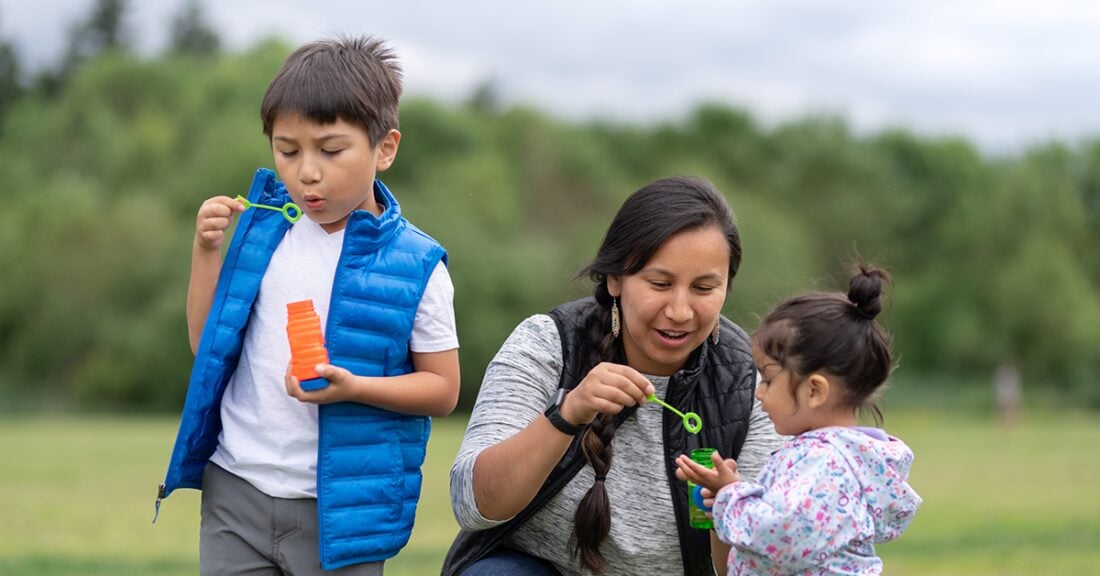
The Annie E. Casey Foundation recently reported on demographic trends for American Indian and Alaska Native (AI/AN)* children in the United States. This companion post examines the status of their health and well-being, including the solvable inequities they face.
Our country has a long history of violence and oppression of Indigenous peoples, the effects of which are still apparent today. This systemic inequity continues, with the United States currently not upholding many of its treaty obligations to Native nations. The country is also not fully implementing policies intended to support their well-being.
It is critical that we work to remove the structural barriers that remain for Indigenous populations. Despite past and present injustices, Native nations have shown leadership and strength in their contributions to society. Supporting all aspects of their well-being is a key part of working toward equity and justice.
The Status of Native Children’s Health and Well-Being
The resilience of AI/AN families is rooted in rich cultural values, including a deep respect for family and elders, a strong sense of community and a shared responsibility to care for children and the environment. According to the KIDS COUNT Data Center, AI/AN communities are excelling on a key measure linked to youth well-being: 95% of AI/AN teens ages 14 to 17 can share ideas and talk about things that really matter with their parents, right above the national average of 93%. Having positive, open communication and safe, nurturing relationships with parents or caregivers is critical for healthy youth development and mental health.
Additionally, several trends are moving in a positive direction for AI/AN families, such as rising median family incomes, on-time high school graduation rates and declining rates of teen births and child poverty. Data also show that the AI/AN population now matches the national average on another key health indicator — the child and youth death rate.
At the same time, historical trauma and generations of discriminatory policies have led to AI/AN children, youth and families having disproportionately poor experiences across many measures of health and well-being compared to the general population. Studies have documented the adverse effects of trauma on the physical and mental health of AI/AN populations — effects that endure for generations. Some of the wounds inflicted by U.S. policies are relatively recent. For instance, the government’s sanctioned removal of AI/AN children from their homes due to forced assimilation policies continued in different forms until 1978, when the Indian Child Welfare Act (ICWA) was passed. Other historic and ongoing U.S. policies and practices have led to isolation, economic deprivation, food scarcity and chronically under-resourced healthcare and education systems for AI/AN communities.
The following selection of data — largely from the KIDS COUNT Data Center — not only elucidate the disparate conditions experienced by AI/AN children and families, but also demonstrate the need to prioritize equity at all levels of government and expand the opportunities and support available to AI/AN communities.
Economic Inequities
- Although the official poverty rate for AI/AN children declined over much of the last decade, as of 2025, about one in four (24%) kids continued to live below the federal poverty level ($32,649 for a family of two adults and two kids). The latest AI/AN child poverty rate was nine percentage points above the national rate (15%) — a pattern that has been consistent for decades.
- AI/AN kids are more than twice as likely to live in high-poverty neighborhoods compared to their counterparts nationwide: 19% vs. 7%, according to 2020–2024 data. This trend has held since the KIDS COUNT Data Center began tracking this measure in 2006–2010.
- More than two in five (42%) AI/AN children live in families where parents do not have secure, full-time employment, compared to 25% on average in 2024.
- About one in nine (11%) AI/AN youth ages 16 to 19 were not in school or working in 2024, above the nationwide rate of 7%.
- While the median income for AI/AN families with children has steadily increased over the last decade, it remains far below the overall median family income, and the gap has widened in recent years, reaching $62,100 vs. $95,700, respectively, in 2023.
- In 2024, just over a third (34%) of AI/AN children lived in households with high housing cost burdens — meaning more than 30% of monthly income was spent on housing — higher than the national average of 31% that year and an increase for AI/AN kids from 27% in 2019.
- Almost half (47%) of AI/AN children experienced household food insufficiency in the past year — i.e., they could not always afford to eat nutritious foods — which was a significant difference from their non-Native peers at 33%, according to 2022–2024 data from the National Survey of Children’s Health.
Education Inequities
- In 2024, nearly two in five (38%) AI/AN fourth-grade students were considered chronically absent from school in the previous month, an improvement from 49% in 2022 but still higher than all previous years on the KIDS COUNT Data Center. For two decades, AI/AN fourth graders have been more likely than their peers nationwide (31% in 2024) and in other racial or ethnic groups to experience chronic absenteeism, which includes excused absences due to health issues, transportation problems or other challenges.
- The share of AI/AN fourth graders who are not reading proficiently has gradually worsened in the past decade, with learning losses starting before the COVID-19 pandemic — from 78% scoring below proficient in 2015 to 85% in 2024. The latest figure is a 15-percentage point difference from the national average of 70%.
- Similarly, nearly nine in 10 (88%) AI/AN eighth graders were not proficient in math in 2024 — also 15 points from the U.S. average (73%). For AI/AN students, this figure improved slightly from 89% in 2022 but remains substantially behind what it was a decade earlier (79% in 2013). Eighth-grade math and fourth-grade reading proficiency are bellwether indicators of long-term academic success — including graduating from high school, which increases employment and earning potential in adulthood.
- AI/AN high school students have made progress on graduating within four years, from 70% achieving this milestone in 2013–14 to 76% in 2023–24. Still, about one in four students (24%) are not graduating on time — nearly double the national figure (13%) and above that of all other racial and ethnic groups with data.
- In 2023, one in three (33%) AI/AN young adults ages 18 to 24 were enrolled in college or had a bachelor’s degree, below their peers nationwide (48%) and those in other racial and ethnic groups with data. At the same time, this college statistic for AI/AN young adults is up from 24% in 2005, which is the lowest point on the KIDS COUNT Data Center.
Native Youth Perspectives on Education, Healthcare and More: A recent national study gathered the views of young Native Americans ages 18 to 24 on issues such as their cultural strengths, higher education, civic engagement, healthcare and access to resources.
Health and Mental Health Inequities
- The rate of uninsured AI/AN children under age 19 jumped from 11% in 2023 to 15% in 2025, the highest level in eight years. AI/AN kids are more than twice as likely to lack health insurance as U.S. children overall (6% in 2025). Additionally, AI/AN youth and young adults ages 14 to 24 are the least likely of any racial or ethnic group with data to have health insurance.
- While the 2024 AI/AN child and youth death rate (ages 1 to 19) from all causes is even with the national rate for the first time since the KIDS COUNT Data Center began tracking it, the teen death rate for ages 15 to 19 in 2024 remains above the national rate: 59 vs. 51 per 100,000 youth, respectively. However, the AI/AN teen death rate dropped substantially in the previous two years, from 84 per 100,000 in 2022.
- AI/AN communities face an ongoing crisis of missing and murdered persons, often women and girls. Homicide is the third leading cause of death for teens and all AI/AN young people ages 10 to 24. The federal response to tracking these cases has been woefully lacking for decades, but other efforts to create databases of such cases have emerged at the national and state levels, largely thanks to Indigenous-led work. Although some federal efforts have occurred in recent years, significant data gaps and challenges remain such as inconsistent implementation of legal requirements and inadequate resources, staffing, investigations and coordination with Native nations.
- In 2025, one in five AI/AN high school students seriously considered attempting suicide (20% vs. 15% of all students) and at least one in four made a plan to attempt suicide (27% vs. 13% of all students), according to the CDC’s Youth Risk Behavior Survey. In recent years, AI/AN students — along with Native Hawaiian or other Pacific Islander and multiracial students — have been among the most likely of any racial or ethnic group with data to seriously consider a suicide attempt. According to the CDC, suicide is the second leading cause of death among AI/AN teens ages 15 to 19.
- Nearly one in five (18%) AI/AN children and youth ages 3 to 17 had depression or anxiety problems in 2023–2024, a figure that has trended upward from 13% in 2016–2017. In all years available on the KIDS COUNT Data Center, a higher share of AI/AN children have experienced depression or anxiety compared to the national average (14% in 2023–2024) and figures for other racial and ethnic groups with data.
- A recent National Academies of Sciences, Engineering, and Medicine study reported that AI/AN populations experience sadness, anxiety, anger and shame related to the traumas they have faced — including forced migration, broken treaties and loss of land, family ties, language and culture. The report also called for more data on AI/AN well-being and recommended making this a federal priority.
Find more data about AI/AN health in the KIDS COUNT Data Center including access to prenatal care, low birth-weight babies and parent-reported child health status.
Family and Community Inequities
- AI/AN children face two or more adverse childhood experiences (ACEs) at more than double the national rate: 42% vs. 19%, respectively, in 2023–2024. ACEs are potentially traumatic events such as: exposure to family or neighborhood violence, parental death or incarceration, frequent economic hardship or living with someone who has mental illness or substance abuse problems. Studies have documented connections between colonization, trauma and ACEs, with intergenerational effects.
- AI/AN kids are significantly less likely than their non-Native peers to live in neighborhoods considered supportive (47% vs. 57%) or safe (55% vs. 67%) by parents or caregivers, according to the 2022–2024 National Survey of Children’s Health. Supportive neighborhoods are “places where residents help one another, watch out for each other’s children, and know where to turn for help when challenges arise.”
- AI/AN young people continue to be overrepresented in the foster care system. In 2024, the rate of AI/AN children and youth ages 0 to 20 in foster care was 12.5 per 1,000, more than three times the national rate of 3.9 per 1,000 and well above the rates of all other racial and ethnic groups with data. Even after the Indian Child Welfare Act was passed to provide minimum federal protections and end the forcible removal of children from their homes, the law has not been implemented consistently, and the child welfare system continues to demonstrate systemic bias.
- Among AI/AN youth transitioning out of foster care — who also participated in a follow-up survey — an alarming 39% reported experiencing homelessness between ages 19 and 21, higher than the national average of 26% and figures for other racial and ethnic groups with data.
- Nationwide, AI/AN youth are also disproportionately detained and incarcerated by the justice system. The latest data show that 199 AI/AN youth per 100,000 under age 21 were residing in juvenile detention in 2023, a substantial decline from the last two decades but well above the national rate of 87 per 100,000 in 2023. Detention for any length of time has been shown to negatively affect youth, and it does not improve public safety.
Access additional data related to families and communities such as young parents, children with incarcerated parents and young people in the child welfare and foster care systems.
The selection of findings presented above is not comprehensive but sheds light on the persistent inequities faced by AI/AN children, youth and families.
Looking Forward
Achieving equity for AI/AN communities is certainly possible, if prioritized, but it will take public policy and systems change, increased resources, improved collaboration and long-term commitments, particularly from non-Native allies. We must promote awareness among such allies about the structural inequalities that continue to drive disparities in AI/AN children’s health and well-being. We also need to prioritize and incorporate AI/AN views and knowledge as we work toward culturally responsive solutions. In that spirit, the following resources offer recommendations from members of AI/AN communities to address systemic inequities:
- The Generational Impact of Racism on Health: Voices from American Indian Communities
- American Indian and Alaska Native Cultural Wisdom Declaration in the Substance Abuse and Mental Health Services Administration’s National Tribal Behavioral Health Agenda
- Federal Policies that Contribute to Racial and Ethnic Health Inequities and Potential Solutions for Indigenous Children, Families, and Communities
- The Way Forward: Report of the Commission on Native Children
These highlight the need to integrate wellness approaches for Native communities into government plans to ensure that strategies are culturally tailored and relevant, recognizing the diversity of these communities. Recommendations also include using the Cultural Wisdom Declaration above as a cross-cutting framework for all programs, including physical, mental and behavioral health, education, child welfare, juvenile justice and economic supports. Additionally, they include providing sustained, flexible funding and strengthening coordination across agencies and programs to support comprehensive, Tribal-directed services.
Along with building on the wisdom and expertise of the Indigenous communities, it is critically important to honor U.S. treaty obligations and support the sovereignty and self-determination of Native nations in any efforts to improve the health and well-being of these children. The Indian Child Welfare Act (ICWA) provides one opportunity to respect this sovereignty and address systemic racism. For instance, the ICWA aims to keep AI/AN kids connected with their families, culture and communities by requiring active efforts to prevent children’s removal from their homes. If removal is necessary, however, it requires placement with AI/AN families before non-AI/AN families. The ICWA also mandates active efforts to support family reunification when possible. Ensuring that states and agencies fully comply with the ICWA is an essential strategy to correct structural biases and protect AI/AN families.
Additional opportunities to strengthen the well-being of AI/AN children, youth and families include but are not limited to:
- Prioritize equity throughout state and federal policies, including ending the chronic underfunding of healthcare and education infrastructures in Indigenous communities.
- Support education systems that are tailored for Native students — from early childhood through higher education and vocational training — recognizing the importance of Native cultures and languages for positive youth outcomes.
- Acknowledge and support Indigenous cultures as a protective factor in any program or policy solution, and promote a focus on resilience rather than risk factors, overall.
- Fully implement existing policies intended to advance equity, such as the ICWA described above.
- Strengthen meaningful collaboration across federal, state and Tribal entities to streamline programs and expand equitable access to multidisciplinary services. As part of this, improve responses to missing persons, support the jurisdictional authority of Native nations and ensure that strong, culturally grounded public safety and family support systems are in place.
- Promote ongoing efforts to eliminate discrimination in the child welfare and juvenile justice systems and prevent young people from entering these systems in the first place. Maximizing juvenile justice diversion responses and supporting Indigenous-led restorative justice models that focus on treatment, accountability, healing and repairing harm to the community are just two ways to help rather than punish.
- Advance accurate, representative, accessible research and data collection in collaboration with AI/AN populations across all domains of health and well-being and, specifically, for cases of murdered and missing Indigenous individuals. Such efforts should be responsive to Native communities and elevate their unique experiences and views, including those of youth.
By prioritizing actions like these, we can move toward a future in which AI/AN children, youth and families have equitable opportunities to thrive in safe, healthy and sustainable communities. Equally important is ensuring that today’s AI/AN children have the opportunity to grow up in communities where their sovereignty and self-determination are supported, and they are fully connected to their cultural identities, practices, languages and land. Indeed, Indigenous communities have maintained these vital cultural assets despite generations of destructive U.S. policies, and efforts to fully restore and uplift Native cultures will continue while we work toward a shared, positive future for all.
More Resources Related to the Health and Well-Being of Native Children and Families
- A Look at the Latest Population Trends for Native Children, Annie E. Casey Foundation
- All Data by Race and Ethnicity on the KIDS COUNT Data Center
- Center Us: A Native Youth Survey Report, Center for Native American Youth at the Aspen Institute
- American Indian/Alaska Native Children’s Health, 2022–2024: Data Brief, National Survey of Children’s Health
- Beyond the Red Handprint: Justice, Accountability, and the MMIP Crisis, Association on American Indian Affairs
- The Ongoing Legacy of Indigenous Family Separation: Long-term Outcomes of Child Welfare Involvement Among American Indian and First Nations Youth, Child Abuse & Neglect Journal
- Guidelines for Implementing the Indian Child Welfare Act, Bureau of Indian Affairs
- Resilience and Health in American Indians and Alaska Natives: A Scoping Review of the Literature, Development and Psychopathology Journal
- A Road Map for Strengthening Behavioral Health in American Indian and Alaska Native Communities: New Toolkit Outlines Strategies to Improve Mental Health and Addiction Services for Indigenous People, National Council of Urban Indian Health
- Federal Policy to Advance Racial, Ethnic, and Tribal Health Equity, National Academies of Sciences, Engineering, and Medicine
- Healing Native Youth Through Youth Justice Reform, Association on American Indian Affairs
- Land Rights and Health Outcomes in American Indian/Alaska Native Children, American Academy of Pediatrics Journal
The Other Side of the ACEs Pyramid: A Healing Framework for Indigenous Communities, International Journal of Environmental Research and Public Health
Get the Foundation’s latest data, reports and news delivered to your inbox
* As noted in our post on population trends for Native children, we primarily use the term “American Indian and Alaska Native (AI/AN)” to be consistent with the data sources referenced. Other terms commonly used to encompass the widely heterogeneous original peoples of North, Central and South America include: American Indian, First Nations, Native American, Native Hawaiian, Native and Indigenous. Naturally, terminology is evolving and personal, and preferences vary on which labels to use. These broad terms are meant to refer to the many different Native nations in what we now call the United States, although using specific Native nation names is preferable when referring to individuals or single groups.