


Q&A: Majd Abdallah on Helping Teens in Foster Care Build Formative Experiences
When Majd Abdallah entered South Carolina’s foster care system as a teenager, he was placed in group care. In this setting, joining after-school activities, spending time with friends and experiencing other ordinary and formative parts of adolescence can be more challenging because of barriers like transportation, money and permissions required for coming and going.
For Abdallah, being able to continue running track helped him feel a little more like a typical teenager. With support from his track team, he connected with a family who began driving him to and from practice. What started as a way to get from point A to point B grew into something deeper: a relationship that would become life changing and lifelong. One year later, the family invited Abdallah to live with them. The move was a turning point for Abdallah. His foster family gave him not only a home but more chances to engage in healthy activities, receive guidance and build lasting relationships. Abdallah’s story reflects a broader goal of child welfare leaders in South Carolina: helping more young people in foster care grow up in families. This difference — as both research and youth make clear — creates more opportunities for young people to thrive.
The Annie E. Casey Foundation has supported South Carolina’s work to reduce group care placements, prevent unnecessary teen entries into foster care and expand family-based care, including kinship care. Since 2019, South Carolina has reduced group care placements by 52%, freeing up more than $11 million to reinvest in system improvements, such as family-based services. In 2025, among teens in foster care statewide, just 13% were in group care while 28% were with kin.
Abdallah has joined other young leaders in partnering with the South Carolina Department of Social Services (SCDSS) and community-based advocates to improve policies, practices and programs for the state’s children and families. He also helped cofound Youth Engagement Advocates, or YEA!, an SCDSS advisory group that elevates young people’s ideas and experiences. Today, in addition to working as an operations associate at Child Welfare Wonk, Abdallah is a TEDx speaker and the founder and CEO of Foster The Bear Foundation, a nonprofit that provides educational scholarships and comforting bears to foster kids while also raising awareness through its mascot, Foster.
Abdallah’s advocacy is shaped by his own life lessons. He recognizes that young people in foster care need access to the same formative experiences as their peers outside of foster care. These milestones — like playing sports, earning a driver’s license or going to college — matter. In this interview, Abdallah discusses the genesis and goals of his Foster The Bear Foundation as well as some common hurdles facing young people in care.
Q. When you went from living in group care to living with a foster family, what changed that made it a turning point for you?
Abdallah: What I wanted most was to feel like other teenagers. While I was living in a boys’ home, I would see my peers getting picked up by their parents, having sleepovers, bringing lunch from home, and joining sports, band or other after-school activities. I had food, clothes, stability and relationships with staff and other young people, but there were rules, approval processes and transportation barriers that made everyday teenage experiences harder.
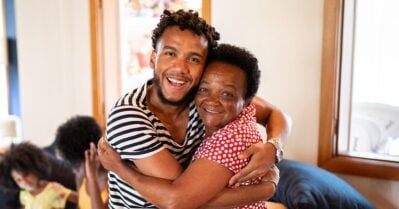
Moving in with a foster family changed everything. I had a regular home address to give people. I didn’t have to hide where I lived or explain my situation all the time. Friends could drop me off and pick me up, and I could spend the night at a friend’s house, both of which I wasn’t allowed to do living in a boys’ home. There was a level of ease, protection and belonging that came with living in a family. I could participate more fully in school, I became less guarded and more open in my friendships, and I was more confident being myself.
Q. After high school, what experiences helped you find your voice and begin thinking about how you could support other young people in foster care?
Abdallah: College was a big step for me. I graduated from Clemson University in 2024 with a bachelor’s in business marketing, and my time in college gave me the ability to really learn about myself. It’s where I met many of the mentors I have today.
I joined a program called the Spiro Institute my junior year of college. It taught me how to build a business plan, write a mission statement, sell a vision and speak publicly. I started thinking about what kind of business I could build. My first question was: How do we get more people to do something for young people in foster care? I did a campuswide survey and found that many people didn’t know blue is the color for foster care awareness, which led me to create Foster, the blue stuffed bear and mascot for what became Foster The Bear Foundation.
Q. Through Foster The Bear Foundation, people can purchase a blue stuffed bear for themselves or to be delivered to a child in foster care. Why stuffed bears, and what do they represent?
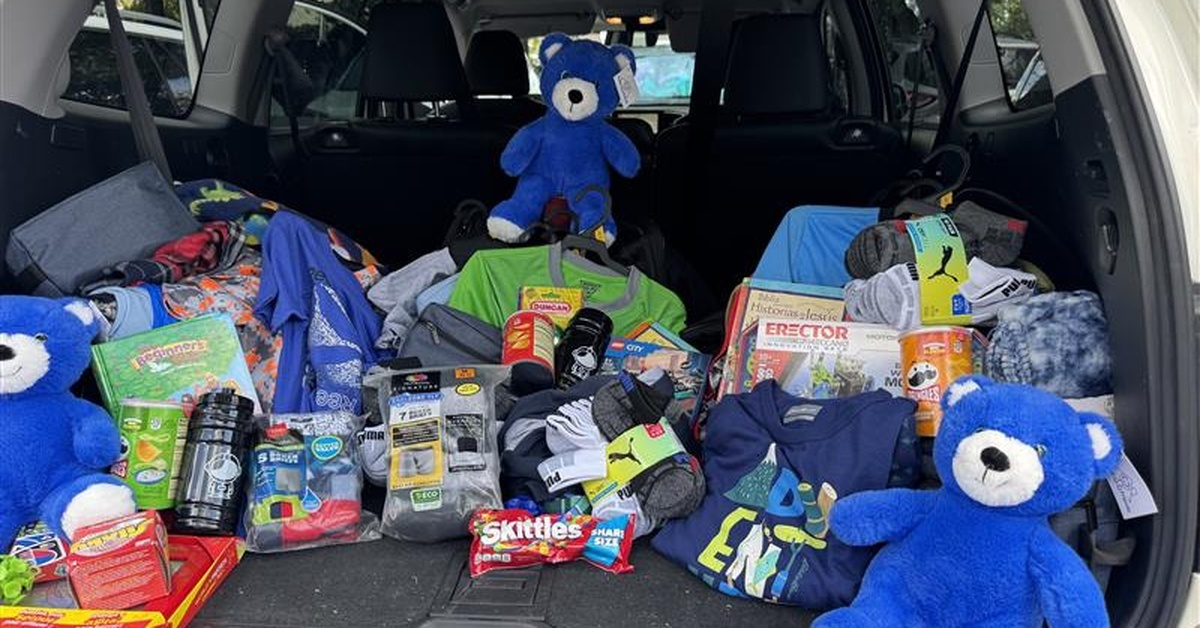
Abdallah: I have heard so many stories from others in foster care who lost stuffed animals, clothes or other belongings during placement changes. A lot of kids coming into care get used items. A brand-new bear can say: “Someone cares about you. This was bought for you.” I truly believe that, for a child in care, that can help instill a sense of normalcy and comfort at someplace new. Also, I honestly wanted to play into the cuteness. A stuffed bear is a cute and fluffy way to invite people into a serious conversation and give them something they can do to show support while also helping raise awareness for young people of all ages in the system.
Q. How does Foster The Bear Foundation use the proceeds from bear purchases and donations?
Abdallah: Foster The Bear is also about supporting teens and young adults as they prepare for adulthood. Proceeds from bear purchases and donations help fund scholarships and mentorship for young people transitioning out of foster care. The proceeds from the bears will allow us to give youth up to $5,000 per year for up to four years for college, technical or vocational programs. But the goal is bigger than financial support.
My hope is to give young people the same feeling of support and possibility that helped me. Not necessarily the same path, if college is not where they want to go, but the same chance to grow, build skills and step into their future. College changed my life, and I believe every young person in foster care should have the same access to those kinds of opportunities and experiences as teens who aren’t in care. When young people win, we all win.
Q. Why was it important to you that Foster The Bear Foundation support not only younger children but also teens and young adults in foster care?
Abdallah: When I entered foster care, I was 16. I’ve seen firsthand how teens in foster care are overlooked. When people wonder what they can do to support children in foster care, they are often more drawn to helping younger children, while teens can be seen as too difficult or too old to need the same kind of care. The bears are a way to get people in the door. They help younger children feel seen and valued while also creating a path to make that same investment in teens and young adults.