Richard Reeves on What Boys and Young Men Need to Thrive
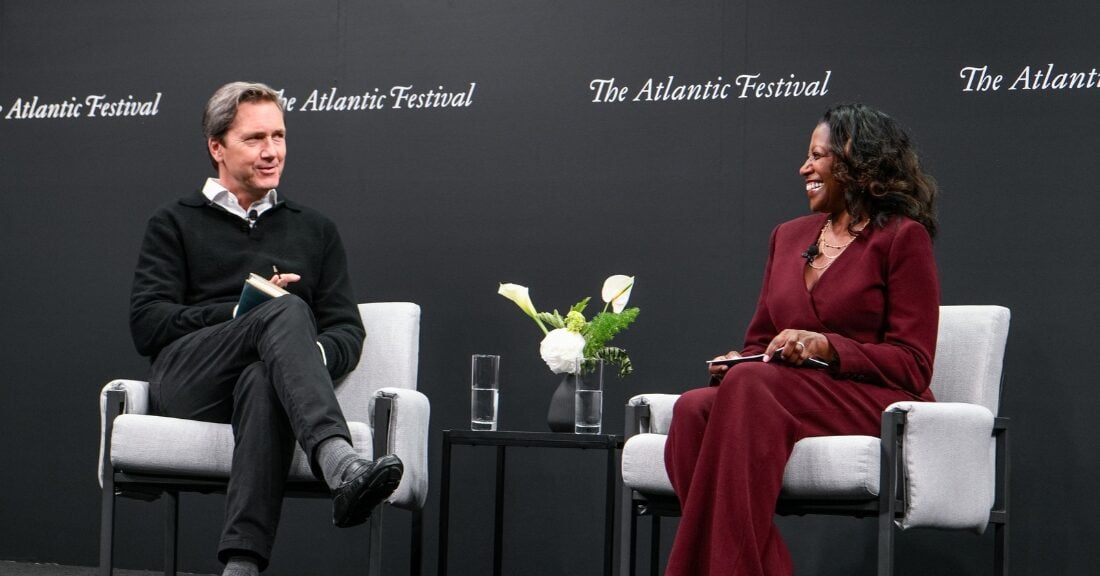
On the latest episode of CaseyCast, Annie E. Casey Foundation President and CEO Lisa Lawson speaks with Richard Reeves about the challenges facing boys and young men and what communities can do to support their education, mental health and relationships.
Reeves is the founding president of the American Institute for Boys and Men and author of Of Boys and Men: Why the Modern Male Is Struggling, Why It Matters, and What to Do About It.
Reeves says that structural economic changes have led to many challenges for today’s boys and young men, including widening gender gaps in educational achievement, declining college enrollment and rising suicide rates. These challenges are particularly pronounced among Black boys and men and those from lower-income families.
For Reeves, addressing these challenges does not mean taking attention or resources away from women and girls.
“I think in some ways, one of the most important things you can say about this is that it’s not a zero-sum game, that we can think two thoughts at once,” he says.
Drawing on research from the American Institute for Boys and Men, Reeves discusses how understanding the different experiences of boys and girls can help adults provide more effective support for all young people. He emphasizes the importance of personal relationships, positive male role models and community connections in helping boys and young men develop a sense of purpose and belonging.
Key Themes From the Conversation
- Understanding boys’ development during adolescence: Reeves shares that boys tend to reach certain developmental milestones later than girls, particularly in areas related to executive functioning — skills such as planning, organization and decision-making. Recognizing these differences can help educators and families better support boys without lowering expectations or assuming all young people develop at the same pace.
- Addressing mental health challenges among young men: Reeves highlights concerning trends in young men’s mental health, including a nearly one-third increase in the suicide rate among men under 30 since 2010. Suicide rates among young men are now four times higher than among young women.
- Helping boys succeed in school: Boys are falling behind girls on several measures of educational achievement, particularly literacy and high school grades. Middle school and the transition after high school are critical periods for additional support. Reeves also discusses efforts to recruit more male teachers, particularly men of color, who can serve as educators and role models.
- Connecting boys with positive male role models: Fathers, teachers, coaches, mentors and other trusted adults can help boys navigate adolescence and develop a positive sense of identity. Reeves emphasizes that young men often look to the men in their own lives for guidance amid conflicting and often negative online messages about masculinity. “I’ve really quite strongly come to believe that the answer to a bad man online is a good man in real life,” Reeves said.
- Creating spaces for friendship and connection: Young men, particularly those who do not attend college, can struggle to maintain friendships and social connections after high school. Reeves and Lawson discuss how sports, community organizations and other shared activities provide opportunities for young men to build relationships. They also emphasize the importance of accessible gathering spaces where young people can develop friendships and a sense of belonging.
- Expanding career opportunities in growing fields: As employment opportunities expand in health care, education and other service professions, young men may overlook careers traditionally associated with women. Reeves discusses how encouraging more men to pursue teaching, nursing and other care-related professions can create new economic opportunities while strengthening the workforce.
Helping Boys and Young Men Build Connections and Find Purpose
For Reeves, supporting boys and young men means looking beyond the challenges they face and investing in the relationships and opportunities that help them grow.
That means connecting boys with teachers, mentors, coaches and other trusted adults who can provide guidance, model positive relationships and help them navigate adolescence. It also means creating spaces where young men can build friendships, explore their interests and find a sense of belonging.
Reeves sees reason for optimism in young people’s desire to grow and find purpose.
“They are really hungry for formation, for purpose, for growth. They’re struggling sometimes to find it, but the desire is there,” Reeves said.
Throughout the conversation, Lawson and Reeves emphasize that adults have a responsibility to recognize young people’s strengths, understand their different needs and create the conditions for all young people to succeed.
Listen On
Lisa Lawson: Hi, and welcome to CaseyCast, the podcast of the Annie E. Casey Foundation. I'm Lisa Lawson, the foundation's president and CEO. On this show, we explore what it really takes to build a brighter future for children, youth, and families.
Last fall, our guest, Richard Reeves, joined me at the Atlantic Festival to help launch my book, Thrive. We talked about how adolescence is a remarkable period of growth and possibility and what it would take to better support young people during these critical years. And as part of that broader conversation, we explored some of the unique challenges and opportunities facing boys and young men today. Because if we want to serve young people better, we have to understand what they're experiencing and pay attention when the data tells us something isn't working.
So I'm looking forward to continuing that conversation here on CaseyCast. Richard brings an important perspective to these questions. He is the founding president of the American Institute for Boys and Men and an author of the book Of Boys and Men: Why the Modern Male Is Struggling, Why It Matters, and What to Do About It. Richard, you've been a grantee and friend for a long time, from your time at Brookings and now leading the institute.
Thank you for joining us.
I'm so glad we have the opportunity to have this conversation.
Richard Reeves: Well, likewise. Congratulations on your book, Lisa, too. I loved partnering with Annie E. Casey throughout my career.
So I, I'll tell this story, which is that I moved from the UK to the US in 2012, between 2012 and 2013, and the very first support I got as a newly arrived scholar was from the Annie E. Casey Foundation, who supported a little bit of work I was doing at Brookings. That helped me to get in with, you know, in with Brookings, and then I was there for 10 years, and that's, that's led me to establish a new think tank, which you've already mentioned, the American Institute for Boys and Men. But I never forget where that first check came from, Lisa, and it was from your foundation.
So thank you.
Lisa Lawson: Thank you. I appreciate you saying that. I've had Richard come and speak at our board meetings before and always joked that his British accent always makes everything we're saying sound better.
So I'm grateful for your thought leadership.
And you talk so much about issues we care deeply about, economic mobility and making sure all young people can succeed.
So we are thrilled to have been a partner with you from the very beginning. Well, why don't we first talk about the institute? Tell us why you created it and what you've decided to focus on.
Richard Reeves: You know, sometimes an institution generates books, right? People work in an institution— you're an example of this— and it generates work that results in a book. And that's been my previous experience, but this time it was the other way around. This time I wrote the book in 2022, and the response to it and the conversations it generated made me realize that this needed more than just a moment, more than just an intellectual intervention to say, hey, we can care about boys and men without stopping caring about women and girls.
We can get better data.
You know, we can, we can have good faith conversations about solutionsfor boys, especially those boys who are most economically vulnerable. And there seemed to be a real thirst for that.
And so I thought, this actually needs to be an institution, not just an idea.
And then, of course, the challenge is like, where do you do that? Does that need to be its own institution, etc.? And I came to the decision that, partly because I wanted it to have no sort of valence, no attachment to any political brand or history, or it's just to start essentially from fresh, from a blank sheet of paper.
So in 2023, I launched the American Institute for Boys and Men.
So we're still only three years old and we're still relatively small, but we are the first, I would say, serious policy and research shop that's focused on this work. I'm glad there's one in the UK now and one just launched in the Nordics, actually, similarly serious evidence based solutions forward.
So that's the, you know, the short version is I thought we needed more think tanks.
God knows we need more think tanks, right?
But, but the longer, more truthful version—
Lisa Lawson: We certainly need to think more. I will give us that.
Richard Reeves: Right. Whether that means we need more think tanks, I suspect people would disagree about that.
But, I think so far it's kind of proven true that doing it kind of independently has actually I think it's helped, not least to be really genuinely nonpartisan.
You know how people will say we're nonpartisan, but they don't mean it. And then other people say we're nonpartisan and they mean it. Well, we really do mean it.
Now, we are working with a number of Republicans, at the state level primarily, as well as with a number of Democrats. And I just think that would be a little bit harder if you did it from an institution that was more associated with, quote, one side or the other.
Lisa Lawson: True, true.
Well, there is certainly no shortage of conversation these days about what is going on with boys and with men. I mean, I remember, you know, 15 years ago there was lots of conversation about everything from the opioid crisis, and now we're talking about declining rates of college enrollment, et cetera, with young men. Tell me what you hear people talking about and what you've chosen to study at the institute, and what really feels important for the public to understand about what's going on with young men these days?
Richard Reeves: Yeah, but there's almost like 2 different conversations going on. I would say that one is the one that's like the vibe conversation, the sort of conversation over dinner or the school gates around maybe stuff you've read online or like what's going with men or some of the kind of, you know, the manosphere quote unquote stuff online and some of the concerns that people have about, if you like, the culture. Uh, Christine Emba, who's a board member of ours, she writes for the Times. She says like she focuses on the vibes.
And she said, I'll leave the facts to you, Richard.
Um, so I think there's a concern really that a lot of young men especially feel somewhat lost, a bit untethered, not quite sure what scripts to follow, maybe a little bit clear about what they're not supposed to do than what they are supposed to do. But then there's a different conversation which is among policymakers, institutional leaders, you know, healthcare professionals, etc., which is, why has there's been such a collapse in male college enrollment? Like, why do, why do only 26% of men now think college is important compared to 40% of women?
What's happening to the suicide rate, especially? And this is the most tragic stat in some ways. Since 2010, the suicide rate has risen by almost a third among men under the age of 30. It's actually now a little bit higher among young men than it is among middle-aged men.
Lisa Lawson: Wow.
Richard Reeves: Which we've never seen before. We tend to associate those tragic deaths of despair, including suicide, with more middle-aged men, but it's really shifted down the age distribution, um, and is 4 times higher among young men than among young women. Tragic in, in every case, of course.
And there's some employment concerns too. I think as the economy has shifted away from traditionally male jobs, you know, if you like, if I could use that term, around manufacturing, industrial, etc., into more of a service-based economy, and I think that it's been an adaptation that many men have struggled to make, especially those from poorer backgrounds.
And so we focus on mental health, health generally, but mental health especially, education, both at the K-12 and higher education level. We focus on fatherhood and family, which is actually the subject of my next book, which is kind of the importance of fathers within the kind of growing variety of family life and employment.
But we also have a particular focus on the men who we think, just based on the evidence, are the ones who we should be most concerned about, and that is most strikingly Black boys and men.
So we have a very strong commitment to looking at that issue through the racial lens, and also class, working-class men as well. Like, it's very clear from the evidence that when we talk about the challenges of boys and men, we are much more likely when it comes to the issues I've talked about to be talking about men without a college degree, men from poorer backgrounds, and Black men and boys especially.
So I think you can't, you can't do this work without being, quote, intersectional, an ugly term, but I think in this case it really is applicable.
Lisa Lawson: Great. Well, we're going to dig into each of those areas, all really important, I think, to the future of young people. But before that, I want to go back to something you said about, you can work on issues of young men while also working on or caring about issues of young women. Have you had to make that case quite a bit since you started this institute? And how do you help people hold both of those at the same time?
You know, we disaggregate data in lots of ways at the foundation, and, you know, it helps us understand who's struggling on what and where. And we don't think that conflicts with being able to help different groups of people. Tell me how you help people reconcile that, because there's been such a women's movement in the United States, and I know you have no intention of trying to diminish that. How are you helping people?
Richard Reeves: Sure. And in fact, when I have done work on gender in the past, it has been through that more traditional approach, if you like, looking at women.
So for example, I did work at Brookings on gender equality, particularly in politics, and why there was such a shocking underrepresentation of women in US politics compared to elsewhere.
So yeah, I think in some ways, one of the most important things you can say about this is that it's not a zero-sum game, that we can think 2 thoughts at once, that we can think, I'm worried about the gender pay gap.
I'm worried about the fact that we still have significant female underrepresentation in senior positions, especially in areas like politics. Tech is a glaring problem. I'm still worried about some of the issues that women face getting adequate healthcare, in many cases, especially in certain periods of life.
I really welcome the recent focus, for example, on menopause, which I think has been a really badly neglected area of healthcare.
So I can care about that, right? I have a wife, I have friends, so — and I can worry about the fact that there's a bigger gender gap on college campuses today than there was in the early '70s, but the other way around.
Right? I can worry about loss of life among men. I can worry about the growing gap in life expectancy, and the very shockingly low life expectancy of Black men in particular.
And so my challenge, I guess, is to say we can do both.
And what I found is that's usually not a difficult thing for people to agree to if they're reassured that this is not really just a stealth mission to turn back the clock on women. I think there's an understandable suspicion of anybody talking about the challenges of boys and men, which is where are they going with this? And if they're going to go in a direction of saying, well, it's women's fault, or it's the fault of feminism, or the only way for men to rise is for women to fall again, or to reassert traditional kind of gender positions, I understand that suspicion.
And I think it's well earned, frankly.
And so I think you have to allow for that. But then once people are reassured that that's not where this is leading, actually, I find that then you can't stop people talking about it.
And also, they start looking at their gender breakdown.
They start saying, oh, it's interesting, we haven't looked at it the other way, what's happened to our boys? Oh, oh, well, look at that, that's interesting.
And so they actually end up kind of discovering— and it's very often the reason they haven't looked at the gender gap the other way is not because they don't care about boys or men, it's just because that's not in our institutional muscle yet, right?
We don't think that way. We'll automatically look for gender gaps the other way, as we should, but it's kind of almost like a new muscle to say, well, hold on, what about the other way? And to reassure people, that doesn't mean you're going to stop looking at the first, right? Just because you're now looking at the second.
Lisa Lawson: It's the very essence of following the data, which we always want people to do. You have to follow where the data takes you. And it is very clearly telling us that there are challenges with the futures of boys and men, as you outlined.
So thank you for helping people realize we can chew gum and walk at the same time.
That we can care about multiple issues at one time.
You know, one of the things we know about adolescence is that young people develop at different rates. I've gotten this question several times about adolescent boys versus adolescent girls.
And so I would love to hear you say, you know, sort of, you've written about the differences between boys and girls during these years. What is the research telling you? And what should we do as it relates to supporting boys in their adolescence, maybe differently than the way we support girls?
Richard Reeves: Yeah, I'm really glad you're getting that question, of course, and, and I've heard you answer it well.
I think the first thing to say is everything we're about to say is on the average.
And so if we say men are taller than women, Nobody thinks that you mean every man is taller than every woman, right? And if someone comes in and says, well, that's not true, I saw a really short man the other day, he was much shorter than the woman. Yeah, right.
People understand what you mean by that. These are overlapping distributions. But it is true that boys tend to develop in certain ways somewhat later than girls.
Lisa Lawson: Mm-hmm.
Richard Reeves: It's partly because they hit puberty later than girls, to a year or more later. And that's associated with the development of certain parts of our brains, particularly the frontal cortex, which is more associated with organization.
Sometimes the skills that are associated with that are called non-cognitive skills, soft skills, etc.
Lisa Lawson: Executive functioning. Yeah.
Richard Reeves: Executive functioning.
Thank you, I'd forgotten that one. And it's really kind of turning in your homework skills is what we're talking about there, is the ability to, you know, defer gratification, plan ahead, you know, as you say, executively organize yourself. And boys just take a little bit longer to get this.
So I think in the education system, we have to be very careful not to inadvertently assume that the default student is a girl, say at the age of 13, 14, and then hold boys always to that standard. I'm not saying we should have different standards. I'm just saying in the pedagogy, in the kind of setting of homework, in thinking about time allowed for things, just like, I sometimes worry that we, again, inadvertently treat boys a bit like malfunctioning girls, you know? But like, why can't you be more your sister? Is the question that a lot of parents have. Or the teachers might be like, why can't the boys be more like the girls, right? Mm-hmm.
Um, and the other thing is that because boys develop a little later, but also the period of adolescence— and this is something that certainly you don't need to hear— um, that it is a little bit different just in terms of some of the balances between the hormonal changes that you see between boys and girls. And one of the implications of that is that when you do get this kind of huge change in testosterone levels, especially in adolescent boys, that does lead to much more risk-taking. To the extent actually that, you know, some, what some historians do, I only just discovered this recently, if they're trying to kind of figure out what the age of puberty is, like in historical societies, and they can't really measure that directly, what they measure is the death rates of adolescent boys.
Lisa Lawson: Hmm.
Richard Reeves: Uh, as a measure of when they hit puberty, because it's a well-known fact that after puberty, the death rates of boys just absolutely spikes. It's called the mortality hump in anthropology. And it's twice as high, still way higher among boys than girls.
And so what happens is that suddenly they're kind of wired for kind of risk-taking.
Now, it's true for all adolescents, but it's really true for boys.
Lisa Lawson: Okay.
Richard Reeves: And it's why it's a very difficult and potentially dangerous time for our boys, um, is this sort of greater risk-taking appetite that's suddenly happening as a result of them. And of course, there are good things that come out of that, but, it means we just need to be really, really attentive to like what they're doing, what they're up to.
How do we support them through that period when they're basically— their body is, you know, putting them through stuff? Their brain is changing. Yeah, and the brain is changing.
So I mean, there's lots of conversations we can have about the implications of that, but I think it's just being aware of it and not sort of denying those differences.
Just, I think that's just the first step,
Lisa Lawson: Right? And I mean, that's really been the whole thrust of this book, is to help people understand the science that you're judging young people for biological development that they can't control. They can't control the timing of it. They can't control the dimensions of it.
It's just happening to them. And we are wanting them to manage it in a way that is oftentimes just unrealistic.
So I've never heard of the mortality hump.
So thank you for that.
I'm going to look into that. One of the areas that we've been doing work on violence prevention for quite a while and trying to help reduce gun violence in the country. But one area we haven't really dug into as much is suicide, which is very high among young people. And, you know, 4 times higher, I think you said, in young boys.
And so thinking about the intersection between the adolescent science and what— how that might be connected to that, I think is an interesting place for us to look at.
So thank you for that. I'm going to look at that.
Well, I want to go into each of those areas you talked about. And I know you are a solution-oriented person, so I know our conversation won't just be about the challenges, but also sort of some of the solutions you're exploring. And the first I want to dig into is school, how differences in boys show up in school. Your institute has been looking really closely at how boys are doing educationally.
Where are you seeing the biggest challenges, and what are the opportunities we have to serve boys better?
Richard Reeves: Yeah, so you're quite right that boys are now, you know, pretty, pretty far behind girls every step of the way in the education system. We see that in kindergarten all the way through now through postgraduate education. I would say that, so, you know, this, if you look at just one measure is high school GPA, which is a really good aggregate measure, quite predictive.
And if you look at high school GPA and then you rank the students, boys account for 2/3 of the students in the bottom 10% and only 1/3 of the students in the top 10%.
So in other words, there are twice as many girls in the top decile of high school GPA and twice as many boys in the bottom decile of high school GPA.
So huge, huge gap in terms of GPA. Not really in terms of things like SAT or ACT, interestingly.
There isn't really a gender gap there, which I think speaks to what we mentioned earlier, which is like, it's not, it's not about smarts, right?
Lisa Lawson: It's executive functioning.
Richard Reeves: It's executive functioning, right? Because GPA measures that really well, which by the way is why it's quite predictive, I think, because it's— because it is very important to have that function.
But because boys get it later than girls, they are at something of a disadvantage in high school. And I've already mentioned the college-going gap. And in fact, the chances of a boy going straight from high school to college now actually has dropped to a level we haven't seen since the late '60s.
Lisa Lawson: Wow.
Richard Reeves: Um, there's really a just significant, significant turning away, higher education. And then if you look at over the course of the school career, if you like, I think the pinch points are middle school in particular, and those transitions, like transitional years in there. And then the transition from secondary, like the last year or twp of secondary into post-secondary or training or apprenticeships or whatever. It feels like those are like the pivotal moments.
I think for all— I don't know if you'd agree with this, but I think it speaks to your work too, we tend to underestimate the importance of those transitional adolescent years, right? Kids— we tend to think of education like a conveyor belt, right? You just put the kids on it and then you drop off one and onto the next. And I think it's more like stepping stones.
Lisa Lawson: Yes, especially when the transitions aren't well navigated here. You grew up in Europe where transitions are much better navigated, and here we just sort of say there are thousands of colleges, good luck, figure out which one works for you, figure out what you want to major in. No one's really going to give you a lot of guidance on what to major in.
So at a point when young people don't have the cognitive skills to sort through all this complexity, that's the very point at which we are asking them to make really important decisions about their lives.
So it is not at all a conveyor belt. It's almost like Frogger, if you remember that game, where there's a log coming down and many logs. And good luck to you at trying to cross the river, because if you don't jump on just the right log, you're going to fall into the river.
That's what I think adolescence feels like educationally, certainly for young people.
Richard Reeves: That's a brilliant analogy. I'm going to be stealing that from now on. And I'd say like one thing that speaks, of course, is if there is then a gender gap in things like executive functioning, that's going to show up in those sorts of areas, right?
If you have to fill out application forms, do multiple ones, remember deadlines—
Lisa Lawson: Make choices.
Richard Reeves: — make choices, that's just a little bit harder for boys than it is for girls.
But also that's where it really starts to become a class issue.as well. And actually, I think that— I think it's basically true that complexity is the friend of inequality.
Lisa Lawson: I love that.
I'm going to steal that from you.
Richard Reeves: It's a deal, Lisa.
Lisa Lawson: Yeah.
Richard Reeves: Because, like, if you have a system that's quite complex, but you have resources, perhaps above all parents, to help you navigate the complexity, actually sometimes the complexity can even work to your advantage because you're able to navigate it and someone else isn't, right?
And whereas if you don't have the resources, parental or otherwise, to navigate the complexity, then you're just going to struggle.
And so I sometimes wonder, I don't think it's like a conspiracy, but I sometimes wonder if it isn't in the interests of those in positions of advantage to keep the higher education and post-secondary education system as confusing, opaque, and annoying as possible, because they will survive.
Lisa Lawson: Is this the conclusion from Dream Hoarders? You wrote a book called Dream Hoarders.
Richard Reeves: Yeah, I'm just going back to a book, but, it gets me, still makes me mad as hell that people think that's okay.
So I think— but I also think that coming back to this point about middle school, we see boys really falling behind a bubble in literacy, which really is kind of— people focus a lot on math, and that's important, but actually literacy turns out to be, if anything, even more predictive of being able to do future good coursework.
And boys are a year behind on average in literacy, and they finish school like a year behind in literacy. And you really see this gap opening up, it looks like, in middle school.
Lisa Lawson: Hmm.
Richard Reeves: And so by the time they hit high school, I'm afraid that by that transition into high school is quite difficult for a lot of boys because they've struggled, they feel behind, which they are.
The girls are way ahead at that point. They've probably hit puberty and they're sort of storming ahead with their executive functioning. And there's this kind of period where I think Margaret Mead had this line where she said, if you walk into a classroom of 13-year-old girls and 13-year-old boys, it's not like there are 2 different sexes, it's like there are 2 different species.
Lisa Lawson: Wow.
Richard Reeves: It's a direct quote from Margaret Mead. And having had 3 sons and then had to have their friends around, you're like, yeah, there is this period where they're the same chronological age but their girlfriends—
Lisa Lawson: Vastly different.
Richard Reeves: They're young women, right? And they're kind of very articulate, they're kind of asking you nice questions, they're like very—
And the boys are still boys, right? And then of course it gets better, but— And that's one of the reasons why I'm slightly obsessed with the issue of male teachers. And even since we spoke, we've launched the Male Educator Network.
So this is relatively new, which is the first national effort led by Curtis Valentine to actually get more men into the classroom, because the share of K-12 teachers who are male has dropped from 33% to 23%. And the biggest drops have been at that middle school level.
And so, first of all, most boys will get to middle school without having encountered a male teacher.
Lisa Lawson: A male teacher, right.
Richard Reeves: And a male teacher of color is, virtually a unicorn, all right, in certain spaces.
And then we wonder why education doesn't feel to boys like a boy thing, right? Because it really, you know, you do believe your eyes.
And so I actually think getting more men into those crucial years classrooms— my own son is now teaching 6th grade in Baltimore City.
Lisa Lawson: That's fantastic.
Richard Reeves: Which I'm so pleased about.
I'm so pleased. Yeah, he's actually following his class up. He started in 5th and he's following the class up.
And I think a lot about him, and, you know, he's a big guy. He coaches the girls' soccer team as well after school. And I think that school, I think, is better for having the presence of both men and women. I think diversity really is a strength.
But that applies in both directions. And above all, it applies in our educational institutions.
Lisa Lawson: Well, think about all the ways young people look to their teachers to help them navigate life. You have an incident with a friend, you want somebody that you can ask a question to.
And having a, you know, someone who looks like you in some dimension is very comforting and very helpful. I used to be married to an African American teacher, and I saw in my own life how many students reached out to him with questions and help me figure out college and help me navigate life. And he was as much a counselor as he was a teacher. And I saw how important it was to the young people in their lives.
And the last thing I'll say is that we helped create an early childhood center in Atlanta, and one of the initiatives we had was to get young men as early childhood teachers because we knew that was so important. We wanted, even from their earliest years, for them to experience a male in the classroom.
So kudos on that.
I think that is a fabulous solution. I'm going to keep us moving, Richard, because I know we could talk about that forever. Another important part of adolescence that we know young people are grappling with is this sense of identity.
It sort of connects to what we were just talking about, sort of figuring out who you are and where you fit in.
There are so many messages coming at young men these days about what it means to be a man. And we've had conversations about toxic masculinity in the world. What are you seeing, and, and how are you advocating for a more positive vision of masculinity? And what supports that in young men's lives?
Richard Reeves: Yeah, well, it does overlap with the previous conversation because I've really quite strongly come to believe that the answer to a bad man online is a good man in real life.
Lisa Lawson: Hmm.
Richard Reeves: So there's been this tendency to say there's all these bad men online, which of course there are, so we need good men online.
Okay, sure.
And I think there are some good men online, and we could talk about some of them. But the evidence suggests to me that what boys are looking for, and young men are looking for, is they are looking for role models, they're looking for guidance, they're looking for the right sort of level of advice about how to be a man today, which is probably not even told, it's shown at its best. And I'm very encouraged by the fact that if you ask boys and young men, who are your role models? It's their dad or a father figure, it's a coach, it's a teacher, it's a youth leader in their church, it's whatever. And then way, way, way down the list, you might get some sort of online figure, right?
Way down the list. But they're still, they're still saying it's the men in my life. The trouble is sometimes they don't have that man in their life, or enough. And it's why, as well as teachers, I think that the role of the nonprofit sector, and especially youth-serving organizations, being just as intentional about attracting men into those roles and getting boys into them.
So I'm really struck by the fact that most of the institutions we set up about a century ago. I actually wrote a piece with Robert Putnam about this for the Times, I guess about a year ago now, where we looked at all the male-serving institutions that were formed in the 1920s and '30s in the Progressive Era— YMCA, Boys and Girls Clubs, Boy Scouts, etc. And they've all gone co-ed for obvious and largely good reasons, and they're now serving many more girls than boys in some cases. But they've also just gotten way more female volunteers, and God bless those female volunteers. Again, do not hear me wrong here.
But they're really lacking. And the most striking is Big Brothers Big Sisters.
Lisa Lawson: Yes, they were on an episode this year, and that's the very first thing he said. We've got to get more male Big Brothers.
Richard Reeves: I mean, there is a couple now that have actually shut down the male side of it because they don't have enough Big Brothers.
And so they've just said— so they've become Big Sisters now because they've got— and some places they have a waiting list for the female mentors. The women signing up to do it because there's so many of them, great.
But a waiting list for the boys looking for a mentor.
And so the call here is to all of— all the men, To say we need more men in those roles.
So I think that's the answer. I think the other thing is to try and avoid— with all these messages that are coming in, they're really conflicting messages.
So on a Monday, a young man might hear, the problem is that you're not masculine enough. You should eat more meat, work out more, be more assertive, be more aggressive, be more of a real man, etc. And probably some misogyny mixed up in all that being a real man stuff. And then they're told the following day that the problem is, no, no, the problem is that you're too masculine. Maybe you're toxically masculine, and what you should do is stop eating meat and go to therapy and start crying more and open up and be emotionally vulnerable.
And these poor guys are like—
Lisa Lawson: what do I do?
Richard Reeves: Yeah, they're getting these— they're being pinballed around. And the answer is, I think, to just not panic. It's a bit too much moral panic right now.
A little bit more curiosity and a bit more engagement with these young men. There is a hunger among a lot of boys and young men for good faith advice, discussion, and to know that they are seen and heard and loved. And if somebody online is making them feel better about themselves by propagating, in many cases, reactionary views about gender, if that person's making them feel better by doing that, I think we should really look hard in the mirror and say, how did we let it get to a situation where that's, that's the person they found? That's our fault.
That's our fault. That's not the young man's fault.
Lisa Lawson: Well, that leads us to a conversation about relationship, and we know that's a critical ingredient for healthy development, but we're seeing lots of concern about loneliness and disconnection between men, even adult men who don't have friends, or younger men who aren't sure how to, to build connections. What's going on there?
What can adults do about that? How do we create more opportunities for boys and young men to create the kinds of healthy strong friendships and relationships that they need?
Richard Reeves: Yeah, well, I'll say the first thing is that this is very much a class story again. We've done some recent work with Sam Pressler and his co-authors on particularly men without college degrees who really see their kind of friendship networks drop off a cliff after graduating high school.
College at least gives you, you know, more of those connections, supports. It's really the men who don't go through that route who end up really struggling. And that's true for women too.
And so I think that whilst there are— there is a gender story here, the class story is one that we really, really can't just skip past.
I think the other thing I would say, it looks to me— and I'd be interested if you agree with this— that just again, on the average, that male friendship and male connection needs more of an institutional scaffolding, right?
Lisa Lawson: Mm-hmm.
Richard Reeves: It just seems to be descriptively— and this may not be true forever— that women are actually a little bit more able, willing, skilled at just creating more relational networks.
Lisa Lawson: That are non-institutional. Men need sports or they need some organizing principle.
Richard Reeves: That's right.
Lisa Lawson: We're organized around sports or we're organized around a job or we're organized around something. But you're right. I think women are more naturally able to gather around without that infrastructure.
Richard Reeves: I think that's true.
And we could argue for a very long time about how much of that is nature or nurture, or we could just accept that it's currently true.
Lisa Lawson: Yeah.
Richard Reeves: And say, so for what that means is that if we see a weakening of our civic infrastructure, a weakening of spaces, places, institutions where you can form those sorts of bonds, that will disproportionately affect men.
And so as we see a decline in even churchgoing, for example, union membership, membership of other civic organizations, you know, back to the old Putnam bowling alone stuff,
Lisa Lawson: stuff
Richard Reeves: that just disproportionately seems to affect men.
Lisa Lawson: Boys.
Richard Reeves: And so I think that we need to reinstitutionalize those spaces. And again, it's why I think these youth-serving organizations, places in the community where there are men for sure, as we discussed earlier, but there are just— at the risk of being a bit unfair to us men, we kind of need an excuse to be with each other, you know? Like, we're shoulder to shoulder quite often, whether that's watching a game or playing in a game or doing something else or fishing. It's the only explanation I have been able to discover for the existence of golf.
It's just golf is just male friendship in disguise, right?
And so, like, and so whatever the activity is, hallelujah, we should, we should stop rolling our eyes at that. There's a bit of a tendency sometimes from some people, especially, you know, I think from more, perhaps more women on the, on the left, which is, so, oh, men can't even just, you know, open up to each other without talking about sports or playing a game or going to— what's wrong with men? And I will say at this point, you know, just—
Lisa Lawson: Let it be.
Richard Reeves: Stop dissing us, right? Like, stop saying there's something wrong with us. If that is how we are going to connect, then help us to do that rather than criticize us. Right.
Lisa Lawson: I've had a couple of conversations— I shouldn't say a couple, lots— over the last year or so about third spaces for young people, that there aren't even really great places for young people to gather. We're kicking them out of the malls. We don't want them in parks. We get frustrated when they gather because they've got social media tools that enable them to tell each other where they want to gather.
It seems like this third space issue could affect young men, you know, maybe more than young women, that they are craving a place to gather. If you don't gather on the golf course or basketball—
Richard Reeves: Exactly.
Lisa Lawson: That having somewhere to hang out is, um, gonna give them the opportunity to collide into each other socially, and they need that. They need that.
Richard Reeves: Let me give you one example from, from policy, is that the new mayor of New York, Mamdani, has actually started to open up some of the sports fields later into the evening.
Some of them would shut down kind of late at night, but actually it looks like quite a lot of the men who wanted to play soccer or do— and it was not just men, but predominantly men— if they're doing shift work, that was the only time they could play, right?
And so actually they do need to play at 2 AM because of the nature of their shifts.
And so that seems like a very small and silly thing, but actually that might turn out to be a really important intervention, which is to say, look, these guys, they want to hang out.
In this case, the disguise is soccer or whatever, and it's also good to be playing sports.
But they can't because they're shut at the time that would work with their work schedule. And it's again especially going to be working-class men, right, who aren't going to go and play golf in the middle of the afternoon, right?
But they might play soccer in the middle of the night.
Lisa Lawson: That's great. I love that. And it points to the fact that we just need to be creative in our solutions.
I think 2 more things I want to cover with you before we end. One is about work and about young men finding purpose. And I want to circle back to something you were talking about teachers and, you know, a lot of the economy is growing around the care economy, spaces men don't traditionally see themselves having career opportunity. Talk to me about— how young men are thinking about purpose and finding purpose these days and how creating a broader sense of what opportunities exist for them, particularly around the care economy.
Healthcare is booming. How are you having that conversation with young men? And then the second thing I want to talk about is fatherhood.
So first, let's talk about work.
Richard Reeves: Sure. I mean, you've basically set it up really well there. I talk about the HEAL professions, health, education, administration, and literacy. But largely it's about healthcare and education.
But they are these jobs that skew very female. And as we've discussed, increasingly so in many cases. And that's also where the jobs are coming from. And again, thank goodness we've got women in those professions and it's growing.
But just to kind of put a data point on it, since the beginning, so we're talking now in October 2026, since the beginning of 2025, the net job growth for men has been zero.
Lisa Lawson: Hmm.
Richard Reeves: And the reason for that is because all the job growth on net has been in healthcare.
And so what's happening is that because these jobs are seen as not jobs for men— nursing, nurse assistants, teaching, care workers— men don't do them.
And sometimes they're even discouraged from doing them or stigmatized for doing them. I think we should be honest about that. But it is where the jobs of the future are coming from.
And so I, I think we need an equally concerted effort to help get men into those professions as we've had historically to get women into historically male professions.
We've invested very hard in women in STEM, women in law, women in medicine, and hallelujah. But we haven't had any equivalent efforts to say, do we care about the fact we're male nurses, male teachers, male care workers? And I think we should care just from a representation point of view, but now we should really care from a labour market point of view too.
Lisa Lawson: That's really insightful. Thank you. And then finally, fatherhood. That's become a bigger focus of your work.
How do you see that connecting to your broader discussion about helping men thrive?
Richard Reeves: I've come to believe that fatherhood is the answer to many of the questions I've been wrestling with for the last few years.
Lisa Lawson: Say more about that.
Richard Reeves: So I think part of it comes back to your question about identity, Lisa, and like, what does it mean to be a good man?
What does being a man mean today. And I never want to be that prescriptive about it, but it's something quite close to being a good dad or being a good father figure. And think how often you use the term father figure.
Lisa Lawson: Yeah.
Richard Reeves: And how often we use the term mother figure by comparison. Quite rarely, because of course, it's much less common, of course, for a mother not to be in a child's life. But we think about father figures, and even I think about Fred Riley, who's one of our board members, wrote a lovely piece for us on— he didn't have a particular relationship with his father really growing up.
So he talked about the pastor, the teacher, and scout leader as the 3 Black men who sort of showed him how to be a man.
And so it's like father figures writ large. And I think there's something about becoming a dad or a father figure where you're giving more than you're getting, where you are caring, providing in that— in a broad sense of the term. You are investing yourself more in others than in yourself. Which is actually what makes a man.
I think that's almost the definition of mature masculinity. And it's a little bit less obvious for men than for women historically, because women have the baby and feed the baby.
And so it's a little bit more sort of baked in, right, the idea of motherhood and being a mother. That's why we say motherhood and apple pie, right?
Why do we say motherhood and apple pie?
It's so self-evidently true and good that we use it even as a shorthand for something good. We don't do the same for fatherhood because fatherhood has to be a bit more constructed, supported. And I don't think we've done a good enough job recently of really lifting up and holding up the importance of fathers and father figures, sometimes for fear that that will— again, back to where we started— undermine the importance of mothers, which I think is just silly, honestly.
Lisa Lawson: Right, right.
Richard Reeves: Um, and so I think that we need better policies, a better culture. I'm kind of over the dad bashing. I'm over the punitive 1990s deadbeat dad stuff.
I'm kind of over the current stuff about our dads aren't doing their fair share. Um, dads have massively increased how much they're doing.
Lisa Lawson: Yeah.
Richard Reeves: Uh, recently, you know, dads are like precious and beautiful, and they are one of the ways historically we have made the best of our men.
And, and so I think doubling down on fatherhood as a— not just as something valuable, but I'll risk saying something virtuous, something— when you say someone's like a really good dad, a really good father, there's a real moral claim being made there, I think, which is equivalent to saying that someone's an amazing mum, and we shouldn't lose that.
So I'm building a lot of work around this.
Lisa Lawson: That's great. And I'm thinking about how it connects to so many of the other things we've talked about, that being a father is about contributing to the economic stability of your household and how that can give a man purpose, and being, you know, sort of financially contributing, how it is a relationship you have with your child and with other fathers in your community, that it is the vision of caring.
That is a man who cares at his best. And if we want men to embrace caring professions or caring for one another, fatherhood is really at the core of how men articulate that. How can we give them other outlets to share that caring with people they aren't maybe biologically related to?
So I'm really intrigued by that.
I think that is a frame that could really help men in many other ways to realize their highest and best selves.
So I think that's really beautiful. I'm going to close with possibility.
I know there's a lot of conversation about what's going sort of wrong with young men, but when you spend time with boys and young men themselves, what do you see that makes you hopeful about this generation?
Richard Reeves: They are really hungry for formation, for purpose, for growth. They're struggling sometimes to find it, but the desire is there.
And sometimes that desire, as we've discussed, that search might lead them to places that we might not think are the best places, but they're searching.
So if we give them better answers, which I think we will, then I think there's a huge appetite.
I also think that among a lot of young men, a lot of young women, they're just kind of over the sense that we can't have good faith disagreements. They're kind of over the sense that we can't enjoy each other. They're kind of over the gloom and doom, honestly. I think that a lot of the gloom and doom is being produced by older, by millennials or even kind of older, older folks.
So I think among a lot of the younger people, I have this kind of sense now that they want to be young, they want to grow, that appetite is not dimmed at all. I don't see a retreat from a desire to grow. I think what I see is a lack of investment in their growth, and this is why your work comes in so well. It's kind of on us to meet them.
And I don't think we've done a good enough job of meeting young people where they are, recognizing what they need from us. And then when they have fallen short, we have tended to blame them rather than ourselves.
Lisa Lawson: Yes, rather than creating the mechanisms for them to be their best selves. Well, you are leaving us with so many great jewels of how we can make a difference.
I'm grateful to you for that. Everything from male teachers to mentors to inspiring more young men to go into the heal or help professions, helping young men make better transitions at these important periods of their lives, and supporting spaces for male friendship and community to grow across the life course. I think that is really all fabulous. Richard, I thank you.
I have enjoyed our conversation, as I always do when I talk to, to you. One thing that stays with me is how important it is to see young people clearly, including recognizing when boys and young men may need something different from us. And that means paying attention to the challenges they are facing, of course, but that also means seeing their strengths and their hopes and all the possibility that exists during those years.
So if we only tell boys and young men they are falling behind or focus on what they are doing wrong, we miss the opportunity in front of us.
And so I, I take your charge seriously that our job as adults is to create the conditions that allow young people to grow with strong relationships, meaningful opportunities to learn and work in places where they belong, and people who believe in their potential. Richard, thank you so much for sharing your insights and for helping us think differently about how we can better see and serve boys and young men. And thanks to all of our listeners for joining us on CaseyCast. If you'd like to learn more about today's conversation, you can find show notes at aecf.org/podcast.
Until next time, I wish all of America's kids and all of you a bright future.