


Riverside County's $30 Million Reinvestment in Community to Transform Juvenile Justice
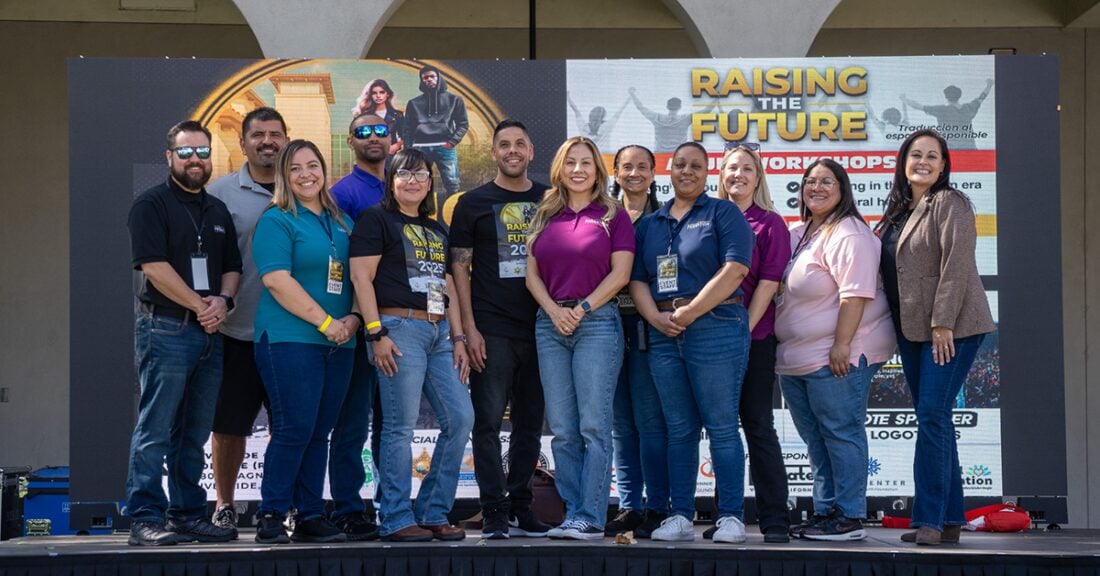
Riverside County probation officers help host a “Raising the Future” event offering skill-building workshops, live entertainment and motivational speakers. Photo courtesy of the Riverside County Probation Department.
The probation department in California’s Riverside County is redefining how public systems can support young people. With a $30 million community reinvestment plan, probation leaders are doing more than simply monitoring young people for their compliance with rules. They are investing in strategies that center youth development, local service providers and public safety.
This shift reflects a growing recognition that neighborhood organizations are often best equipped to understand and address the challenges facing local youth.
Moving Beyond Surveillance
Traditional juvenile probation has long centered on restrictions and monitoring that can persist for years. But under the leadership of Chief Probation Officer Christopher H. Wright, Riverside County is pursuing a new vision — one that embraces accountability through community-based programs and a system of care that prioritizes partnership and youth well-being.
When Wright assumed leadership of the probation department in 2023, it had millions in unused funds from California’s Juvenile Justice Crime Prevention Act (JJCPA). These funds were intended to support positive programming for youth under probation supervision and youth released from juvenile detention, among others. “Let’s not wait,” said Wright. “The community wants change, and they are asking to be a part of it. If we have to tap those reserves to give more to the community because that’s what works for youth, we’ll do it.”
Laying the Groundwork for Change
One of the first steps Wright and his team took was creating a space for shared decision-making. They invited community and county leaders to form a new advisory committee to the Juvenile Justice Coordinating Council, which oversees Riverside’s juvenile justice system and controls JJCPA spending.
The committee’s task: Develop a three-year plan to invest $30 million in community-based programs that support youth, reduce justice-system involvement, and promote well-being.
Ramon Ramos, executive director of The Exception, was appointed to represent community interests and chair the committee. He launched the CBO Alliance, a nonprofit that brings local organizations together to strengthen their collective voice and impact.
“The committee gave us a place to raise community concerns. As we worked together, we came to see that the probation department was serious about transformation,” Ramos said.
Elisa Judy, Riverside County’s chief deputy probation officer for juvenile field services, called the committee “a shift from top-down to side-by-side partnership — systems and communities working at the same level to meet shared goals.”
In March 2024, the committee presented a plan focused on prevention, diversion, reentry, and streamlined access to care. The plan set the stage for the county’s community reinvestment strategy.
National Insights, Local Action
To sharpen their vision, Riverside brought a team to Washington, D.C., in June 2024 to attend the Transforming Juvenile Probation Certificate Program. Hosted by Georgetown University’s Center for Youth Justice in partnership with the Annie E. Casey Foundation, the program supports jurisdictions in implementing more effective, youth-centered probation practices.
The experience helped Riverside refine its approach, particularly in how it structured its reinvestment strategy.
A New Model for Reinvestment
Later that summer, Riverside County released requests for proposals to fund:
- program evaluation by outside experts;
- supportive community services for young people and their families to assist with meeting their basic needs and creating positive, lasting community connections; and
- community-led diversion efforts.
Importantly, the county removed a controversial $100,000 cap on JJCPA funding for community-based organizations. The change opened the door for local groups to receive more substantial, sustainable support.
In 2025, the probation department began awarding funds:
- January: $555,000 for evaluation.
- July: $12 million over three years for supportive services at nine organizations and $8 million set aside for potential extensions.
- November: $10 million over five years for community-led diversion programs.
“We know that to best serve youth, probation must do our part and let the community do theirs,” said Riverside County’s Assistant Chief Probation Officer Natalie Rivera. “Probation should be a short time in a young person’s life. If we can provide a warm handoff to community partners who can support youth over time, they’ll have a better chance to succeed.”
Looking Ahead
Riverside County’s approach is already serving as a model for other jurisdictions. The results are early, but the collaboration is strong and the commitment is clear.
Chief Wright encourages others to explore similar partnerships. “Whatever the size of your county, young people can thrive if public systems and community work together. We are already seeing some of the magic here in Riverside — and we’re just getting started.”