



Federal Policy Changes Could Mean a Loss of Health Insurance for as Many as 3.4 Million Young Adults

Up to 3.4 million young adults could lose health insurance coverage by 2028 due to federal policy changes in Medicaid and the health insurance marketplace, according to two new reports by the Urban Institute. Many other young adults will have to pay significantly more for health insurance at a time when the cost of living continues to rise.
The Casey-funded briefs explain how recent federal policy changes to Medicaid and insurance marketplaces will affect people ages 19 to 24.
“Our society cannot afford to leave millions of young adults behind.”
“Starting out in adulthood is hard enough without worrying about losing your health coverage or facing huge premium spikes. Affordable health coverage isn’t a luxury; it is an essential bridge that allows young people to transition into adulthood, stay healthy and build secure futures,” said Kit Judge, associate director of policy reform and advocacy at Casey. “Our society cannot afford to leave millions of young adults behind.”
How Medicaid Changes Could Affect Health Coverage for Young Adults
The brief “Up to 2.3 Million Young Adults Ages 19 to 24 Could Lose Medicaid Under OBBBA’s Work Requirements and More-Frequent Redeterminations” outlines the federal changes to Medicaid. Beginning in 2027, in most states, enrollees in ACA Medicaid expansions must work, attend school or participate in other specified activities unless they qualify for an exemption. In addition, eligibility determinations will be required twice a year, rather than annually, a burdensome new requirement expected to lead to a loss of coverage for many young adults.
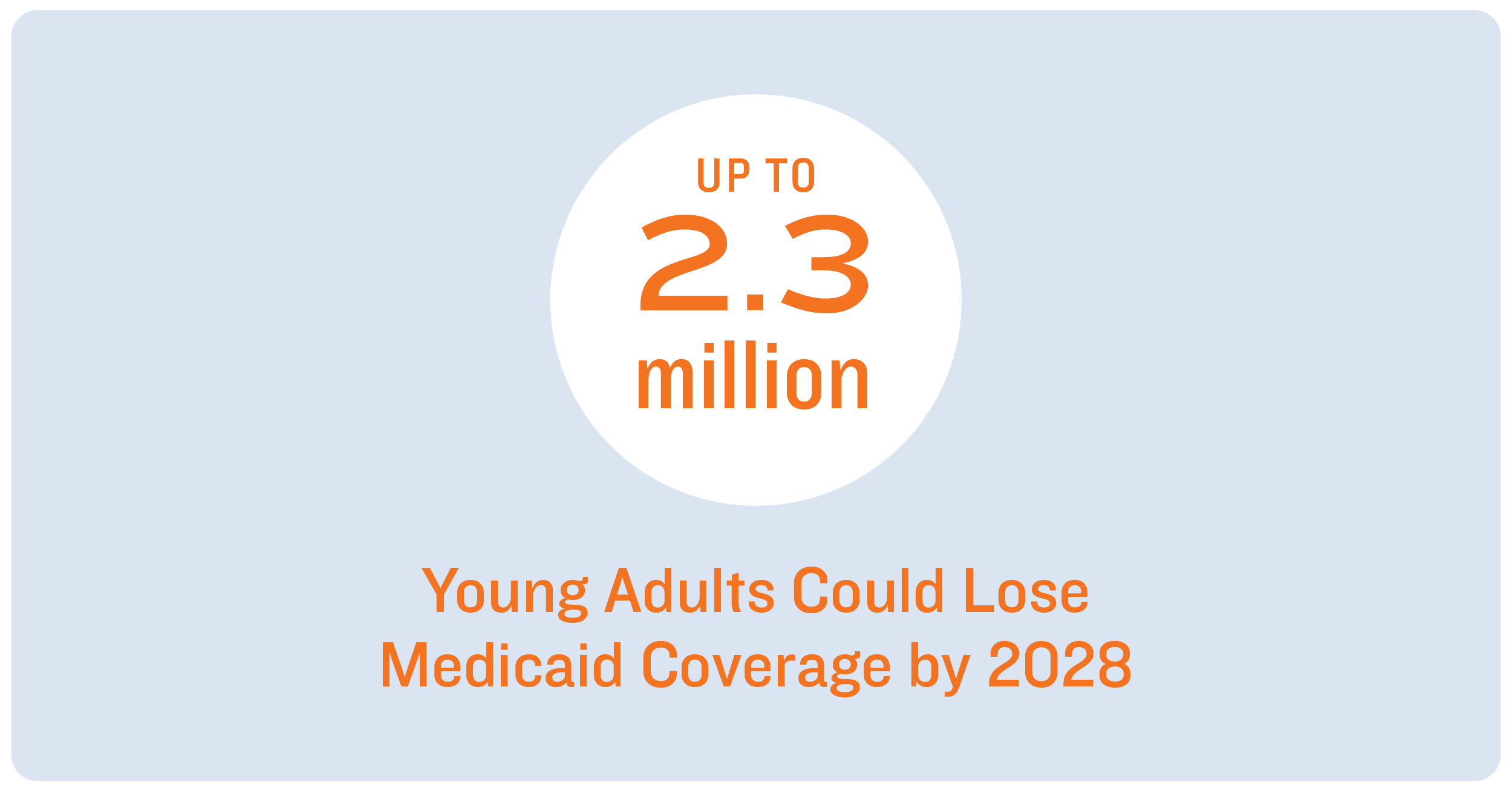
In all, the brief estimates these changes will mean up to 2.3 million young adults will lose their Medicaid coverage by 2028. The report highlights that the number of young adults losing coverage will be affected by state policy and implementation choices that help maintain coverage for people who meet the new eligibility criteria.
Kristin McGuire, president and CEO of Young Invincibles, said, “At a time when young adults are already navigating an affordability crisis, the drastic decline in healthcare enrollment that these reports project will occur under recent policy changes is deeply troubling.
“Losing health coverage adds uncertainty to an already stressful time in young peoples’ lives as they transition into adulthood and start their careers. The pandemic underscored how important affordable, reliable health coverage is to our individual and collective well-being. We should have taken those lessons as a guide and a call to expand health coverage and ensure more young people can get care when they need it. Instead, we’ve done just the opposite, which will leave millions of young adults without essential care.
“Healthcare is a human right, and young adults, just like all people, deserve access to affordable, comprehensive health coverage.”
What Young Adults Could Pay for Marketplace Coverage
According to “Loss of Enhanced Subsidies and OBBBA Could Cut Young Adults’ Subsidized Marketplace Coverage by More than Half,” the financial hit began in 2026 for young adults buying coverage through the ACA insurance exchanges. At that time, Congress did not renew enhanced federal premium tax credits that were launched during the COVID pandemic. Subsequently, Congress enacted new barriers to enrollment and restrictions on eligibility for some lawfully present immigrants that are likely to affect the number of people who have Marketplace coverage with the original premium tax credits.
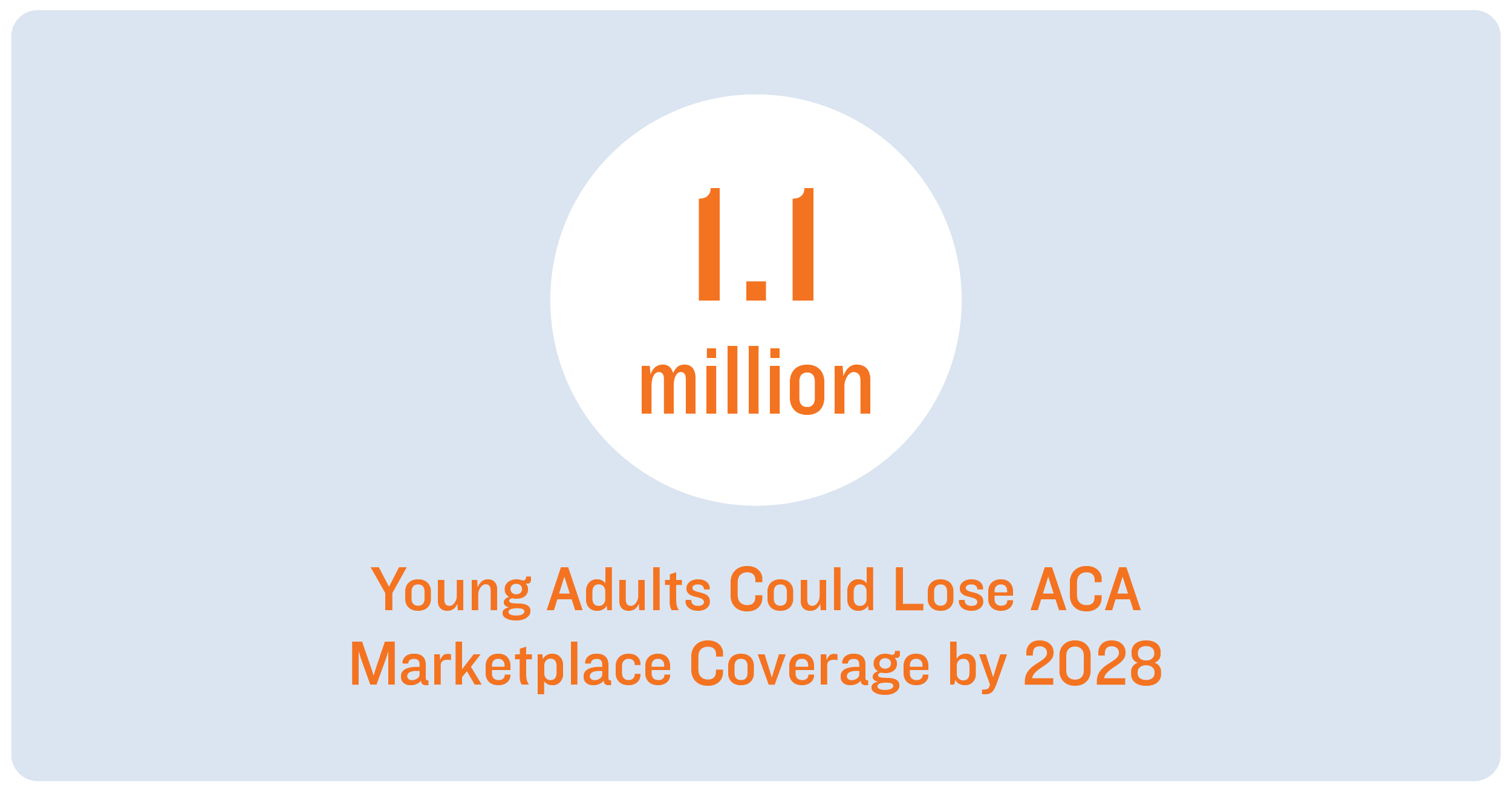
The policy changes taken together will result in as many as 1.1 million fewer young adults having subsidized coverage through the insurance exchanges in 2028.
Other young adults who opt to retain insurance coverage despite the loss of the enhanced subsidies will pay far more. The brief estimates:
- A young adult with an income below about $40,000 a year will pay, on average, about $63 a month for health insurance on the exchange instead of the $9 premium when the enhanced tax credits were in place.
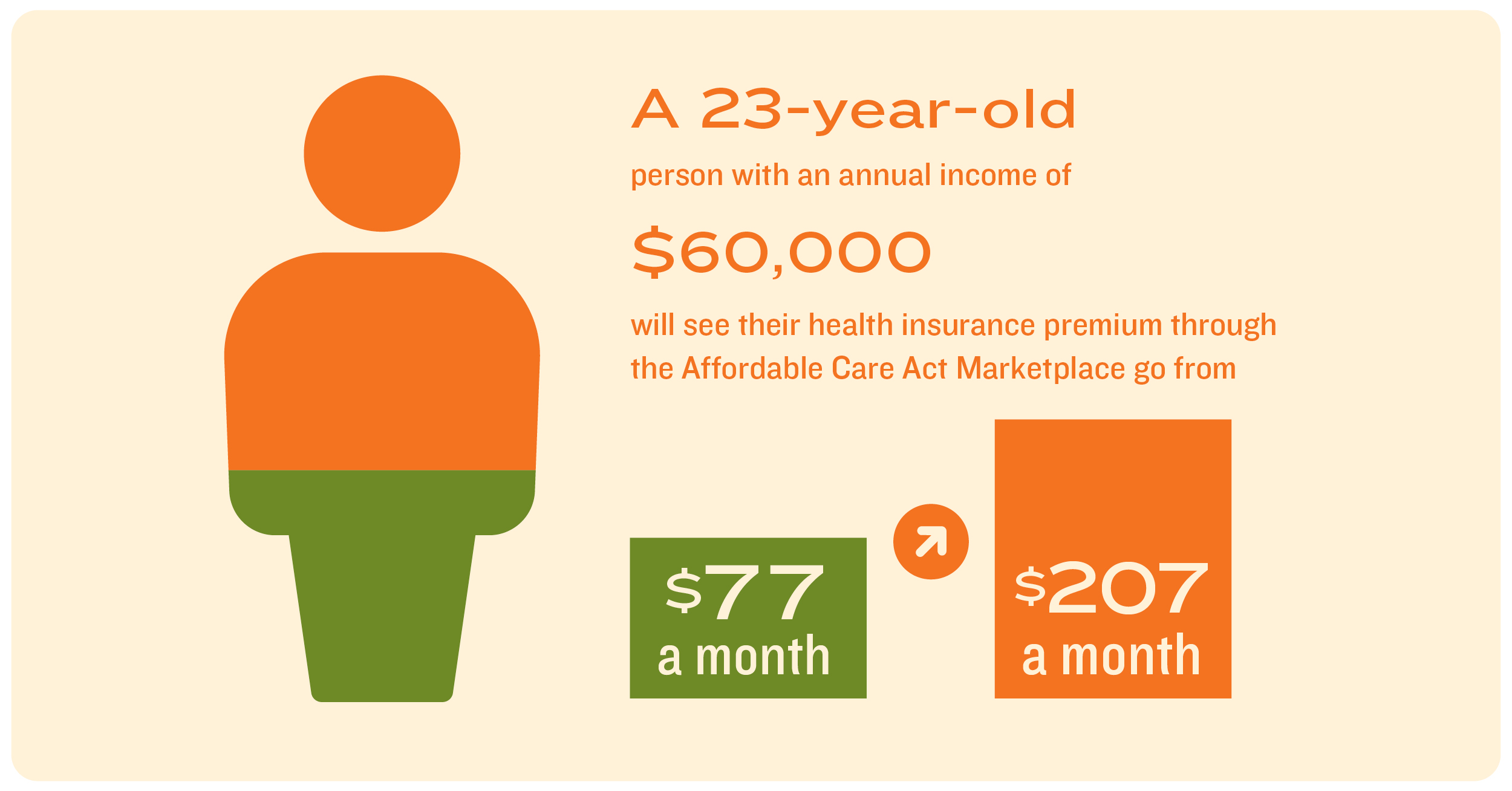
- Young people with incomes between roughly $40,000 and $64,000 would pay an average of $207 a month, up from $77 with enhanced subsidies.
The Urban Institute notes that young adults face challenges “learning to navigate the nation’s complex health insurance system” at the same time they are dealing with transitions such as leaving home, finishing school and starting careers. “The new work requirements and increased frequency of eligibility redeterminations are likely to increase [young adults’] need for clear guidance on navigating processes and hands-on assistance with reporting compliance activities and exemptions.” The brief recommends trusted organizations provide more help with enrollment and recertification.
States can act to help more people afford insurance purchased through the exchanges. Several states (California, Colorado, Maryland, Massachusetts, New Jersey, New Mexico, Vermont and Washington) already provide additional state subsidies. Others (Minnesota, New York and Oregon) and Washington, D.C., have established basic health programs that provide more affordable coverage for people with incomes of up to 200% of the federal poverty level.