


Michele Jacobs on Helping Young People Earn, Learn and Thrive in Atlanta
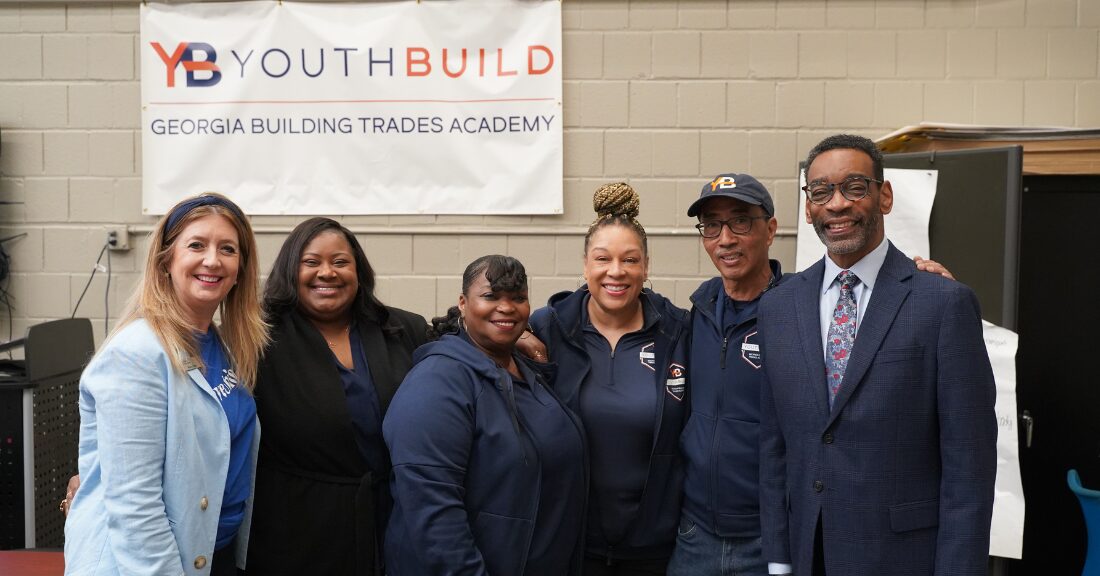
On the latest episode of CaseyCast, Foundation President and CEO Lisa Lawson talks with Michele Jacobs, associate vice president of College and Career Ready at United Way of Greater Atlanta, about how CareerReady ATL is reimagining pathways to work for young people.
CareerReady ATL is a youth apprenticeship program designed to support young people ages 16 to 24 who are furthest from opportunity — including those involved in foster care, the juvenile justice system or disconnected from school and work. Through partnerships with employers, schools and community organizations, the initiative combines paid, on-the-job learning with education and wraparound supports to help young people build careers.
Since 2022, more than 750 young people have enrolled in apprenticeships, earning an average of $18 per hour and gaining credentials that support long-term career mobility.
Key Themes From the Conversation
- Apprenticeships that combine earning and learning: CareerReady ATL allows young people to gain industry-recognized credentials while working in high-demand fields like health care and information technology — building skills and earning income at the same time.
- Centering youth voice in program design: Young people help shape the program through peer-led focus groups and youth consultants, ensuring the model reflects their real needs and experiences.
- Wraparound supports as a foundation for success: From housing and transportation to financial literacy and mental health support, CareerReady ATL addresses basic needs so young people can focus on learning and career growth.
- Mentorship and relationships matter: A relationship-centered approach helps employers serve as coaches and mentors, while peer ambassadors provide trusted support and guidance to participants.
- Preparing for a changing workforce: The initiative emphasizes human-centered skills like problem-solving, creativity and emotional intelligence, helping young people adapt to a labor market shaped by automation and AI.
Why Strengthening Career Pathways Matter
For communities like Atlanta, CareerReady ATL is helping address a dual challenge: employers struggling to find talent and young people struggling to access opportunity. By aligning workforce needs with skilled young people, the program is creating pathways to economic mobility while strengthening the local economy.
Young people are ready to work and eager to succeed, but they need access, support and opportunities to get started. Apprenticeships, combined with strong relationships and wraparound services, can provide that bridge to adulthood.
Learn More
- CareerReady ATL
- The Foundation’s Atlanta Civic Site
- Changing the Odds: Comprehensive Solutions for Atlanta’s Future
- What Are Youth Apprenticeships?
- Connect | Focus | Grow Training Curriculum
Listen On
Lisa Lawson: Welcome to CaseyCast, the podcast of the Annie E. Casey Foundation. I'm Lisa Lawson, the Foundation's president and CEO. On this show, we explore what it really takes to build a brighter future for children, youth, and families. Today's conversation is a special one for me, not just because of the work we're going to talk about, but because of where that work is happening. As many of you know, I'm from Atlanta. It's where I grew up and where I've seen how much opportunity can depend on your zip code. It's a city full of talent, ambition, and promise. But as we've shown in Casey's Changing the Odds reports, it's also a place where too many young people are navigating real barriers like housing instability, unmet mental health needs, and food insecurity, all while being asked to succeed in school and prepare for work. At the Annie E. Casey Foundation, we believe that young people can't thrive if they're constantly in survival mode. That belief is at the heart of an effort we call Thrive by 25, which is our commitment to making sure young people ages 14 to 24 have what they need to successfully make the transition to adulthood. As part of Thrive by 25, we're working with partners in several communities, including Atlanta, Baltimore, and Albuquerque to test, strengthen, and scale the best approaches to supporting young people, especially those facing the steepest barriers. One thing we've learned again and again is that education and career pathways only work when young people's basic needs are met and when their voices shape the solutions. The foundation is excited to be in partnership with organizations that are working in new and innovative ways to meet that challenge. That's why I'm so glad to be joined today by Michelle Jacobs, Associate Vice President of College and Career Initiatives for the United Way of Greater Atlanta and a key leader behind Career Ready ATL. Career Ready ATL has been a powerful force in reimagining how Atlanta prepares young people for work, not just by focusing on credentials, but surrounding them with the support they need to actually succeed. Michelle, it is so good to be with you. Welcome to CaseyCast.
Michele Jacobs: Thank you. So great to be with you as well.
Lisa Lawson: Wonderful. Well, let's start by talking a little bit about Career Ready ATL. What is it and how does it fit into the broader work of United Way?
Michele Jacobs: Yes, Career Ready ATL is a youth apprenticeship system focused on youth who are furthest from opportunity. This includes system-involved youth or other youth that may be disconnected from work and school. We're providing apprenticeships in high-demand industries such as healthcare, and information technology. Right now in Greater Atlanta, we have over 14,000 young people, 16 to 19, that are not in school and working, meaning they are not accessing the traditional pathways to thriving careers. United Way Greater Atlanta designed CareerReady ATL as a collaborative solution to open new pathways for these youth. CareerReady ATL provides opportunity for young people to thrive, to be put on a pathway to economic mobility. Our apprenticeship model is to helping young people not just dream about the possibilities, but experience their dreams in real time as they are learning and earning at the same time. At United Way, we visualize a region where all young people thrive by the time they're 25 and reach their fullest potential regardless of their race, their background, or their neighborhood. Our future is powered by youth. And we know that when they thrive, our whole region thrives.
Lisa Lawson: That is wonderful to hear. I want to ask you two follow-up questions. One, could you explain how apprenticeships work for those who might not be familiar with it? And you talked about a focus on system-involved youth. That's something we do here at the foundation. Could you talk about what systems these young people are involved in and why you think it's so important to focus on their pathways to opportunity?
Michele Jacobs: So let's start with the system-involved youth. System-involved youth could be young people that are in our foster care system or have recently aged out of the foster care system. We call these young people transition-age youth. It could also be a young person that has had connection to the juvenile justice system. We also really focus an emphasis on what's called opportunity youth. Those are usually 16 to 24-year-olds that are not working and not in school. And what we mean by that is that if you went to the school system, they're not showing up as an active student. And if you went to the Department of Labor, they're not showing up as an active employer. When we think about apprenticeships and the opportunities that we're providing, you heard me say earn and learn. Apprenticeship opportunities allow young people, 16 to 24, so you have to be of working age, to obtain a certification while they're also getting experience in that particular field. So let's use cybersecurity as an example. I would go to an Atlanta technical college to work on my certification. That could be on Tuesdays and Thursdays, and then Monday, Wednesdays, and Fridays, I could be Google, Microsoft, or even another small-size IT company where I am learning cybersecurity directly from my colleagues who I'm working with, and I'm actually earning a wage at the same time. So you're not waiting for the training to be completed before you get the job. You're doing both at the same time. So it's the earn and learn model.
Lisa Lawson: That's fantastic. You're, you're focusing on young people that we want to make sure are on track to be productive long term. So it's really preventing problems in the future, helping them get back on the pathway to opportunity. And the way you're doing that aligns with brain science is something I've been talking a lot about, that young people love to learn while doing. And that's exactly what apprenticeships do. And we know they love to make money. And so this sounds like the perfect way to help young people really achieve their goals, and especially those who might have had challenges along the way. So at Career Ready ATL, as it started to take shape, what were some of the early signals you got either from the young people themselves or from the partners you were working with that told you this needed to go beyond just credentials and job placement?
Michele Jacobs: So when we first implemented CareerReady ATL, we took time to talk to young people, and the young people told us that they needed time to understand career options and determine what options were best for them. So in our apprenticeship models, our partners ensure that there's time for career exploration, developing soft skills such as showing up on time before they start with credentials and job placement. Through our experiences, young people have expressed that they're not certain about their career pathway until they have time to have a deeper understanding about careers, especially in fields like IT, construction, and logistics, when there's so many different opportunities. As young people enter into careers and explore through apprenticeships, we know that we also had to be intentional about wraparound support. Because we knew from young people that I can't focus on the career choices or a job or even the credentials if I'm still concerned about basic needs that I have. So we're intentional that as they are being in the apprenticeship program, we also are providing them with housing supports, helping them build financial literacy skills, also helping them to deepen their understanding of how to manage households, such as having an understanding of wants versus needs and paying bills. Young people have really shared that they're concerned about their basic needs. I think Gen Z is a population where we've heard that often, and we wanted to ensure that we increase their chances of success by eliminating that barrier. So at its core, it's about access and opportunity, not just credentials and a job. One of our apprentices, Leah, always saw herself wanting to be in an arts-related field even as a high schooler, but she didn't think college was a part of her journey. So at first she faced major setbacks, and she has shared with us that a lot of young people are ready for the workforce. We just don't know how to get in the door, and we come with skills. Of course, we know we're going to need additional training, but workforce readiness is there. The excitement to work is there. We just need the door to be open. So for Career Ready ATL, we're going beyond credentials and job placements because we're doing access opportunity not only through the career pathways, but also making sure that we're taking care of your basic needs through our wraparound supports.
Lisa Lawson: I love that. I often describe adolescence, which is the age range you're talking about, as the bridge between childhood and adulthood. And so often, particularly in the employment space, we talk about that journey like it's a tightrope, like you've got to do exactly this thing and major in exactly this thing or go to college and don't make it as wide a bridge as we can so that young people don't feel like they're going to fall off. We make it sound like there's only one way to do things. So I'm so thrilled to hear you are widening the bridge for young people. You're helping them see there are lots of different pathways to get where I might want to go and supporting them to have the equipment they need as they cross, you know, that they've got safe passage with a safe place to live, with food, with behavioral health supports or other things they might need. So in our field, we often talk about wraparound supports as a sort of shorthand for that, but you described beautifully that it really is wrapping our arms around those young people and giving them the help and support that they need in the moment. So thank you for helping us understand how you've approached this work. Did you have any shifts in mindset or design that you had to do as you were crafting this program? So often people start with the credentials in mind, did you have to change how you thought about what you were building for young people?
Michele Jacobs: Yes, of course we did. For United Way, we recognized at the onset of CareerReady ATL that we needed to shift the mindsets of the young people as well as the employers. So we're taking a parallel approach. We are leveraging National Mentors workplace curriculum called Connect, Grow, and Focus. It's a relationship-centered approach that focuses on trust and mutual respect between the mentor being the employer and the mentee being the apprentice to build social capital, but especially for historically excluded young people. It provides potential for benefits for our apprentices to increase exposure to the workplace. It's helping them with employment opportunities, employability, workplace retention, and access to college and career training programs. At the same time, for the employers, we're helping them to gain a clear understanding of their role as a connector, as an advocate, a job trainer, a coach, that job supervisor, and also a friend to provide that social and emotional support inside the workplace. As we implemented mentoring as a core component of CareerReady, we also had to center youth voice and the development and ongoing management of CareerReady ATL to ensure that the system or this initiative reflected the needs and aspirations of young people. We included 6 youth consultants who have helped us to remain grounded in our why. Ensuring that young people are most impacted by integrating like ongoing decision-making and governance of CareerReady ATL. They're making sure that we're incorporating the lived experience that we hear young people talk about on the front end, not on the back end. They conduct youth-led focus groups, which are a peer-to-peer conversation with these apprentices. So we're able to hear what the young people are feeling at the ground. You know, you have these partners that are involved, the partners are going to tell you one thing through their reporting structure, but we get the real story when there's a peer-to-peer conversation with these young people. We knew that it was critical to actively engage young people at multiple levels as we thought about the shifts that we needed to make in the mindset. So active apprentices have that peer support. It moved us from just a typical youth development program to a career development opportunity that has long-term success for young people as well as the companies that are hiring them. Our youth engagement is top tier. We're helping young people to build confidence. They're developing their career pathway way based off their choices. And we're also building a foundation for a strong talent pipeline that will support Georgia's growing economy as well. So definitely aligning what the young people need and what the employers need and shifting the mindset overall with our parallel approach.
Lisa Lawson: I mean, there was a lot in that answer. When I think about what you said about elevating the skills of not just the young person, but also the adults and supervisors who are around them. I tell you, as I've been going around the country talking about Gen Z, you hear lots of feedback from employers about how to manage Gen Z in the workplace. And I've often talked about something called intergenerational agility. It's not just about how young people adapt to a static workplace, but how we all evolve to work together. And so that program you were talking about, Connect Grow Focus, sounds like just the perfect tool. I'm sure listeners are going to want a link to that when we post the show notes because it's exactly the kind of thoughtful engagement we've got to normalize in the workplace. How do we help folks know what it means to really mentor and support young people? And then everything you said about engaging young people in the design process is fantastic. You know, we often try to serve young people, but we don't think about how to engage young people in thoughtful ways. And it does make the programming stronger. And for you'd be getting that 360 feedback. It helps improve your program design. So kudos to you for being so thoughtful about how you're doing that. You've talked a lot about sort of the way you collaborate with young people in this work, but I imagine you have many other collaborators at the table, including sort of the employers and the schools that you're working with. Talk about how you have brought all of these partners together, especially when they don't always, work together or work in sync. What's that been like?
Michele Jacobs: Yes. So for Career Ready ATL, we begin assessing the needs of employers. One of our employer champions is Arden's Garden Schools. We're working with Fulton County Schools and Clayton County Schools. And then of course, we have service providers and community organizations that we kind of looked at a landscape analysis to get a better understanding of what the needs were on the ground. Right. And to start that collaboration process. We're collaborating with employers to really understand their talent gaps and helping them to develop job descriptions that actually meet their needs, but ensuring that young people are ready for those roles. Our service providers and community organizations are a great value add for CareerReady ATL. They're implementing the apprenticeship model, but they're also participating in our community of practice where we're bringing all of those partners together to really provide capacity building for their programming, right? A lot of it is around how they enhance their wraparound support. How they increase their apprentice retention. Some of the capacity building efforts that we're providing are trauma-informed care, mentoring, like I previously mentioned, but we're also incorporating youth power building strategies to really help our providers and organizations to see the strength in their organization, but to also help them to think about how they're solving local issues through apprenticeship programs, but also the social change that is happening as we're working alongside young young people. So Career Ready is providing an opportunity for partners like Strive Atlanta, the Ensoro Education Foundation, Cobb Works are a lot of our partners who are coming together to really learn from each other and are really looking to see how they can adapt their apprenticeship programs for what we're hearing from young people and to align that. So there's lots of collaboration on the nonprofit level, on the system level, and then also we're thinking about about, you know, the system-involved youth, those systems that they're connected with. So all of these pieces are orbiting around each other is the way I like to describe them, but we're not saying in which order that they need to orbit, in which way they need to move.
Lisa Lawson: What I like most about that is that it doesn't just make things effective for the partners, it helps young people. They aren't at an age where they can necessarily navigate all of these pieces independently, and so it really sounds like you are sort of coordinating for them the ways of systems that orbit around them to, to make it easier for them. How has that approach translated into the pathways that Career ATL is, is building? What does it look like in practice when the wraparound supports are embedded? You've got these partners in sync.
Michele Jacobs: Yeah, so like I stated earlier, United Way has been intentional about our career-ready model including wraparound support. So we're providing high-quality apprenticeship and wraparound support services are a core part of that. What we heard from young people is, I cannot focus on classroom learning and on-the-job training if I still need support with my immediate needs, such as food, housing, and transportation. So we take a multi-layered approach with our wraparound supports where we really are helping employers to be able to recognize what the needs are of these young people that are in the apprenticeship programs. We also have incorporated youth ambassadors as a core component to career Ready ATL. What that looks like is a young person that has lived experience, usually between the ages of 18 to 24, they are connected to 5 apprentices. And that is again a peer-to-peer conversation for them to be able to understand what the immediate needs are because there's some things that young people are not going to share with the employers. There's some things that they're not going to share with the case managers or the nonprofit partners. So we are training these youth ambassadors in mental health first aid. They're getting trauma-informed support. Trauma 101, Brain 101, thanks to a partnership with Georgia State University. And so they're learning how to recognize the things in the apprentices that they're supporting. So we're able to address those mental health challenges on the front end versus allowing them to fester when we know they're a lot harder to address later.
Lisa Lawson: And what a great leadership opportunity for those young people. I love that peer-to-peer mentoring. We know during this age young people are deepening their relationships with their peers. That matters so much to them and they, do like the advice of others who are close to their age and have navigated some of the same issues. So how brilliant of you all to really leverage that and bake it into your programs. I haven't heard that before in an apprenticeship program, so that's, that's really great. Before we turn to results, I want to hear what employers are saying. You know, when I've talked to other employers who have apprentices, they are always shocked at how curious the young people are. How diligent they are, that it sort of blows all the stereotypes they have apart. What do you hear from the employers in Atlanta who are participating in this program?
Michele Jacobs: Exactly. As we think about that mindset shift that we've had with employers, we, we definitely still have that fear of working with 16 and 17-year-olds. Like, if you're under 18, it's like we don't really know if we're ready for that, right? But it's United Way's role as a— through Career Ready ATL to get that readiness for those employers, right? So that they are more comfortable working with 16 and 17-year-olds. I'll tell the story of one of our apprentices, Josiah. This is the perfect example of what employers are thinking. Josiah is a high school student who goes to Promise Career Institute, and he has an apprenticeship at Arden's Garden. In Josiah's first week, he saved the company $30,000 just because of his innovative way of thinking. Right. And so Arden's Garden then became a champion thinking like, we need to have more apprentices that are involved. They are in the industry of logistics. And so Josiah has a role that's more of a administrative logistics, right? And the cost saving was really around— they produce a healthy juice, right? So it was a cost savings in terms of how they're thinking about producing juices in the future. But he was able to look at the things that they've been thinking about for months and say, well, have we thought about this and considered this vendor? And so I think that cost savings to that employer definitely lets them know apprentices is definitely the way to go. I think on another example with like our IT apprenticeships, our IT apprenticeship really focuses on young people that have been in the foster care system, they have aged out. And I think a lot of things that we heard from them as the young people were rotating and learning about the different IT areas is once it was time for that young person to transition— so let's say that they were in the project management area and it was time for them to transition to cybersecurity— the project management team didn't want to let the apprentice move on to the next, uh, area, right? So I think what we're hearing from employers are they are surprised how great The apprenticeship model is working. We still have a long way to go. There are models, you know, like Germany, Switzerland models where it's an— it's a clear understanding with the workforce development apprenticeships are a part of their core and we're just not there in the US. But I think we're making great progress with CareerReady to really help employers to kind of see the differences. I think the other thing that they're seeing is like it is very time-consuming and costly to post a position and then have someone that only stays for 6 months.
Lisa Lawson: Months, right?
Michele Jacobs: When they invest into apprentices, you know, statistics says that that apprentice is going to stay for 3 to 5 years versus a person that you brought in for 6 months. And you've spent more money bringing in that person that only stayed for 6 months versus the apprentice because of course they're earning and learning. So as they're moving along, they're increasing their hourly wage, which is a cost savings to employers. But I think it takes some time for employers to kind of understand and get there. So I think they're still surprised about how well this is working.
Lisa Lawson: That's great. That is a wonderful story. Josiah needs to be on a poster somewhere. That is, uh, that is fantastic. Well, let's turn to talk about results. How do you know this is working? What kind of outcomes are you seeing that tell you young people aren't just participating but really progressing and succeeding?
Michele Jacobs: So since 2022, we've enrolled over 750 young people into high-quality apprenticeship programs. We've invested over $30,000 in wraparound support from grocery gift cards to rental support that are helping the young people to complete their apprenticeship program. I would say definitely amazing results where the average wage is about $18 an hour across the 6 industries that we're really focused on right now. CareerReady is making a lot of progress in the young people's lives. So I feel like we have great results that are like your numerical numbers, like, you know, your quantitative information, but the qualitative data and the stories that we are getting from young people is really showing a difference. We have one apprentice that just purchased her first home. That was one of her goals as a part of being in the apprenticeship program. We have others who have really been very grateful with the fact that we provided them— so a year ago we provided an apprentice housing where he had a roommate. Now he's almost tripled his salary that he was making and he's living on his own all within a year period of time. So I think we're seeing a lot of short-term wins plans with the young people, that they have the housing stability. We're making sure that the children are enrolled in childcare centers and making sure that's affordable for our young people, which is a hard thing to do because we're basically offsetting the cost because childcare is really expensive, right? And so we're really offsetting the cost. We're enrolling them into programs where they're getting certifications and degrees but at no cost to them, right? Because we're ensuring that they're clear on completing the FAFSA application, which provides resource resources for them to go to school. So I think as we are hearing the stories from these young people and the successes and the wins and the fact that they are then sharing that with their peers, it becomes a word-of-mouth process for CareerReady ATL and why others should be a part of an apprenticeship program.
Lisa Lawson: I'm glad you mentioned both the quality and the quantity metrics because you say 750 people, but that's 750 lives and the lives around them, their children's lives, their families' lives that impacted because of the opportunity that these young people have. And so it just helps you realize the sort of ripples beyond that. And you really can't quantify hope, you know, to give a young person hope that they have a path forward, that there are people who care about them, that they have competence and capability. Like, that is a priceless gift that you are giving young people. So I'm thrilled to hear that. Any, any sense of how many of them them really find their future in their apprenticeships, that they're staying with these companies and, and finding long-term, longer-term success?
Michele Jacobs: Yes. So we know that we're increasing the number of industry-recognized credentials. That is a clear indicator of success. And the industry-recognized credentials are not just if you reside in Georgia, but if they decide to move to other states and continue their careers. We know that we're providing a pathway to economic mobility because It's quality education, it's stable housing, workforce development that helps them, enables them to have that upward mobility. We've talked about the wraparound supports that we're providing to the young people, and it's very clear young people have expressed, definitely since the pandemic, that there's an increase in their mental health challenges. There's 1 in 5 young people that have a mental health illness. 42% Are reporting feelings of sadness and hopelessness. So we really are are long-term helping with that as we're thinking about the wraparound supports and the youth ambassadors being in the role. We also know that long-term, the 750 that we have enrolled into an apprenticeship program, we know that on average, like, 40 to 60% of them are staying within that career path, and they also are continuing to move along that career path, right? So I got into the apprenticeship program, they're moving into their permanent positions, but they are staying within the permanent positions. We are tracking that like about 90 days. We do have some partners that are trying to figure out how they track for an entire year, but that's still something that we're learning and growing in the career-ready space. But we know we're making long-term impact because we're putting young people on a pathway for success that can't be taken away from them.
Lisa Lawson: That's fantastic. Well, the work has to also take into account the broader labor market and the external forces shaping it, and we are hearing a lot of conversation now about how the job market is changing for young people, concerns about automation and the impact of artificial intelligence. You've talked about being focused in particular industries. Maybe talk, talk about the way you're thinking about the changing labor market and where you're trying to help young people position themselves.
Michele Jacobs: Yeah, so our current approach as we think about the labor market with AI is preparing young people to thrive by encouraging them to focus on the skills that complement AI AI versus compete with it. We're asking our partners to help young people to learn to work alongside the AI tools, which we know are crucial. We are really helping young people to focus on the human-centric skills, so that critical thinking, the problem-solving, creativity, their emotional intelligence— we know that these are highly valued skills that young people need to understand, like digital literacy. They need early exposure to AI concepts in order for them to continue thrive in these different career paths. As we know, the labor market is shifting, but we also are helping young people to adapt to this new landscape. We're helping them to recognize that that shift is happening, and we recognize that we need to place a higher value on these industry-recognized credentials and that apprenticeships and job training is going to be the direction over traditional 4-year degrees. And so we're helping our young people to understand that and really recognize also the need for mentorship. How we talked about that national mentor model, we probably going to have to incorporate some AI coaching and support because we know a lot of these careers aren't necessarily going to go away, but we have to prepare our young people for the shift that's actually happening. So like I said, it's more of think about how you can complement AI versus, you know, competing with it is what we're focused on right now.
Lisa Lawson: Right. And teaching them to learn while working. I mean, I think as the workforce needs change, we're all going to have to learn how to incorporate some education and training while we are working. And so you've already got them in that pathway of knowing, hey, I have to continually sort of retool myself while I'm also working. So you've given them a repeatable skill that they can use over and over in their lives. And I love that you're focusing on the human-centric skills and how to work alongside AI and not compete. Meet with AI that we hear that over and over again. And a lot of concern from employers that we continue to give young people opportunities to get into the workplace and build those skills because you're going to need them as a higher-level manager. And then the last thing I'll say is, you know, we are worried about the ways that AI will impact entry-level work, and apprenticeships are such a fantastic on-ramp for young people. So you're, you're really building that, that bridge right into a long-term career for young people. That's fabulous. Well, you know, I, I, uh, care lots about Atlanta. It's the place where I grew up and spent the first half of my career there. Tell me what it means to you to be doing this work in Atlanta, a place with so much growth and opportunity. Why do you think Career Ready ATL matters to the ATL?
Michele Jacobs: Yeah, so the Metro Atlanta is facing a dual crisis. Employers across industries can't find enough talent to fill their workforce needs. But then we have thousands of young people that are disconnected from education and career pathways. This dual crisis perpetuates another issue in Atlanta, which is low economic mobility. We are really looking at the fact that if you're born in poverty in Atlanta, the odds are stacked against you in terms of escaping poverty by adulthood. And at United Way, we're committed to changing those We think about it, Metro Atlanta is home to several Fortune 500 companies that are continuing to hire, but outside of Atlanta, they're seeking other states to actually fill that. And we want to be in a place where Atlanta fills the shortages with talent that actually is local talent, not talent that is outside of the city. We have young people that are pleading for immediate solutions to help them navigate this complex complex post-secondary world. And so there's lots of limited opportunities. And so we're trying to ensure that our young people have access to, like, real-world workforce preparation. Also, as we think about the youth-centered work, we remain competitive in Atlanta and trying to figure out how to stay a major player on, like, a global stage, right? We really are trying to think about how we shift the sights of our young people to help them to really understand that yes, just because you are born in poverty doesn't mean you have to stay there, right? There are other opportunities in there. There are other ways for us to do this. And as we think about CareerReady ATL, it definitely is the right model that can actually help these employers to obtain local talent. It definitely is the right model to help these young people to be prepared for these different career pathways. And it's also helping us to make great system change efforts. We know that if we don't do anything, the cost of the economic impact is about $200,000 per young person. So if we didn't have Career Ready and we do nothing and we continue to allow our employers to hire talent that's not local, that is going to be the economic impact to Atlanta. And so we know the time is now for the Atlanta region to really identify and implement immediate solutions that's going to be able to help us to leverage all the great assets that we have, right? In order to make sure that we're sustaining progress. Atlanta is home and it is a place that's important to me as we continue to try to figure out how we address all these challenges that we're seeing in the region.
Lisa Lawson: That's great. You make such a good point. Atlanta is such a thriving, beautiful city, and you want to make sure the young people who live there have the opportunity to take advantage and share in the success of the city and help power that that growth in the city. So you are definitely trying to meet the moment for young people. Well, before we close, I want to ask you what gives you hope? What are your dreams for Career Ready ATL? Where are you headed?
Michele Jacobs: So I would say the dream would be that we continue to enroll more young people into apprenticeship programs. We're hoping that we continue to shift the mindset of employers, letting them know that apprenticeships is the right direction to go in. To fill those talent gaps. I think the one thing that gives me hope is as I think about Josiah, I think about Dikerys, I think about Leah and all of the different experiences that they have been able to share, whether it's I'm now— I have stable housing by you putting me in this apprenticeship. It helped to double or triple the hourly wage or the salary that I'm making. And so I think I'm hopeful because I can see the progress progress that young people are making within this region, and I know there's just so much more that we can continue to do.
Lisa Lawson: That is wonderful. Well, I'm going to ask you a last question. If you could speak directly to other civic leaders, employers, or funders who want to strengthen career pathways for young people, what's one lesson from this work you'd want them to take to heart?
Michele Jacobs: Yes, I would say join us at United Way as we continue to improve economic mobility for our region by investing in quality work that creates a sustainable youth workforce through CareerReady ATL. It's about access and opportunity for all young people across the region through apprenticeship programs. So join us in continuing to do this great work so we can continue to improve the economic mobility for our city.
Lisa Lawson: Michelle, thank you. Thank you for this conversation, and more than that, thank you for the leadership that you are bringing to Atlanta every day.
Michele Jacobs: I appreciate it. Thank you so much, Lisa, for your time today.
Lisa Lawson: You know, what you've described is exactly the kind of work we're trying to support through Thrive by 25. Listening to young people, meeting their basic needs, and building pathways that make success possible. And thanks to you, all of our listeners, for joining us on CaseyCast. If you'd like to dig deeper, you can find show notes at aecf.org/podcast. Until next time, I wish all of America's kids and all of you a brighter future.