


Six Sites Selected for 2026 Juvenile Probation Certificate Program
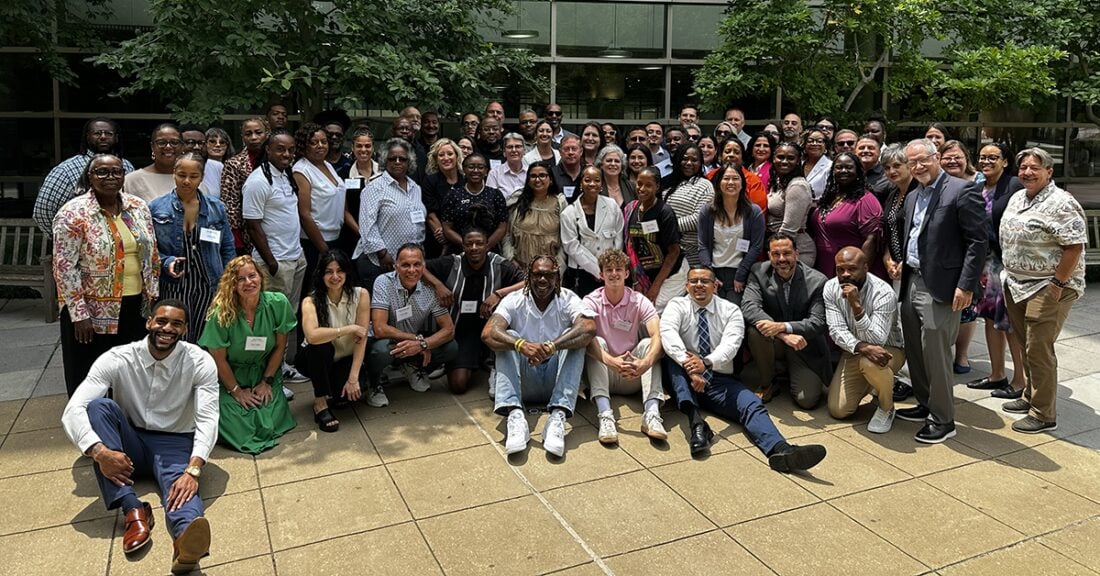
In June 2026, teams from six sites gathered in Washington, D.C. to learn about redesigning juvenile probation culture and practice as part of the Transforming Juvenile Probation Certificate Program.
The week-long certificate program, offered by The Center for Youth Justice at Georgetown University McCourt School of Public Policy with support from the Annie E. Casey Foundation, aids local jurisdictions in adopting a safer, youth-centered approach to juvenile probation. The program offers intensive instruction, discussion and planning support to selected jurisdictions that are ready to fundamentally redesign probation into a targeted, development-focused intervention that promotes young people’s personal growth and long-term success.
The six jurisdictions are:
- Augusta, Georgia
- Hinds County, Mississippi
- Memphis and Shelby County, Tennessee
- Metro Nashville and Davidson County, Tennessee
- Sacramento County, California
- Santa Cruz County, California
“This is an opportunity for jurisdictions to fully shift the role of probation away from surveillance and compliance and toward promoting personal growth, positive behavior change and long-term success for youth,” said Steve Bishop, associate director of Probation and System Transformation in the Foundation’s Juvenile Justice Strategy Group.
Jamal Rowe, Sacramento’s Chief Probation Officer and one of the participants, is receptive to that kind of transformation. “We have a responsibility to examine our approach and be willing to change,” he said. “That shift challenges us to move beyond simply responding to behavior and instead help young people identify pathways to success and achieve meaningful goals.”
Practitioners, researchers, policymakers and community representatives presented on an array of topics, including:
- incorporating practices for fairness and opportunity for all;
- youth, family and community partnership and empowerment;
- diversion as an off-ramp from the formal justice system;
- decision making about the length and intensity of probation terms;
- roles of probation officers; and
- leading transformational change.
Each team, capped at ten members, was required to have a chief probation officer, judge and prosecutor on its roster. During the application process, sites were also asked to demonstrate:
- a commitment to comprehensive probation transformation;
- a history of effective implementation of juvenile justice reforms;
- a desire to implement innovative practices and be a national leader in transforming youth justice;
- a history of successful collaboration among agencies, public systems and community stakeholders; and
- the organizational and data capacity to support probation transformation.
The program also requires each participating team to include a community-based organization leader and a youth representative. By bringing these voices to the planning table alongside traditional decision-makers, teams ensure that system transformation is driven by authentic partnerships and the guiding principle of “nothing about us without us.” These community and youth leaders are there to help shape local goals and strategies.
Over the course of the program, Georgetown and Casey will provide each team with technical assistance — virtually and locally — as they develop a capstone project that identifies a clear action for transforming juvenile probation in their jurisdiction. Once the project is approved, participants will earn an executive certificate from Georgetown University and join CYJ’s network of more than 2,100 Fellows.
The team from Metro Nashville and Davidson County in Tennessee is planning a capstone project inspired by their youth representative, Cameron Carver. It’s based on his own experience as a teenager on probation. Café Momentum provided him and other young people with system involvement with work readiness training for restaurants. Now a chef at age 22, Carver considers workforce development to be “what saved [his] life.” The team’s idea is to offer job readiness programming to young people in detention so “they are ready and focused with ideas of what they could do next to provide for their families,” according to Carver.