This year’s Annual Results Report comes at a time when families and communities across the country are navigating tremendous stress and uncertainty. The cost of everyday essentials — from housing, child care, food and health care — continues to rise. Public resources are shifting. Trusted safety nets are under strain. And the organizations that young people and families count on are being asked to do more, often with less.
For immigrant families in particular, life is even more uncertain. Changing policies, fears of family separation and confusion about who qualifies for services have added new burdens that threaten children’s well-being and disrupt daily life. These challenges are real, and they are taking a toll on families, communities and the people who work every day to support them.
And yet, amid all of this, our partners continue to push forward, guided by data and grounded in evidence. The progress you’ll read about in this report is proof of what’s possible when leaders refuse to accept the status quo. You’ll see mature efforts making a difference across the nation for many children and families, and promising programs beginning to demonstrate progress on a local scale. All of this work reflects the courage and determination of people who saw that better outcomes for kids were within reach and had the vision to try something different. They know — like we at the Annie E. Casey Foundation do — that when children thrive, our nation does too. That is dynamic resilience. And it’s exactly what this moment calls for.
Making Progress to Keep Young People Safe, Connected and Ready to Work
In 2025, the Foundation invested in nearly 1,000 organizations across all 50 states, the District of Columbia, Puerto Rico and the U.S. Virgin Islands. These grantees didn’t just respond to changing conditions; they improved how systems work, sharpened their strategies and stayed rooted in the realities young people and families are facing. And their efforts led to real, measurable change.
For example, in 2025:
Despite steep federal funding cuts to community safety programs, the number of trained violence interrupters grew by 93% in Casey sites between 2021 and 2025, contributing to homicide reductions of 23% in Atlanta, 34% in Baltimore, 17% in Baton Rouge, 43% in Jackson and 8% in Milwaukee.
More employers embraced innovative ways to give young people experience in promising careers. The number of partners supporting youth apprenticeship through the Partnership to Advance Youth Apprenticeship grew by 74% since 2021 to include 764 businesses and institutions, strengthening pathways to promising careers.
The number of children and youth initially placed with relatives or close family friends when they entered the child welfare system increased by 145% across South Carolina and Maryland, where the Foundation has been working since 2021 and 2022, respectively. And through the Jim Casey Youth Opportunities Initiative’s Opportunity Passport® program, 400 young people aging out of foster care saved and matched dollars. Since the program began in 2003, it has helped young people build approximately $32 million in combined savings and matching funds.
Thirty jurisdictions have adopted the Foundation’s approach to probation transformation, and among the 17 sites providing complete data through 2024, out-of-home placements were down 41% since they began working with Casey. Across 73 sites participating in the Juvenile Detention Alternatives Initiative®, detention admissions fell 17% from 2020 through 2025.
These results show how thoughtful policy, strong local leadership and meaningful youth engagement can reshape outcomes for families.
Supporting the Field
This progress wouldn’t be possible without our grantees and partners on the ground. And at a time when so many organizations were navigating shifting resources, rising demand and real uncertainty, it was important for the Foundation to help sustain their work. Our investments concentrated on several key areas:
Data: We helped sustain national organizations that collect and analyze data on children and families, so communities, advocates and policymakers could keep relying on trusted information.
Juvenile justice: We supported national partners that provide leadership, training and coordination, helping protect progress on reform and prevention even as funding fell away.
Community safety: We invested in local efforts to prevent violence and strengthen the case for lasting public support.
We also helped grantees across our strategies plan for sustainability or transition; joined pooled funds to support organizations in key cities and Casey hometowns; and provided bridge funding — including forgivable loans — to help child care centers and other critical services weather delays in expected funding.
Telling the Story: How Connected Strategies Help Young People Thrive
As we’ve done this work, one thing has become even clearer: Data are an essential tool for understanding what’s needed and what works, but stories are what truly compel people to act.
As I shared Thrive, my book about adolescence and opportunity, with audiences across the country during the past year, I saw again and again how deeply the science and the journey of adolescent development resonated when it was connected to real lives. When adults heard what young people need to grow and thrive, they thought about the kids and teens in their own lives. They often came to a larger realization: The strength of our communities and the future of our country depend on how well we support all young people, not just the ones in our own families. Talking not only about the research but also about the young people and their real lives spurred that recognition.
That’s why this year’s results report includes not only numbers about progress, but also four videos that bring to life how our grantees’ work is changing young people’s paths. As you take in both, you’ll see that while our investments concentrate on five key strategies, real progress happens when they come together — just as multiple factors shape a young person’s life.
Across the country, the investments look different in every community: young people saving for their future in Indiana, learning to be emergency responders in California, growing and harvesting food for their neighborhoods in New Mexico, or reconnecting to school and making it to graduation in Baltimore. But the throughline is the same: With the right relationships and resources, every child can have a bright future. As we approach the nation’s 250th anniversary, it’s worth remembering that the founding ideals of this country — life, liberty and the pursuit of happiness — were built on that promise.
Thank you to the organizations, leaders, researchers and young people whose dedication, even in the face of headwinds, continues to drive this work. And thank you to our staff and trustees for your steady guidance and partnership, which help keep our efforts both bold and grounded. Together, we are helping create the conditions every child, young person and family needs to truly thrive.
What Guides Us
Across its investments, the Casey Foundation holds a set of core principles that guide how we approach our work and collaborate with others. These principles shape our organizational culture and define how we strive to create meaningful and lasting change.
Using Data to Drive Decisions
Data provide valuable insights that inform better decision-making. The Foundation supports strong public data collection and encourages the use of detailed data to understand challenges and identify solutions that benefit all children.
Keeping a Long-Term Perspective
Many of the challenges facing children and families require sustained effort. The Foundation is committed to addressing complex issues with a long-term vision, recognizing that meaningful change takes time.
Encouraging Innovation
Casey invests in research, new solutions and system improvements that help children, young people, families and communities thrive. Not every approach will succeed, but testing and learning from innovation are essential to strengthening opportunities for future generations.
Expanding Opportunity for All
Casey is dedicated to improving the well-being of all children in the United States by expanding access to opportunity. We recognize that different groups of children and youth face diverse challenges, and our work seeks to remove obstacles and ensure that all have a fair chance at success.
Building Partnerships
Lasting change requires broad collaboration. Casey works across communities, political perspectives and sectors to bring people together in pursuit of effective solutions. As part of this work, we recognize the importance of partnering with the young people and families at the center of our investments, ensuring they have a voice in decisions that affect their lives.
Scaling What Works
The Foundation is committed to identifying and expanding the most effective strategies so they can benefit as many children and families as possible.
While we know that other issues are also important to child and family well-being, these investment areas align with the Foundation’s long-held expertise in child welfare, juvenile justice and economic opportunity and have the most potential to spark change.
In 2025, a year marked by rising needs and shifting public resources, the Foundation partnered with nearly 1,000 organizations across the country to strengthen the systems that serve children and families. By working with public agencies, nonprofit organizations, employers, community leaders and funders to pursue practical, evidence-informed strategies, we expanded access to essential sources of support and helped build durable pathways to opportunity. You can visit Candid.org for a list of the Foundation’s grants and their descriptions.
Our investments supported work to help families meet basic needs; keep young people in families and reduce involvement in child welfare and juvenile justice systems; increase access to quality jobs and financial tools; strengthen early learning and postsecondary success; and elevate leadership within communities and public agencies. Additional investments in leadership development, evaluation, research, integrated data systems and policy engagement helped effective ideas reach more places and informed decisions that shape outcomes for young people nationwide. As part of these efforts, the Foundation engaged young people, families and community leaders most affected by these challenges, ensuring their insights helped shape Casey’s strategies and priorities.
We also made targeted investments to help stabilize grantees and partners affected by shifts in federal funding, strengthening their capacity to continue serving children and families.
The examples below offer a glimpse of what is possible when we prioritize what the data show children and young people need most. They reflect both large-scale initiatives and promising early efforts that we are working with our partners to scale so they can benefit more people across the country.
At the same time, these highlights represent only a portion of the progress we are advancing alongside our partners. Meaningful change requires sustained effort, and not all investments yield immediate results. Much of this work focuses on laying the groundwork — supporting innovation, strengthening communities and creating the conditions for children, young people and families to thrive. Over time, these efforts build momentum, improving outcomes today and for future generations.
Basic Needs
Through program, policy and practice investments, Casey works to help children, young people and families secure essentials such as housing, food, safety, health care, transportation and child care. These basic needs are the foundation for well-being and future educational and economic success.
In 2025:
Despite steep federal funding cuts to community safety programs, the number of trained violence interrupters grew by 93% in Casey sites since 2021, contributing to homicide reductions of 23% in Atlanta, 34% in Baltimore, 17% in Baton Rouge, 43% in Jackson and 8% in Milwaukee. Thrive By 25
Grantees worked to inform policy efforts to strengthen the safety net for children and families. For example, Georgia enacted new child and dependent care and child tax credits and increased school funding for students in poverty; Arkansas expanded access to free school meals; Maryland extended Medicaid coverage for school-based mental health services; and New Mexico and Alabama advanced investments in behavioral health.
Recognizing that a safe place to live is foundational to helping young people stay connected to school and opportunity, the Foundation supported Community Solutions International, Covenant House and Point Source Youth in providing more than 8,400 young people experiencing homelessness with housing and supportive services in two dozen communities across 18 states. Thrive By 25
Through the Student Basic Needs Coalition — a network that helps colleges connect students to essential supports, such as food, housing and health care, which are critical to persistence and academic success — trained peer navigators identified 1,859 students at 32 campuses who were eligible for food benefits through the Supplemental Nutrition Assistance Program, unlocking an estimated $7.9 million in annual assistance. They also screened an additional 300 students for Medicaid eligibility. Thrive By 25
Last year, 57% of the more than 200 colleges Casey has engaged were implementing policy and practice changes to improve retention for student parents, including embedding food and emergency aid referrals into advising and expanding access to child care. Since 2021, this work has reached institutions across 13 states and the District of Columbia. Thrive By 25
Camp Fire USA’s Digital Empathy tool and CampWell training equipped 1,500 young people across nine states to use technology safely while prioritizing their mental health — helping them build the social and emotional skills they need to stay connected, navigate challenges and succeed in school and beyond. Thrive By 25
In Southwest Atlanta, one of Casey’s two hometowns, the Foundation has partnered with community organizations for several years to improve graduation rates at Carver High School. These efforts support students — most of whom are Black and from economically disadvantaged backgrounds — by helping meet basic needs, including access to a school-based free grocery store and clothing closet, as well as transportation assistance and housing advocacy. At the same time, the partnership has advanced systemwide policy changes within Atlanta Public Schools. As a result, Carver’s graduation rate increased from 79% in 2024 to 91% in 2025, demonstrating what’s possible when we invest in students and remove barriers to success. Thrive By 25
Reconnecting Indigenous Youth to Culture and Conservation: Ancestral Lands Conservation Corps reconnects Native youth to their land and culture while building job skills and career pathways. Participants gain hands-on training and produce and donate over 400 pounds of food annually.
Permanent Relationships
Casey invests in helping children, youth and young adults — especially those involved in child welfare and juvenile justice systems who have been disconnected from opportunity — build strong, permanent connections with caring family members and other supportive adults in their community.
This work includes funding innovations, providing capacity-building support and promoting better practices to strengthen how these systems operate and to prevent young people from entering them in the first place.
In 2025:
The number of children and youth in group child welfare placements across Baltimore City; Connecticut; Oklahoma; South Carolina; and Allegheny County, Pennsylvania, has decreased by 58% since the Foundation began providing consultation to child welfare agencies in these jurisdictions in 2019 (starting with South Carolina and Baltimore City) — a sizable shift toward keeping young people in family settings. Thrive By 25
Thirty jurisdictions have adopted the Foundation’s approach to probation transformation, and among the 17 sites providing complete data through 2024, out-of-home placements were down 41% since they began working with Casey. Across 73 sites participating in the Juvenile Detention Alternatives Initiative, detention admissions fell 17% from 2020 through 2025. Thrive By 25
The number of children and youth initially placed with kin when they entered the child welfare system increased by 145% across South Carolina and Maryland, where the Foundation has been working since 2021 and 2022, respectively. This reflects progress in placing young people with relatives or close family friends — an approach that helps preserve connections to community and culture, which are critical to healthy development and long-term well-being. Thrive By 25
Momentum continues to grow as more states explore the SOUL Family Framework, which expands legal permanency options for older youth. Last year, the Foundation concluded a six-month effort with seven states — Connecticut, Maryland, New Jersey, North Carolina, Oklahoma, Rhode Island and Tennessee — to build understanding of the model and assess readiness for implementation. Potential demonstration sites would join Kansas and Washington, D.C., which have already expanded or are working to expand these options.
To help reduce the number of young people who are pushed from school into the juvenile justice system, the Dignity in Schools Campaign drew on insights from students across 20 school districts to identify what’s needed to keep them on track toward graduation, while the Baltimore Algebra Project released a tool kit developed by and for Baltimore City Schools students that offers meaningful alternatives to suspension. Thrive By 25
Helping Students Get Back on Track: Baltimore City Public Schools’ Re-Engagement Center helps students who have fallen off track continue their education and connect with jobs. Grounded in individualized support, the center addresses the real-life barriers young people face and helps them see a path forward.
Financial Stability
The Foundation works to connect parents and young people with traditional employment, entrepreneurship and financial tools that support long-term stability and well-being. This work includes improving public policies and workforce development systems to better serve youth and families facing financial hardships.
In 2025:
Through the Jim Casey Initiative’s Opportunity Passport® program, 400 young people aging out of foster care saved and matched dollars to support their transition to adulthood. The program matches what they save, growing the $688,000 they put aside to a total of $1.95 million, which they used to pay for essentials such as cars, laptops, tuition and rent. Since the program began in 2003, it has helped young people build approximately $32 million in combined savings and matching funds, supporting the purchase of 16,300 resources. Thrive By 25
Casey’s Generation Work initiative — which connects young adults to training and employment while helping employers improve hiring and workplace practices — concluded with strong results. Across 13 sites, 3,561 young adults completed training, 2,241 secured jobs and 1,211 remained employed for at least 30 days; partners engaged 1,750 employers; and more than 8,000 young people were served over five years. The initiative also generated lessons for a changing workforce, highlighting the importance of elevating young adult voices to improve workplace practices and outcomes. Thrive By 25
More than 9,500 young people in Baltimore received training and employment opportunities through programs including Grads2Careers, YouthWorks and the Youth Grantmakers Initiative. A recent evaluation of Grads2Careers found that participants had higher average annual wage increases three years after high school graduation than peers who did not complete the program. Thrive By 25
Civic Nation hosted clinics and workshops to help borrowers navigate federal student loan changes, assisting more than 2,400 people and providing guidance amid shifting repayment policies. In one virtual legal clinic, trained volunteers helped 216 borrowers discharge $3.1 million in student loan debt.
Advancing Financial Stability for Youth With Foster Care Experience: Opportunity Passport® helps young people with foster care experience build assets and transition successfully into adulthood. Through financial coaching and matched savings, participants gain the tools, resources and confidence to take control of their futures.
Early Care, Education and Credentials
Casey invests in helping children, youth and young adults reach key developmental milestones, graduate from high school and earn postsecondary credentials that support their future success. To achieve this, the Foundation promotes approaches and policies that address chronic absenteeism and expand access to education and career preparation.
In 2025:
The Partnership to Advance Youth Apprenticeship (PAYA) helps communities create high-quality apprenticeship pathways that enable young people to complete high school, transition to college and build skills through paid, on-the-job experience. In 2025, PAYA enabled more than 2,500 young people to gain high-quality apprenticeships with 473 employers in 17 industries — up from about 1,500 young people and 270 employers in 2022. Thrive By 25
The Kids on Campus initiative helps community colleges expand access to affordable child care for student parents by partnering with Head Start programs to open centers on campus. Since launching in 2024, the initiative has expanded to 105 community colleges, with 37 campuses receiving technical assistance to negotiate colocation agreements and four opening on-site Head Start centers, creating 288 new child care slots. Thrive By 25
Southside Works, a workforce initiative in Atlanta that connects people facing barriers to employment with job training and opportunities, served 730 residents and placed 370 young people in jobs paying at least $15 per hour — well above the state’s minimum wage. Thrive By 25
The Children’s Aid Society, Institute for Educational Leadership and Partnership for Student Success at Johns Hopkins University provided 373 school districts with technical assistance to help address chronic absenteeism and ensure more children get to school more often. Their combined efforts reached more than 17,000 schools and about 11 million K–12 students. Thrive By 25
Paid EMT Training and Career Pathways for Young Adults: EMS Corps is a paid EMT training program for young adults — many with foster care or justice system experience — that prepares them for careers in health care and public service. With strong graduation and employment rates, it pairs hands-on training with wraparound support to help young people build purpose-driven careers serving their communities.
Community and Youth Leadership
The Foundation supports community members and young people in using their voices, shaping policies that support their success and taking on leadership roles to strengthen and improve their communities.
Thirteen social sector leaders ages 24 to 31 completed the first Rising Leaders for Results Fellowship. During the 21-month program, fellows worked to advance population-level results while building their leadership skills using the tools and approaches of Results Count.
The Foundation funded the National Conference of State Legislatures to hold the second meeting of its inaugural Youth Justice Fellowship for state lawmakers. The fellowship offers a hands-on learning environment where legislators work with youth justice experts, build peer networks and gain tools to guide their work at home. The 18 fellows represent Arkansas, Kentucky, Maryland, Massachusetts, Michigan, Montana, North Dakota, Oregon, Pennsylvania, Rhode Island, South Dakota, Tennessee, Washington state and Wisconsin.
The Raising Child Care Fund, a pooled fund of 16 foundations, supported coalitions in 16 states and Washington, D.C., engaging over 16,000 parents and providers in campaigns to strengthen child care. The National Association for Family Child Care developed a strategic plan to elevate the leadership of home-based educators in national conversations.
Youth engagement is central to how the Jim Casey Youth Opportunities Initiative® improves outcomes at its 16 sites and nationally. Among participants in the Jim Casey Initiative’s Opportunity Passport program that matches participants’ savings and helps them purchase resources for education, housing or work, 69% were involved in informing public policy discussions and partnerships in their communities. Young people influenced 88% of the 24 policies that changed in 2025. Thrive By 25
The Foundation published the Elevating Youth Engagement curriculum, which provides practical, step-by-step lessons for child welfare professionals and youth-serving organizations to deepen their knowledge and practice of authentic youth engagement. The curriculum also supports young leaders in building the skills and confidence to advocate for themselves and their peers.
Casey concluded an eight-month training for five Thriving Families, Safer Children jurisdictions in Florida, Indiana, Kentucky, Nebraska and Oklahoma to strengthen youth engagement. In Indiana, these efforts led to a new law requiring youth involvement in public decision-making.
Expanding Knowledge and Equipping Stakeholders With Data to Improve Child Well-Being
Casey supports a range of efforts to help the Foundation and its partners better understand the challenges facing children, youth and families; identify effective solutions; and explore new strategies and technologies to improve implementation and expand reach.
In 2025, the Foundation released several key publications, including the following:
Lisa M. Lawson, the Foundation’s president and CEO, published Thrive, translating adolescent brain science into practical steps that families, communities and public systems can take to ensure young people have the relationships, opportunities and support they need to flourish.
The 36th edition of the KIDS COUNT Data Book reported national and state trends across 16 indicators of child well-being, helping leaders identify bright spots and persistent gaps.
In this KIDS COUNT Data Snapshot, the Foundation updated its analysis of the Supplemental Poverty Measure, showing how tax credits and basic needs programs reduced child poverty and why strong data systems matter for tracking progress.
The Foundation also funded key data efforts, training opportunities and several important publications to equip communities with the best information about child well-being and share lessons and best practices with the field.
The Foundation helped youth justice leaders build skills to drive meaningful system change through the Juvenile Justice Applied Leadership Network, which graduated teams from four jurisdictions and now includes 76 alumni across 23 states and Puerto Rico. The Foundation also trained nine jurisdictions to engage families in case planning — an approach that centers youth and family voices to set goals, strengthen relationships and support long-term success.
As part of our commitment to advancing best practices, the Foundation brought county commissioners from 36 jurisdictions to Ramsey County, Minnesota, and probation leaders from 15 jurisdictions to Pierce County, Washington, to see firsthand how local leaders are helping young people involved in the justice system thrive.
With assistance from grantees, 43% more jurisdictions than in 2021 have integrated data systems providing a comprehensive view of how children and families are doing, and the Foundation has developed a tool for the Internal Revenue Service that strengthens national research on employment and economic mobility.
Grantee James Bell Associates completed an evaluation of FOCUS+, a group-based program for fathers involved in the child welfare system, which is designed and implemented by grantee NewDay Services for Children and Families. The study found positive changes in fathers’ parenting skills, confidence and knowledge, and in their ability to navigate child welfare processes.
With co-funding from Casey Family Programs, Child Trends released a suite of data products from the 13th Child Welfare Financing Survey, analyzing spending trends over the past decade. The data offer valuable insights for administrators, policymakers, advocates and researchers working to address child welfare financing challenges and opportunities.
The nonprofit Criminal Justice Administrative Records System launched a Justice Outcomes Explorer that provides public access to data on 226 million criminal justice events across the country to answer fundamental questions about law enforcement, criminal courts and correctional supervision, as well as their impact on society. With more than 7,000 unique visitors that have exported more than 700 data visualizations and data files since its launch, the database serves a vast audience of researchers, advocates, and policymakers with crucial data about populations with systems involvement.
The Casey-funded LAUNCH initiative developed a framework with five key levers that states can use to integrate career pathways within K–12 education systems. They include dedicated funding, state data systems and industry champions.
The Shift Project published research showing that young workers with child welfare or justice system involvement face higher rates of workplace bullying and discrimination. These findings offer insights to help workforce practitioners engage with employers and foster workplaces that support employee well-being, retention and career advancement.
Financial Information
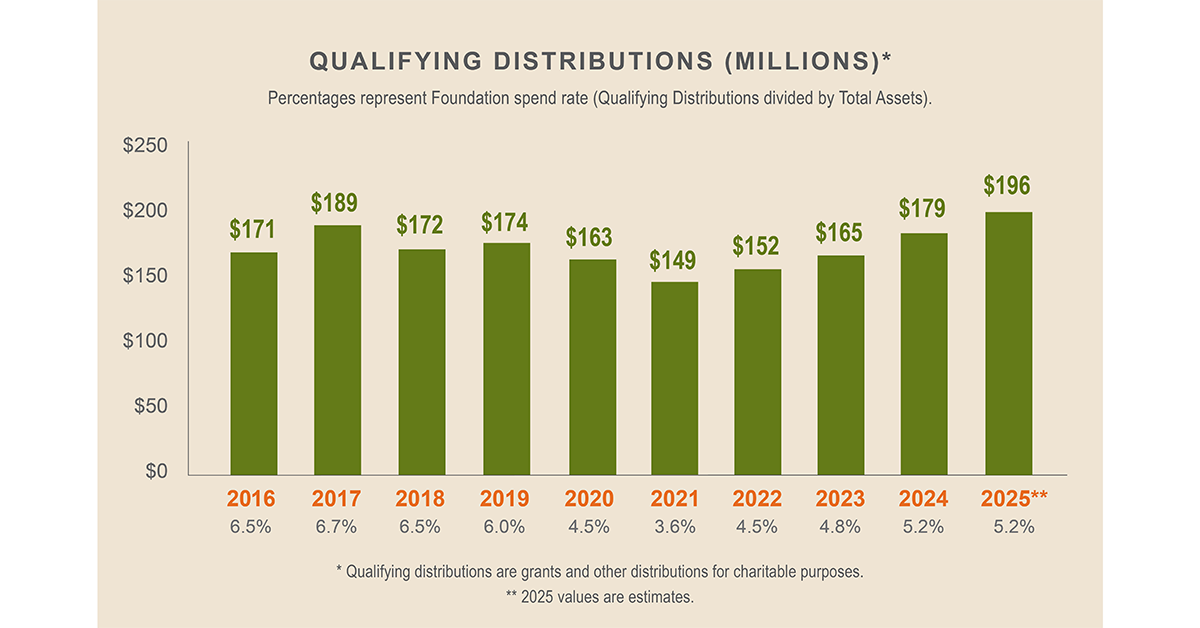
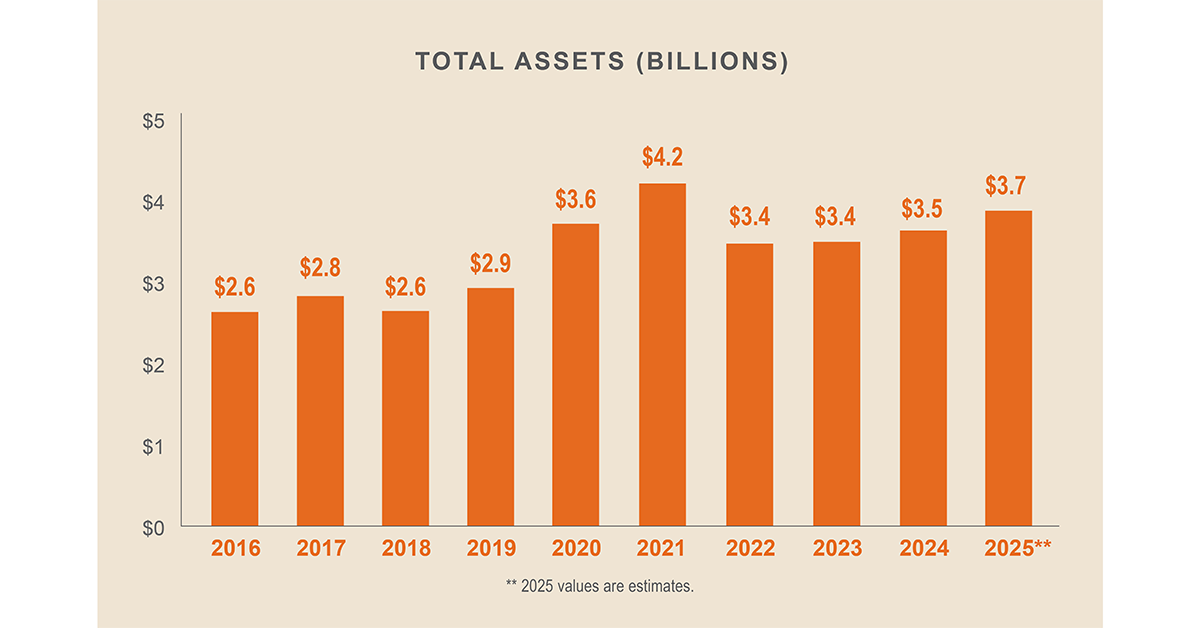
The Foundation’s grant making and operations are supported by an endowment established by Jim Casey and his siblings, our founders. Each December, the board sets the annual budget using a formula designed to sustain our work over the long term, recognizing that the problems we focus on are not easily or permanently solved and require ongoing investment. Because our assets fluctuate with market conditions, our spending rate varies from year to year. A list of the Foundation’s grants is available and updated quarterly on Candid.
Tracking Our Progress
By working with our grantees and partners, Casey is committed to ensuring that all children and youth can thrive. To track progress toward this goal, we have identified 18 key indicators that provide a comprehensive picture of child and family well-being at the national level. While the Foundation’s KIDS COUNT index measures overall child well-being, these 18 indicators align with our five investment areas and help assess where progress is being made and where challenges remain.
As new data emerge in the wake of the pandemic, we see signs of improvement in some areas, while others continue to require attention and support to help all children reach their full potential.
Here’s how each indicator is trending following the pandemic (between 2019 and 2024, unless stated otherwise):
Basic Needs
Babies born with low birth weights Worse
Children, youth and young adults (birth to age 24) who lack health insurance Worse
Children, youth and young adults (birth to age 24) who live in a household with a high housing cost burden Worse
Children (birth to age 17) who live in unsafe communities Better
Comparing 2019–2020 and 2023–2024
Permanent Relationships
Children, youth and young adults (birth to age 21) involved in the child welfare system Better
Children (birth to age 17) who live in two-parent families Same
Youth and young adults (ages 15 to 24) involved in the justice system Better
Children in eighth and 10th grade who have an adult other than their parent that they can turn to when they have a problem Worse
Financial Stability
Children, youth and young adults (birth to age 24) who live in low-income families Better
Children (birth to 17) who live with a householder who has at least a high school diploma Better
Children, youth and young adults (birth to age 24) who live in high-poverty communities Better
Comparing 2016–2020 and 2020–2024
Youth and young adults (ages 16 to 24) who are not in school or working Same
Comparing 2016–2020 and 2020–2024
Early Care, Education and Credentials
Children (ages 3 to 5) enrolled in nursery school, preschool or kindergarten Worse
Comparing 2016–2020 and 2020–2024
Fourth graders who are not proficient readers Worse
Youth and young adults (ages 18 to 24) who have graduated from high school Better
Young people (ages 25 to 29) who have an associate degree or higher Better
Community and Youth Leadership
Young people (ages 16 to 24) who got together to do something positive for the community Better
Comparing 2019 and 2023
Adults (ages 25 and older) who got together to do something positive for the community Better
Comparing 2019 and 2023
Thank You For Your Interest
We hope you'll find value in this report. We’d love to get a little information from you, which we'll use to notify you about relevant new resources.
Subscribe to our newsletter to get our data, reports and news in your inbox.