Summary
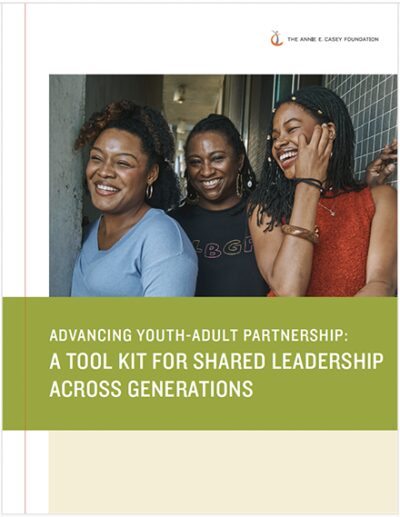
Organizations nationwide are partnering with young people to help shape programs, policies and systems impacting their lives. Youth engagement, however, can take many forms. Absent a shared framework, organizations can use similar language while still operating from very different assumptions about roles, authority and leadership. This tool kit from the Annie E. Casey Foundation provides a practical framework for creating and advancing genuine youth-adult partnership for community change work. It was developed through the Foundation’s Intergenerational Learning Collaborative, a two-year process in which pilot organizations, youth leaders, adult partners and technical assistance providers tested and refined approaches to shared leadership across generations.
Understanding Where You Are: The Intergenerational Partnership Spectrum
The tool kit introduces a five-stage Intergenerational Partnership Spectrum to aid organizations in identifying where collaboration is currently happening, how decisions occur and what conditions are in place to support shared responsibility. Each stage — from Foundational Implementation to Transformational Achievement — is defined across 10 evaluation criteria. These include sustainability requirements, estimated costs, success metrics, red flags and key champions needed to advance the work. Users gain a shared language that can help intergenerational teams have more honest, productive conversations about roles and expectations.
Assessing Organizational Readiness
Deep intergenerational partnership requires alignment across three pillars: 1) structural conditions (compensation systems, accessible meeting spaces, written policies); 2) cultural conditions (trust, shared norms, psychological safety); and 3) leadership conditions (senior commitment, resource allocation and transparency). The Organizational Readiness Assessment walks teams through a scoring process across eight domains to produce an overall readiness score that maps to the Partnership Spectrum. This is not a pass or fail exercise; it is a for honest reflection and shared learning across generations. A facilitation guide helps teams process and discuss their results.
Core Insights and Practices from the Field
The collaborative’s pilot work defined seven core insights. These include recognizing the importance of moving from youth invitations to genuine youth influence, the role of adult preparation as the most significant bottleneck, and the gap between intergenerational values and day-to-day operations. Six core practices — from compensating youth reliably and navigating productive conflict, to facilitating intergenerational meetings and setting shared success metrics — provide concrete, field-tested guidance for teams ready to take action.