

Casey Fellow Applies Results Count to Leadership and Employee Well-Being

When Kassi Longoria joined the Annie E. Casey Foundation’s Children and Family Fellowship® in 2022, she was already an accomplished leader. Four years later, she says the experience changed how she thinks about leadership, organizational strategy and employee well-being.
Before the Fellowship, Longoria said she was skilled at succeeding within structures others had created, executing their initiatives and meeting established expectations for strong leadership.
“What has changed since 2022 is that I’ve grown into creating my own vision of leadership rather than performing within someone else’s,” said Longoria, CEO of VIDA Collaborative.
The Fellowship — Casey’s signature approach to helping leaders strengthen their ability to achieve better and more equitable results for children, families and communities — gave her space, tools and support to consider a different set of questions: What does she believe needs to change? What kind of leader does she want to be? And how can she work with her team to turn a vision for change into something concrete?
Today, she is applying lessons from the Fellowship and its underlying framework, which is called Results Count®, to both her own leadership and the organization she leads.
How the Fellowship Changed Longoria’s Approach to Leadership
One of Longoria’s biggest shifts has been bringing more of herself into her leadership.
She described feeling pressure earlier in her career to be careful about how boldly she expressed her ideas. Through the Fellowship and subsequent coaching, she began to see her identity, experiences and creativity as assets to her leadership rather than something separate from it.
That realization helped her move, as she describes it, from “performing to creating.”
Today, Longoria is more comfortable articulating her vision and grounding it in the well-being of both communities and her staff. She also has become more deliberate about translating values into practices that can be tested, assessed and improved.
That approach became especially important as her organization, formerly MAYA Consulting, became VIDA Collaborative.
VIDA means “life” in Spanish and also represents four actions: Voice, Imagine, Design and Activate. “People deserve the opportunity to live vibrant, fulfilling lives,” Longoria said.
How VIDA Collaborative Applies Results Count
Longoria wanted the lessons she learned through the Fellowship to extend beyond her own leadership, so she created opportunities for her team to learn and apply them together. She was particularly drawn to Results Count’s ability to make ambitious goals clear and memorable.
Learn more about Results Count
That thinking influenced VIDA Collaborative’s guiding principle — health, wealth and community for all — as well as how the organization sets goals, evaluates its work and defines the contribution it can make to systems change.
It also helped lead VIDA Collaborative to develop its ARCH framework:
- Adaptive leadership: See systems differently, experiment and distinguish technical problems from challenges that don’t have fixed solutions.
- Results-based Impact: Stay focused on outcomes and ask who is better off.
- Centered community: Keep people closest to the work at the center of decisions.
- Hopeful Momentum: Sustain momentum and possibility when the work becomes difficult.
The framework helps the team connect its work across areas such as education, health and housing while maintaining a shared understanding of what the organization contributes.
But developing a framework was only the beginning. Longoria wanted staff to have regular opportunities to practice it.
VIDA Collaborative now holds monthly sessions focused on different elements of ARCH. Team members often lead the sessions, using current projects to examine what is working, what is not and how the framework can evolve.
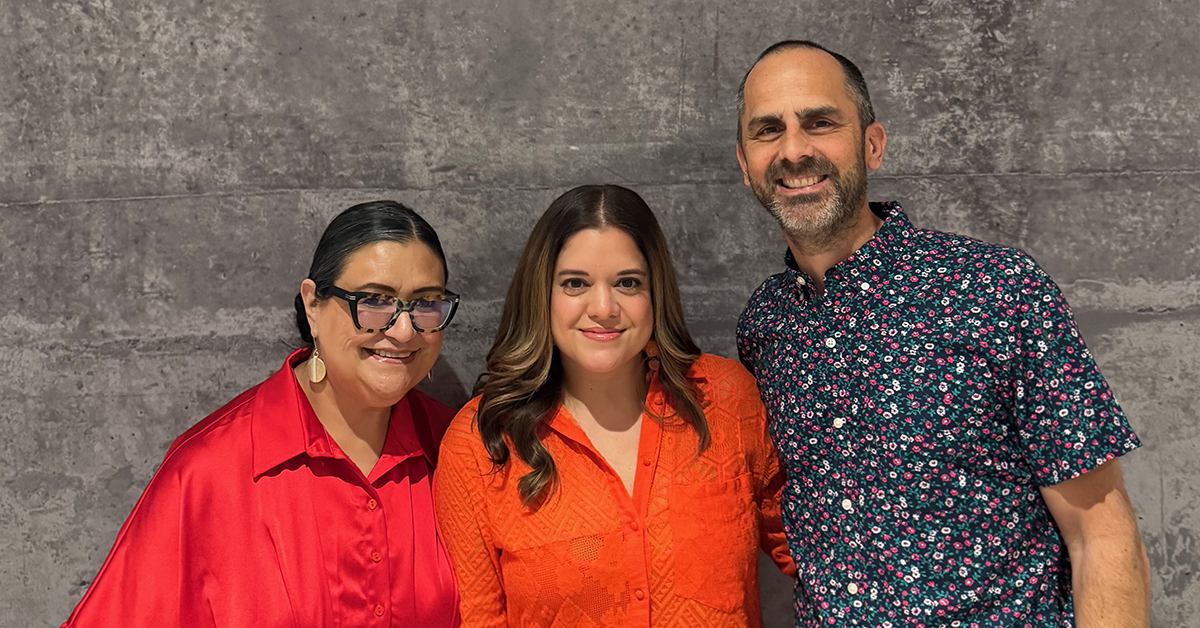
Longoria also continues to draw on relationships built through the Fellowship. For example, fellow Children and Family Fellowship alumnus Hasan Davis joined a recent VIDA Collaborative staff session to discuss hope and how leaders can turn it into concrete strategies.
“I really realized, ‘I don’t have to do this all on my own,’” Longoria said. She can help establish the direction while drawing on the leadership of her staff and network to shape how the work develops.
How Results Count Can Support Employee Well-Being
Longoria also has applied lessons from Results Count to a challenge that many leaders face: supporting staff well-being while responding to urgent needs.
Her conclusion is that the two goals should not be treated as competing priorities.
“If people do have rest and if they do have role clarity, I think that will help them meet the urgency even better,” Longoria said. “It feels like a trade-off right now, but I think it is actually in service of the result that we are seeking.”
VIDA Collective is working to define well-being in concrete terms, including rest, purpose, role clarity and growth. Longoria’s goal is to move well-being beyond an aspiration or organizational value and identify practices the team can build toward and assess.
One experiment is renewal leave. Team members will receive a month away from work, with colleagues sharing responsibilities while they are gone. Longoria said the practice is intended to provide enough time for meaningful rest while encouraging staff to work together to make that rest possible.
The approach reflects a larger lesson Longoria has taken from Results Count: If an organization can clearly name the result it wants, it can develop strategies for achieving it and determine whether those strategies are working.
She applies that thinking externally to VIDA Collaborative’s work with communities and internally to the experience of its staff.
Using Results Count to Lead Through Organizational Change
That focus has been tested.
Like many organizations, VIDA Collaborative has experienced significant change and restructuring. Longoria said Results Count has helped the team acknowledge the emotions that accompany change while maintaining focus on its goals.
It also has helped her reconsider the relationship between urgency and leadership.
People working to improve conditions for children, families and communities often care deeply about the people they serve, Longoria said. That commitment can make it easy for leaders and staff to put their own needs aside.
Her experience has convinced her that rest, clarity and well-being can strengthen rather than distract from the work.
The lesson extends beyond formal policies or benefits. Longoria said organizations can support people simply by creating space for thoughtful questions, reflection and learning.
“I couldn’t make room for what was new without making space for it,” she said.
Why Leaders Need Time for Reflection and Growth
Four years after entering the Fellowship, Longoria continues to value one of its simplest offerings: protected time to think.
The tools and relationships mattered, she said, but so did having dedicated space to question assumptions, imagine alternatives and determine what kind of leader she wanted to become.
That remains a challenge even now.
“If it’s not protected for you, it’s harder to protect it for yourself,” Longoria said.
For Longoria, making that space has led to a different way of leading — one that connects results with well-being, draws on the contributions of others and leaves room for creativity.
It also demonstrates how leadership development can extend beyond an individual leader. The ideas Longoria explored through the Children and Family Fellowship now influence how VIDA Collaborative defines its goals, develops staff, approaches systems change and supports employee well-being.