


Corps to Careers: Building the Bridge Between Service and Today’s Careers
Today’s young adults are navigating a complex economic landscape. Slower hiring and greater competition for entry-level jobs is making it harder to gain the early work experience, skills and connections that can lead to family-sustaining wages and career advancement. And the systems meant to guide young people from the classroom to career — schools, workforce programs and employers — too often operate in isolation from one another.
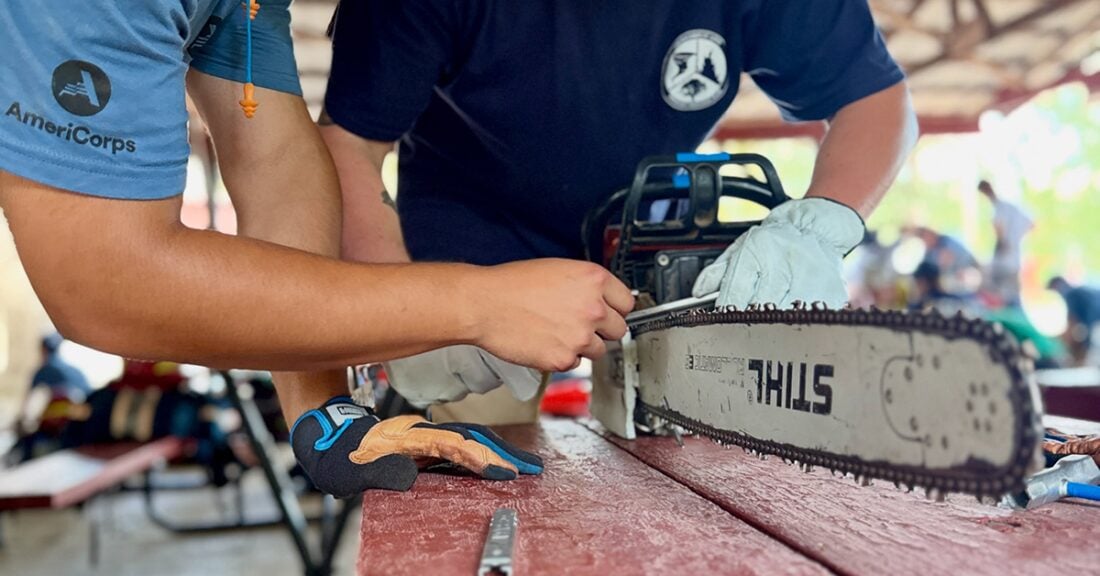
Corps to Careers, a new initiative from the Annie E. Casey Foundation, is designed to provide career onramps for young people who are building skills and gaining work experience through service and conservation corps participation. Service corps are structured programs that engage young people in paid, service-learning opportunities that blend technical training, skill building, work experience and robust wrap around supports.
How Corps to Careers Connects Young Adults to Infrastructure Jobs
Launched in July 2026, Corps to Careers is a five-year initiative that strengthens the capacity of corps programs to connect young adults to jobs focused on building and maintaining the physical environment. These fields face an urgent need for workers, including construction; natural resource and habitat management; water management; energy efficiency; and disaster response and preparedness. According to Brookings, an estimated 1.7 million infrastructure workers will need to be replaced annually over the next decade as the workforce ages out and climate-driven challenges from floods to wildfires continue to grow.
To meet that demand while expanding opportunity for young people, the initiative focuses on three goals:
- Young people are connected to well-paying jobs that support opportunities for advancement.
- Employers are connected to young adult talent pipelines and meet critical and growing workforce needs.
- Communities are ultimately strengthened by improved local infrastructure.
For this initiative, Casey engaged 11 corps programs from across the country that represent a diverse set of communities — urban, rural and tribal — where there are entry-level job opportunities for young people in infrastructure sectors, such as construction, water, clean energy and land and natural resource conservation. Through their participation in Corps to Career, corps partners will advance their efforts to launch, strengthen or grow service to career pathways. In the first year, corps partners will receive strategic planning grants and hands-on help from The Corps Network, JFF and PowerCorpsPHL.
Corps Programs Expanding Career Opportunities
Corps to Careers’ inaugural service and conservation corps program partners include:
- American Youth Works (Texas)
- Civic Works (Maryland)
- green | spaces (Tennessee)
- Heart of Oregon Corps (Oregon)
- Los Angeles Conservation Corps (California)
- Louisiana Green Corps (Louisiana)
- Maine Conservation Corps (Maine)
- Mile High Youth Corps (Colorado)
- Operation Fresh Start (Wisconsin)
- Rocky Mountain Youth Corps (New Mexico)
- The Service Collaborative of Western New York, Inc. (New York)
Partners will use a framework developed by The Corps Network and Jobs for the Future (JFF) to deepen employer partnerships, strengthen youth voice and leadership, enhance service delivery and expand post-service employment opportunities. In addition to the Casey Foundation, The Brendan & Helen Bechtel Foundation, the Conrad N. Hilton Foundation and the MetLife Foundation are co-investors of Corps to Careers.
“A strong start in the labor market has long lasting benefits for young adults, including higher wages to support them and their families and less time spent unemployed over their lifetimes,” says Ranita Jain, senior associate with the Casey Foundation’s Center for Economic Opportunity. “Corps to Careers represents an exciting opportunity to identify, support and scale promising approaches that create new pathways to opportunity and improve outcomes for young people. Young people will have expanded access to work and education while playing a critical role in strengthening the communities they live in.”
How Service and Conservation Corps Prepare Young Adults for Careers
In a recent study, the Urban Institute examined how service and conservation corps programs across the country have evolved beyond community service, adding workforce development programming that helps young adults — including those disconnected from school or work, or at risk of disconnection — build the skills and relationships needed to pursue a career.
The study found demand for these programs outpaces supply. Programs already combine structured service with mentorship, skill-building and support, helping young people make informed choices about their next steps. Corps to Careers builds on that foundation of mentorship and skill-building. It connects young adults to well-paying jobs with opportunities for career advancement. The initiative draws on this research, along with other studies Casey has supported in the service-to-career field, to connect service programs, employers and training providers so young adults move directly from service into jobs.
Research on Service Corps and Career Pathways
- “Corps to careers: Expanding career opportunities for young adults involved in service and conservation programs” (Brookings)
- “The Corps Network Joins Jobs for the Future to Release New Report – Strengthening Service-to-Career Pathways: Amplifying Successful Practices From The Corps Network” (The Corps Network)
- “Service Corps Programs That Connect Opportunity Youth to Infrastructure Jobs Potentially Yield High Returns on Investment” (Urban Institute)