Dreama Gentry on Expanding Opportunity for Rural Youth
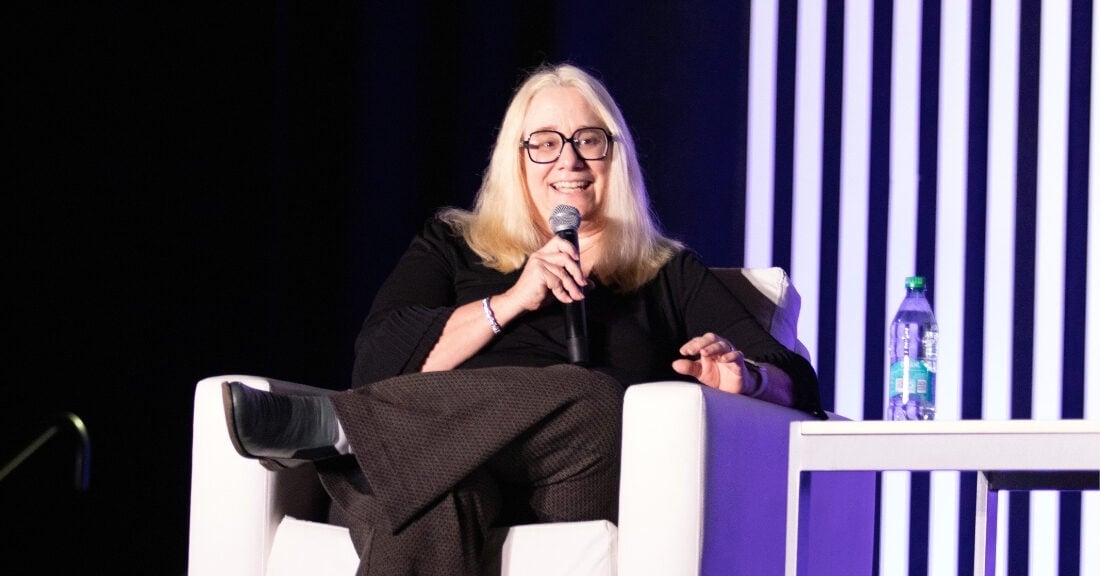
On the latest episode of CaseyCast, Annie E. Casey Foundation President and CEO Lisa Lawson speaks with Dreama Gentry about expanding opportunities for young people growing up in rural America. Gentry serves as founder and CEO of Partners for Rural Impact and was a 2016–17 Children and Family Fellow.
An estimated 14 million young people live in rural communities across the United States. Some of these communities are thriving while others have experienced generations of poverty or more recent economic challenges. The unique histories, resources and economic conditions across rural America shape the experiences of young residents in different ways.
Drawing on examples from Appalachian Kentucky and other rural communities, Gentry explains how partnerships with schools, investments in education and career exploration build on each community’s strengths and expand opportunities for young people so that they have meaningful choices about where to live, learn and work.
Key Themes From the Conversation
- Schools as a resource hub: In many rural communities, schools serve as hubs for education, mentoring, health services and other resources. Gentry shares how a partnership in Leslie County, Kentucky, brought mentors and external programs, like AmeriCorps, into the local school system to help strengthen student support and student success.
- Giving young people the choice to stay or leave: In rural communities with limited job opportunities, young people may feel they have to leave to advance economically. Gentry discusses how stronger education and career pathways can give young people meaningful choices about where they want to live and work.
- Preparing young people for a changing economy: Early career exploration, internships, apprenticeships and college courses can help rural young people discover their interests and prepare for future opportunities. Gentry also highlights entrepreneurship and business skills as ways young people can build careers in their own communities.
- Building on local leadership and community strengths: Rural communities have different histories, resources and needs. Gentry emphasizes the importance of supporting local leaders, whenever possible, rather than bringing in programs designed elsewhere. Schools, families, faith communities and other local organizations can provide a foundation for lasting change.
- Connecting economic development with economic mobility: New investment in rural communities can create jobs, but Gentry argues that those jobs should also provide opportunities for career advancement and long-term economic security. Community members need a voice in shaping economic development so the benefits remain local.
- Letting young people define success for themselves: Success means more than income or professional achievement. Lawson and Gentry discuss how adults can better support young people’s individual goals, including their desire for meaningful work, well-being and an authentic connection to community.
Creating Opportunities for Rural Young People
For Gentry, the goal is to give rural young people more choices about their futures, including whether they want to stay in their hometowns or leave.
“Rural young folks, as I’m traveling around the country, what I’m continually impressed with is that they have connections to their family, their place, they have roots, but they also have aspirations and dreams that are much bigger than any one place,” Gentry said.
Making that possible means strengthening schools, creating pathways to good jobs and supporting local leaders who understand their community’s needs.
Learn More
- Partners for Rural Impact
- Casey Joins National Partnership to Tackle Disparities in Rural America
- Dreama Gentry: Empowering Rural Communities through Education
- Casey Foundation Announces Tenth Class of Children and Family Fellows
Listen On
Lisa Lawson: Welcome to CaseyCast, the podcast of the Annie E. Casey Foundation. I'm Lisa Lawson, the foundation's president and CEO. On this show, we explore what it really takes to build a brighter future for children, youth, and families. As part of that, we're often asking ourselves what it takes to create and sustain thriving communities. We know communities are all different. The opportunities young people can access and the barriers they face are shaped in part by where they grow up. We often hear a lot about the challenges of young people living in cities. So today, I want to explore the unique experiences of young people finding their way in rural America. And I can't think of anyone better to do that than Dreama Gentry. Dreama is the founder and president of Partners for Rural Impact, an organization working to ensure rural young people have a path to economic mobility. She grew up in Appalachian Kentucky, and has spent her career advocating for rural communities across the country. Drima is also a graduate of the Annie E. Casey Foundation's Children and Family Fellowship, which is where we first got to know each other. Recently, I joined Dreama at the Partners for Impact convening, where we talked about my book Thrive and what young people need from adults and communities during adolescence. So today, I'm excited to continue that conversation and dig into what it takes to make sure the 14 million young people living in rural places in the United States have the opportunities they need to flourish. Dreama, welcome to CaseyCast.
Dreama Gentry: Hi. Thanks for having me.
Lisa Lawson: Of course. Well, let's start with some basics for the listeners. When we say rural, we are talking about millions of young people living in very different communities across the country. What do you wish more people understood about them?
Dreama Gentry: So when I think about rural young folks, what I really want folks to think about is they're the same as young people from everywhere.
Lisa Lawson: Hmm.
Dreama Gentry: And I think first we try to pigeonhole them and think they may be different, but they have the brilliance, they have the challenges, they have the hopes and dreams that young folks have everywhere. And given the digital nature of the world, they're not isolated. They are connected and linked in. What is unique in growing up in a rural place is that your day-to-day, what you have and your opportunities may be limited. In many rural places, the school is the center of your universe. There's not a Boys and Girls Club. There's not opportunities. Now, there are libraries. Libraries was my refuge growing up.
So you do and are limited in some ways. But rural young folks, as I'm traveling around the country, what I'm continually impressed with is that they have connections to their family, their place, they have roots, but they also have aspirations and dreams that are much bigger than any one place. And so they also have those wings. And I talk a lot about how do we make sure they have both roots and wings and they have real opportunities.
Lisa Lawson: Do they typically end up staying in the places where they grow up, or do you find more rural young people move toward opportunity in cities over time?
Dreama Gentry: So I think it's interesting, and this comes back to that rural is not one place, one thing. So my own, and I do need to share that my own personal experiences are rural Appalachia in Kentucky, which is actually a place of persistent poverty that doesn't have a lot of economic opportunity. And so young folks often growing up in our region, if they're wanting to move up economically right now are having to leave, and there is a population decline. But there are other rural regions around the country that are thriving, and we're seeing there more young folks are staying and connecting. What a lot of our work at Partners for Rural Impact is, how do we actually support young people in leaving high school college-ready, career-ready, ready for the military, ready for work, so that by the time they're at that high school point of deciding, they have real and true opportunities. And just like I told my two sons, grew up in rural Eastern Kentucky. When you graduate high school, you don't have to stay here, but you can stay here.
And so they both left. They went to school, and they and then they're both back now. Right? And I think that that is what we see across the country. But often, if it's a place of persistent poverty, there's not economic opportunity to come back to.
Lisa Lawson: Well, that's great that your aspiration is to make it possible for them to stay if they want to stay, which is great. Well, I want to talk a bit about your work at Partners for Rural Impact. You pursue your work through a collective impact model. You're part of the Strive Together Network, which I've been on the board of. And in the simplest form, it's about creating communities where young people have what they need at every stage of life. We often call that from cradle to career and beyond. We often think about that in more urban settings, but I'd love for you to talk about what that model looks like in a rural community and how that might be different from a more urban setting.
Dreama Gentry: Yeah, I'm happy to. And I will say that what I love about Partners for Rural Impact is we're still practitioners in Appalachian Kentucky. So we have our Appalachian Cradle to Career Partnership where every day we have team members working with kids and families all the way from home visiting up to preparing for college and even working with them in post-secondary. And then across the nation, we're doing technical assistance, bringing people together and sharing the model. And so when I think about what it looks like in a rural environment, I think about Leslie County, Kentucky. I first went to Leslie County, Kentucky in 2009. It was 2009, and the superintendent had connected because they were in school turnaround. That high school there was 215th out of 217 high schools. So it was in the bottom 1%.
But the people in the community, the school leaders, they believed in their school, they believed in their young people, and they wanted to do something different. So they invited us to come in, and that became one of the first places where we worked deeply to say, okay, what can we provide to wrap around students? And when you look at Leslie County, Kentucky, and when you look at lots of rural places, the school is the heart, right? So we know if we can improve the school and if the school can provide strong out-of-school programming, if it can provide mentoring, if it can work on instruction and high-quality interventions, things will change.
And so we worked for about five years there in Leslie County deeply. We brought in an AmeriCorps program that hired local folks to come in, and every young person there has a mentor who's connecting with them, connecting with their family, and helping them think about their next step. So by— within like 5 years, they had moved up as far as the rankings. And rankings are not everything, but I think it does give you an idea of how we can create change. But I'm happy to say that like last year, that high school was 6th in the state.
Lisa Lawson: That's fantastic. That's great.
Dreama Gentry: So it changed. But what changed was the community started leaning into the school. We now have health programs in the school. You have your nurses there. You have a dental program that we have a relationship with, with a neighboring county. You have mentors. You have young people actually doing AmeriCorps service as high school students working in the elementary school. And so it's the same thing you see in a larger urban area, except that in rural places it's often built of and from the school. Because many of these young folks live over an hour on a bus ride from school.
Lisa Lawson: Hmm.
Dreama Gentry: And parents don't have the gas money, especially now, right, to come back to school to bring them. So everything is centered. The school day becomes the focus piece. And so that's what it looks like in Leslie County, Kentucky. We have other rural places like in Yakima, Washington, our friends there at Heritage University. They are more of a town. And what they've been able to do is the schools are the center, but they realized there was a community college right there, bus stop right outside the high school. So now that the high school students can get on the bus that goes through to go to the college to take their classes, right? But they still have a school in the community.
Lisa Lawson: As you were talking, I was thinking, you know, we often worry about urban schools and all the turnover in staffing at urban schools. I'm wondering and suspecting there's less of that in rural communities. And so you've got maybe more of an opportunity for stability and for relationship that might be different than what you see in urban communities. Is that true or not?
Dreama Gentry: So I think there isn't a lot of turnover in the schools, but there is a gap around finding quality educators to actually take the positions. And so you'll find many rural districts across the nation are doing grow-your-own programs where they're actually working to bring— the program in Leslie County with those students who are AmeriCorps members is to help them learn about and develop a love for teaching and then going, going on to post-secondary, starting to think about education and then thinking about how do we actually bring them back.
Dreama Gentry: So I think there's not the turnover piece. Teach for America is doing great work in rural regions, and we're seeing a lot of the Teach for America members actually staying in rural places and making their homes there. So I think that it's a little different. One of the things, though, that's interesting with having local people that are doing the work in the schools is that you also have to shake their mental models.
Lisa Lawson: Mm-hmm.
Dreama Gentry: Now, like, I can say, like, when I was— I remember being in elementary school, and one of the teachers had been one of my mama's teachers.
Lisa Lawson: Oh, wow.
Dreama Gentry: Right? And I have staff at Partners for Rural Impact who've lived in their communities for generations. And one of the things that we've realized over the years is sometimes folks will actually pigeonhole kids based on where their family lives, what part of the county, right, where they're from. And so I do think that there is this piece in rural places when, you know, generations, is to see the young person as themselves, not as their mama or their grandmama.
Lisa Lawson: Right. I hadn't thought about that. Yeah, I'm thinking there's trust, you know? And so that's often the hardest thing to overcome. But there's also history. And that sometimes has to be overcome too. So thank you for helping us appreciate that.
Well, when I met you through the Fellowship, you were deep in developing an amazing program at Berea College, really a model for the country about you know, how this really special college had become a platform to help improve education across the region. But I remember the first thing I told you in that interview, I said, okay, this is great, but like, when are you going national, Dreama? There are kids all over the country who need your help. Well, I can't remember how long ago you were in the Fellowship, but you did it. You took up that challenge. And I'm curious what convinced you beyond my poking at you to know that it was time to take what you were learning in Appalachia and bring it to rural communities across the country.
Dreama Gentry: Yeah. And I think you were one of the first folks that just flat out asked me, right? You just asked the question and I'm like, well, well, no, it's Appalachian. I think the turning point started when— the Fellowship was powerful for me. And I think it was over 10 years ago that I did the Fellowship because the key piece is what is the result you want to see in the world? And at the time, I wanted to see all Appalachian young people be successful. Right, on the path to success. And then it's thinking about, well, how do you accomplish that? And digging into that, what I realized was young people in Appalachia, young people in Leslie County, will never be successful unless the systems change that often trap them in poverty. And systems change won't happen because of one county or one region.
Lisa Lawson: Right.
Dreama Gentry: But that rural America is large. It's vast. There's a lot of political power in rural America. And if I want things to change in Leslie County, Kentucky, I need to change things in Quitman County, Mississippi, right? And Yakima, Washington, and bring together rural folks. Because often there's powers that be that actually would prefer that rural Appalachia and the Mississippi Delta not partner.
Lisa Lawson: Mm-hmm.
Dreama Gentry: Right? That we instead think that we're fighting over one small piece of the pie. And so it was really that systems thinking. And then I think the second piece, and I will say for folks out there listening to this, if you find yourself asking a question like, why is there not more of this, right, over and over? Because I was like, why is there not opportunities for rural people to gather and talk about this? Why is there not more research done on rural best practices? If you keep asking the same questions, you got to be part of the solution.
Lisa Lawson: Right.
Dreama Gentry: And so I think that was the second piece. I'd ask those questions. And then finally somebody's like, well, if you think this, why don't you just do it? And then Berea College gave us a great foundation for the work, and they also supported the piece that this work can actually impact kids in Appalachia and across the nation.
Lisa Lawson: Right.
Dreama Gentry: And so I often say it took me 25 years to graduate from college, and so I finally graduated.
Lisa Lawson: It's fantastic. Well, you know, it has just been a beautiful thing to see you step into the fullness of your leadership, Dreama. I could already see with what you were doing in Berea, that you could do so much more across the country, that there were others who really needed your vision and the tools that you were developing and the relationships that you were developing. So I couldn't be more thrilled that you took up that challenge. As you have expanded, what have you learned about different rural communities and how does the infrastructure for opportunity look different in Appalachia versus the rural South or the Southwest or Midwest or other places. You had— I mean, Berea really is a very special place, but I imagine you found other infrastructure to build upon in other places. And after you respond, I'll sort of reflect on what I found at Casey about sort of building on what often is invisible infrastructure to others, but really strong assets.
Dreama Gentry: Yeah, and I think that there was a piece of me when we started working nationally, I underestimated that I knew one frame of rural, and that was the frame of where I grew up, where I am today. And it was a frame of a place of generational poverty. And what I've realized is that's its own unique framing, probably has a lot, you know, Geoff Canada and the Harlem Children's Zone work really resonated with me. And I think part of that might be because some of that generational piece is there. But as I started traveling rural America, I realized there's places that don't have that legacy of generational poverty, that are rural places that are thriving, or that are rural places that for the last 10 years have been struggling. And so a part of the learning for me was, I have one frame of rural. It's very different. The other was there are, there are leaders that grew up in places that are leading in rural America that are from phenomenal, and I need to listen. And so a lot of my work in going into other places was, how do I find the hope dealers, my husband would call them, the folks in the community that are holding hope, that are working every day? How do I listen to their stories? And how do I then try to find and activate the resources and supports they need?
Lisa Lawson: Mm-hmm.
Dreama Gentry: And one of the things we find across rural America is, you know, 7 cents on the dollar of philanthropic money goes to rural America, right? 20% of young people are rural, right? 80% Of the landmass is rural, but it's deeply underfunded. So one of the supports that we can provide to rural places is help them to activate the dollars to support their brilliant ideas. The one lesson that went wrong for me, I think, was thinking that if we were doing something in Appalachia, we could go and do it in other places. And so we always think it's important to talk about what didn't work.
Lisa Lawson: Yeah.
Dreama Gentry: Right. And when we first started, we thought, well, we can actually go and power partnerships, power the collective impact movement in other rural places. And we did that. And what we ended up doing was launching a couple of places. But what we realized is we can be a launch, we can be an instigator, but then it actually has to be led, governed, and carried on by local people. And so we transitioned those to local folks. So yeah, it's been a learning journey, but an opportunity to meet so many great leaders across the country, which is really powerful.
Lisa Lawson: That's wonderful. I mean, and I— what you're saying about sort of the local leadership really resonates with me. Maybe 10 years ago at the Casey Foundation, I kept saying we've got to work across the South. We can't keep telling people with KIDS COUNT that this is where young people are struggling the most, and then we do all of our initiatives in the North or, you know, in the Midwest. We've got to go where we know the challenges are the deepest. And I think it was this misperception that there was no infrastructure to build upon there. And I think what you're saying is you found infrastructure that looked different than maybe what it looked like in your place. And that's what I think has been the lesson of our work, that there's infrastructure everywhere. It might be, you know, a strong church program. It might be, you know, a charismatic school principal or a really great afterschool program some ladies in the community got together to create. But our job isn't to import, you know, whatever it is from some other place, but really try to amplify what exists in those places. And it sounds like that's the lesson that you've learned too as you have worked to support rural communities all over the country.
Dreama Gentry: It is. And I love your word infrastructure. And I think that the leaders, that the parents, the faith community are key to that. The schools are key to that. And then I think it is helping them develop out the infrastructure and what do they need to develop locally, but what can they actually use that's already being developed? And I think about KIDS COUNT, right, and the data system there that now is available and folks can access that. So it's actually showing them those tools and saying, you don't have to spend the time on this system, but you can spend the time on this one, right? Because I think often in urban places, organizations have and they build everything, right? And so a big piece in rural areas is what do you actually have to build locally? But what can you borrow that's already been developed? Or what could you have a partner do for you?
Lisa Lawson: That's great. That's great. I want to turn to economic development because there's a lot of conversation right now about investment and growth in rural America. When you listen to those questions and conversations, what do you think is driving them? And what do you want leaders making big economic development decisions to understand about the people who already live in these communities?
Dreama Gentry: Yeah, that's a big one. And I do think, again, at the Casey Fellowship, we learned about person, role, and system, right? And our personal experiences are key to how we lead. And so growing up in Appalachia, where there was an extraction economy, does impact some of the way I think through this.
Lisa Lawson: Say more about what— say what that is, Dreama, just for folks who are listening and don't know what you mean by that kind of economic model.
Dreama Gentry: It's an economic model where the power and the money live outside the region, and even the ownership of some of the assets live outside the region. So the folks in the place maybe in a good-paying job in the moment, but the assets are not being held locally. So when the economy shifts, when the jobs go away, then they're left with nothing, right? And having to rebuild. And so I think that this is a moment in rural, though, where folks are looking at rural America, particularly because we have the land assets and the other assets needed to power the AI economy, as opportunities to partner, to come in. And so as we talk with folks about this, both on the corporate side that are thinking about rural America, but also on the local side, we go back to that collective impact model, right? How do you actually do this together? How do you actually work to ensure that the community has a vision for their place, that the economic development entity also has and shares that vision? And how do we actually develop a system that's not extractive, that actually supports the local place? But it's a tough time, right? Because power differentials and that piece. And so I think we're blessed and there's organizations across the country that are working with communities on community benefit agreements and helping them to think about how do you hold the power and actually how do you think through this. And we're also blessed that many of these companies have folks that really come from community that are actually trying to come with that lens too. But it's an interesting time.
Lisa Lawson: Yeah. Yeah, I can imagine. And, you know, we— there is no economic development without human capital development. And that's the business that you are in, that we are in. And so I think I think it's incumbent upon all of us to talk about how we don't just talk about technology and buildings, but really talk about the human capital that's needed to use today's tools in order to create the economy that we want. And economy is nothing really without the people who need to thrive inside of it. And so I know you hold, like we hold, this— the importance of the people development that needs to take place right alongside and to power the economic development that I think we all want to see in lots of places. So we talked about economic development at a broad level, but what does all this mean for young people who are coming of age today? How should we be thinking differently about school and work to prepare rural young people for career success in a rapidly changing economy?
Dreama Gentry: One of the pieces, as we think about economic development, particularly in places where they're desperate for jobs and they're desperate for economic development, is how do we actually not let young people be turned into widgets that just power an economy that keeps them in poverty?
Right? How do we actually ensure that the jobs we're bringing in are jobs that will actually open the door to economic mobility? And sometimes it'll be a lower-paid job, but as long as it scaffolds to the next job, to the next job, right? And I think that on the economic development side is critical, that we hold that and we're not trapping young people in poverty. I think on the, what can we be doing to develop young people for the new economy, I think it is working with them as early as elementary school around what is their dreams, what is their aspirations, what actually gets them excited.
So it's that career exploration at that really early level. And then as they get to that middle school age, starting to think and talk with them and, and hear where they, what are their dreams? You know, I talk to young people every day. Their dream is to be able to stay at home and live at home and work and have a family and do this. So in that case, they need to be actually thinking about careers that actually keep them at home.
Right? And I think we don't have those discussions with young folks around what their dreams are, what they want to do, where they want to live, what type of contribution they want to create to the world. And then I do think it's as early as late middle school and high school, how do we actually get young people onto college campuses, but also into work sites? How do we start thinking about internships, apprenticeships? How do we make sure they're graduating from high school and they already have either a work-based learning experience, an internship, or dual enrollment course, right?
How do we make sure that happens so that when they are at that senior year of high school, and if they have the opportunity to choose to go or to stay, to go to college or to go to work, or to go to the military, they actually can make an informed choice.
So it's tying back, I think, to our— we started in college access 30 years ago, but back then it was a sliver because we were pushing everybody to college. And so I think it's that type of cradle-to-career exploration and pathways work that we all have to be supporting in community.
Lisa Lawson: I want to ask about entrepreneurship. Every time I talk to young people these days, they are always talking about entrepreneurship. I think some of it is a reaction to global labor market that seems very intimidating or the hundreds of resumes we know they submit online to no avail and get no answer. They want more agency in their lives, but also seeing how other young people have become fabulously wealthy, you know, through entrepreneurship. I'm curious if young people in rural communities are having the entrepreneurship conversation that I hear from so many other young people, and if so, how you all are thinking about supporting them in those aspirations.
Dreama Gentry: They are. And I think that one reason is that if you're an entrepreneur, particularly on the tech side, you can still stay here and do whatever, right? And so I do think, I mean, we're working actually in one of the counties in eastern Kentucky now with a venture capitalist who actually developed out her own apps. And she's like saying, right now the world is open for young folks. How do we actually bring them in, let them start digging in, let them think about what they can build. But also, can they be the problem solvers that are helping folks like me at my age figure out how to use the new technology? So almost like a geek squad around AI that's rural power with young people. And so I do think there are— there's an interest in it. I think the piece that we're seeing too is it has to be more than just the entrepreneurship side. But it also has to be the business side of it too. How do we also— my mom often says, well, we need more plumbers. We do need more plumbers everywhere, right? But we're starting to see now the folks that are training — and our community colleges are fabulous across this nation — that are training folks for that are also giving them business skills because you have to be a small business owner.
Lisa Lawson: You do.
Dreama Gentry: So I think it's entrepreneurship plus the business side of it.
Lisa Lawson: Plus the skill.
Dreama Gentry: Plus the skill set.
Lisa Lawson: Yeah. That's great. I asked you early on about the tension between young people feeling like to have economic mobility, they've got to leave their communities. And I love how we've explored in a variety of different ways how we can create on-ramps and ladders for them without them having to leave their communities. But I want to ask, do you generally think rural America needs a different definition of success for young people? And what stories should we be telling them about what success can look like both at home or in other places.
Dreama Gentry: Yeah. And I would, I would even push and say, I think that as we think about young people and how we measure success in any environment, we probably need a more holistic definition of what is success. And I think there is something around young people having agency, having dreams, but then having and being prepared to follow those dreams. To me, that's the success piece. Even with my own kids who are 27 and 22 now, I've really struggled because I came up in the age where you hustled, right? And you worked hard and you wanted to get to this level and then you wanted to do this and you wanted to achieve this. And my oldest reminds me, Mom, I can be successful without all of the trappings and have balance, right? I can be self-employed and do this. So I think there is something around what is success that we need to be listening to the young people to figure out what is it they want, right?
Lisa Lawson: They want well-being. Yeah.
Dreama Gentry: I mean, they survived the pandemic.
Lisa Lawson: They did.
Dreama Gentry: And that's hard because the systems are held by folks that view success as a certain score or a certain income.
Lisa Lawson: Right. I agree. You know, there's a lot coming out now about what young people's values are in the workplace, and well-being is really at the top of their list. Like you said, they survived a global pandemic. And so mental health, you know, is important to them and work-life balance is important to them in ways that I think prior generations put some of that aside. It doesn't mean they're less ambitious. It just means that their ambition is tempered by wanting a fuller definition of life. And it's good to hear that young people in rural communities are feeling that as well.
Well, I want to bring this back to adolescence and to a conversation you and I had in April about Thrive. I wrote the book because I think we dramatically underestimate these years and the opportunity adults have to help young people discover who they are and what they can contribute. You're not only doing this work professionally, but like me, you are a mom of adolescents. What resonated about the book to you based on your own experiences with your kids?
Dreama Gentry: I think I appreciated how we have to individualize young people, right, and meet them where they are. That's— that was hard for me, even parenting two young men that were five years apart. And I had the resources. I did counseling with both my kids, right? And it was more, I think, my counseling than for them. But I I remember the— as I was talking with a counselor and working with my youngest son, the counselor in the one-on-one reminded me that I was actually parenting Christopher, not Malcolm. And I was bringing the skills that I had developed with Malcolm into the interaction with Christopher. And it was a totally different skill set that was needed.
So I think the adaptive piece of parenting, the adaptive piece of thinking through how do we ensure that they have the opportunities to experience, to learn, and to grow, but the ones that they need versus the ones that we think they need.
The other piece I've really over the last few years, and I think being a parent helped me see this, is when I started this work 30 years ago, working in places of poverty, and I had resources, as a program, we were like, had this almost scarcity mentality of if we're giving this young person this service, then we need to give the next service to this one, right? So if Johnny is in the afterschool program, Judy needs to be in the dance program, right? Because you need to spread these students out, right? And I think what we've learned, and I think that what you were sharing in your book too, is that it takes so many different inputs to actually support young folks. So around 2010, when we started to think about Cradle to Career, we changed our framing to say we may be working with fewer young folks, but we're going to provide them a whole suite of services and supports.
Lisa Lawson: That's great.
Dreama Gentry: And I think that's, as a nation, what we have to do to ensure that young people have what they need to be successful.
Lisa Lawson: Yeah, not just a little piece of it because we're trying to parse it out to all of them. You know, I wrote this book not thinking of myself as a parenting expert, I am a parent, and I found many of the things I learned about adolescent brain science really helpful for me as a parent. But what I have come to realize is that so many of us have the experience of being a parent while also being professionals in lots of different ways. And if we can't find that empathy, if we can't understand adolescence as parents, it's really hard to give that care and grace to other people's children if we can't find it for our own. And so I find myself at every speaking event talking about something about parenting because I think that's the lens through which we first try to understand adolescence, maybe reconcile our own adolescence and what that was about, and then try to understand how it's playing out for the young people directly in our families. And then I think we can find a way to extend that circle of care to other young people. So I was curious about— you know, what you gained as a parent, because I never give a speaking engagement and people don't ask me some kind of parenting question, though I don't think of myself as a parenting expert.
Okay, I have one more question because I always like to close on a positive note. You've spent your career betting on rural young people and rural communities. What gives you hope when you look at the next generation of young people growing up in these places?
Dreama Gentry: When I'm out in community talking with rural young people, It's their boldness and their ability to say the thing and lean into the thing that I really appreciate. It's also, they seem in a way less jaded than I would've anticipated after, with all they've been through, right? And so they're holding a sense of optimism. The other piece that resonates with me working with rural young folks is they're able to care about their place, but also care about the world in general.
Lisa Lawson: Hmm.
Dreama Gentry: And growing up in rural America and being the age I am, I cared about my place, but I didn't spend a lot of time thinking about the world and the global perspective. And young folks today in rural America will be talking about what they're dealing with in their community, and they'll quickly then extrapolate that to this is what we're seeing on the global front and this, right? So, so that's just been really interesting for me. And I think that's what we have to do. We have to lean in and be local citizens and global citizens at the same time. And young people today seem to have a unique ability to do that.
Lisa Lawson: That's great. And I think social media has made it easier for them to understand things, not just from a news perspective, but from an individual human perspective. And so that's really beautiful to see them hold that. I often try to explain to people how compassionate young people are. Young people are deeply compassionate. They care so much about other people, about the planet, about social issues. That is animating for them. It's actually part of what's turning on in their brains during adolescence is this deeper understanding of complexity. And so it's great to hear you say that young people in rural communities are holding both and, that sort of care and concern for those closest to them, but even those who are farther away. So thank you for that.
And thank you, Dreama, for being on CaseyCast. I've loved having the chance to continue this conversation with you. One thing that stays with me is that place matters, but it shouldn't determine a young person's potential. Whether a young person is growing up in Baltimore, Appalachian Kentucky, or a rural community somewhere else in the country, they need many of the same things— people who believe in them, a good education, opportunities to explore who they are, and meaningful pathways into work and adulthood. But creating those conditions just don't look the same in every place. Rural communities, as you've said, don't lack talent or ideas, and rural young people certainly don't lack potential. So our responsibility is to make sure that opportunity can find them wherever they live.
Dreama, thank you so much for your leadership, your partnership with Casey over the years, and for continuing to remind us of how much possibility exists in rural America. And thanks to all of our listeners for joining us on CaseyCast. If you'd like to learn more about today's conversation, you can find show notes at aecf.org/podcast. Until next time, I wish all of America's kids and all of you a bright future.