

Profiles Showcase Latest Class of Children and Family Fellows
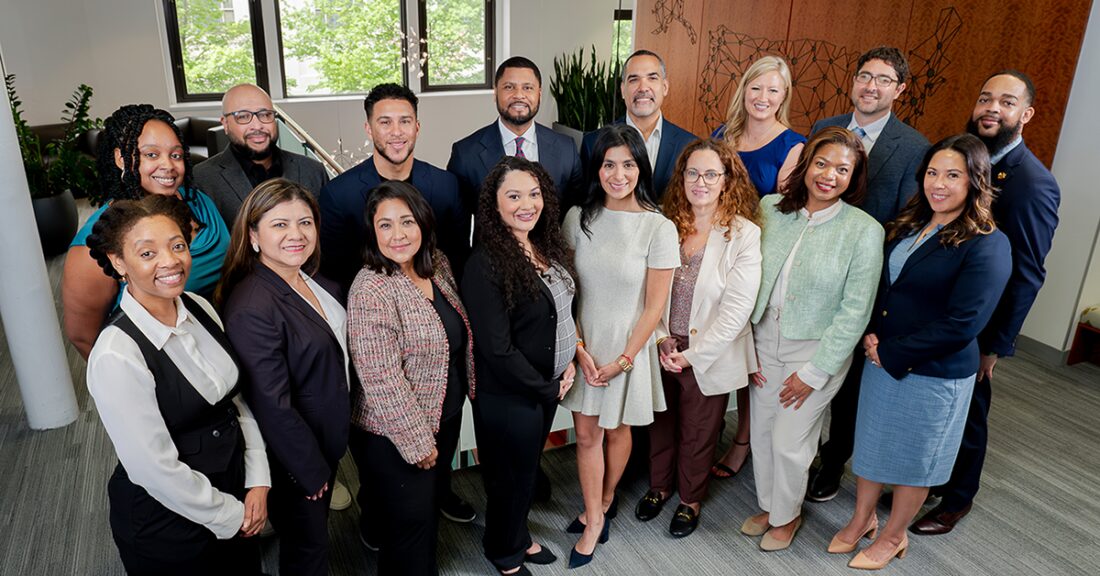
The latest members of the Annie E. Casey Foundation’s Children and Family Fellowship® are working to improve policies and programs that affect children and youth in marginalized communities.
Meet the members of the 2025—27 Children and Family Fellowship
Sixteen leaders — 10 women and six men from nine states and the Washington, D.C. — were selected for the intensive, 23-month executive leadership program. A wide range of experiences informs and strengthens their work, with many crediting the scholarships, mentors and opportunities that helped them succeed as young people. Now, they are committed to ensuring that today’s children and youth have access to those same supports — not by chance, but by design.
Improving Public Systems for Youth and Families
Abe Fernandez, Jacob Leos-Urbel and Christian Motley credit scholarships to independent schools and higher education with setting them on the path to meaningful careers, while Sharon Vigil and Michael Lynch express gratitude for the mentors and caring adults whole helped them navigate challenging circumstances. Across the cohort, these leaders have dedicated their careers to ensuring that such experiences are not a matter of luck, but the norm.
I hear consistently from the young men in our program that having a network of other people who care deeply about them, beyond their family, helps them feel seen. — Michael Lynch
From Lived Experience to Policy Leadership
Some Fellows are immigrants or children of immigrants, shaped and inspired by the fortitude and ambition of their families. Adriana Cadena, for example, came to this country as an undocumented 6‑year-old whose family did not qualify for any public assistance.
“Even when we became legal residents, we didn’t know these services were available to us,” she said.
Today, Cadena advocates for immigrant families to fully access the benefits of the nation’s safety net.
In addition to Cadena, Fellows Adrienne Olejnik and Shamoyia Gardiner lead legislative advocacy efforts on behalf of marginalized communities. Olejnik is vice president of the largest statewide advocacy organization in Kansas, and Gardiner recently became legislative director for the Office of the Baltimore City Council President.
There are lots of different ways to make a difference. Sometimes it’s visible. Sometimes it’s behind the scenes. Our voices are so needed for children and families because they don’t have the time or skillset to be full-time advocates. — Adrienne Olejnik
Fellows KellyAnn Kirkpatrick and Christina Autin expand access to affordable housing through their roles in the private sector, building partnerships that add, rather than extract, resources. In her role at Amazon’s Housing Equity Fund, Kirkpatrick focuses on families earning between 30% and 80% of the area median income.
“There’s a housing gap that often includes people like teachers, nurses and firefighters,” she said. “We need more housing they can afford.”
Building Systems That Keep Families Together
Dr. Alger Studstill Jr. and Jovon Perry oversee child and family welfare programs in state governments, drawing on private-sector practices to make public benefits systems more user-friendly and efficient.
“How might we reconfigure our programs to meet the needs of families, versus asking families to conform to our complex systems?” said Perry. Ann Reilly also oversees a child welfare system and, like her Fellow peers, is committed to keeping families together.
We believe that communities and families should be supported, not separated. — Ann Reilly
Others take a multi-sector approach, prioritizing community voices and cross-sector collaboration. Robert Marcus brings together stakeholders to align resources to close the sports equity gap. Mayra Aguirre oversees place-based initiatives that center the voices of teachers and families, while Deidre Griffith guides community health needs assessments and improvement plans across a 14-hospital system.
“When you give the community a voice and resources, you lean into their innate gifts, talents and strengths,” said Griffith. “You don’t try to do this work without their expertise.”
Regardless of field or sector, Fellows are committed to ensuring that the opportunities they’ve enjoyed extend to others.
“I wasn’t the person you would tap to solve your housing crisis 10 years ago,” said Kirkpatrick. “Now I believe I deserve to be in this room. How do I make sure that door stays open for others?”