


Training Strengthens Opportunities for Youth Participation in System Change
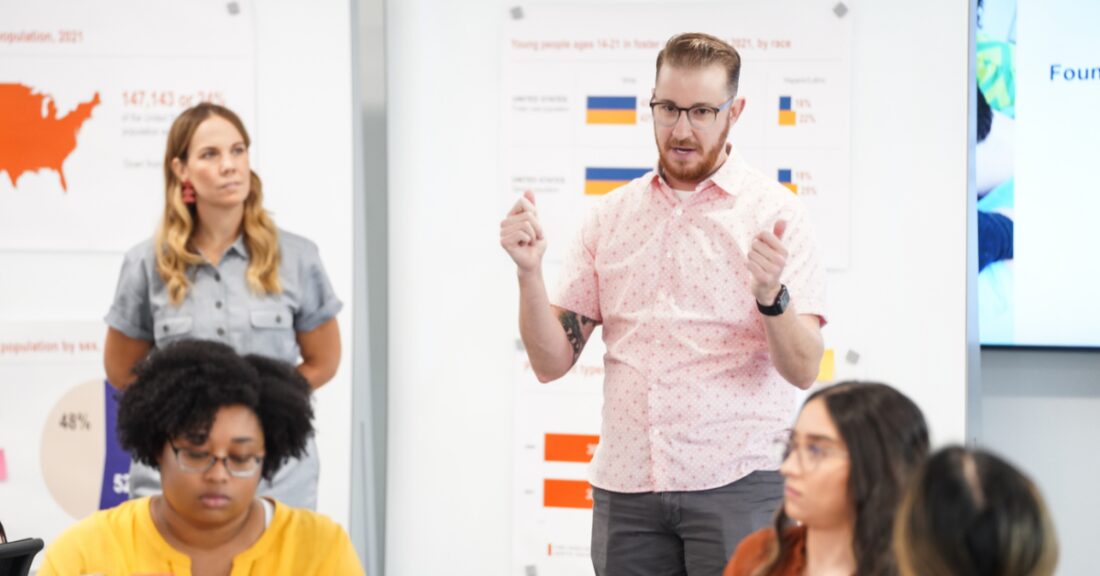
In 2025, child welfare leaders and practitioners in five states sharpened their youth engagement skills at a series of workshops provided by the Youth Engagement Learning Action Network and funded by the Annie E. Casey Foundation.
The trainings — offered to Thriving Families, Safer Children teams in Florida, Indiana, Kentucky, Nebraska and Oklahoma — focused on empowering young people with child welfare experience to take on meaningful roles in reforming the system.
A Recipe for Successful Youth-Adult Partnerships
Youth engagement is not as simple as setting extra places at the table for them. Adults in positions of authority must create the conditions for young people to co-design and lead partnerships where shared decision making influences policy and practice, said Sam Garman, one of the facilitators of the Youth Engagement Learning Action Network and senior youth engagement consultant for Cetera, Inc., which is a partner of the Casey Foundation.
“It’s about making sure the table is ready for them to sit at,” Garman said. “Sites had to start by rethinking what readiness looks like. That means adjusting meeting times to accommodate young people’s schedules, supporting travel to and from events and clearly explaining how decisions get made so youth can participate as full partners.”
To support child welfare teams in this work, the Youth Engagement Learning Action Network devoted its first two training sessions to strengthening adult readiness for partnership. Participants explored a field-tested framework for authentic youth engagement. They learned about adolescent brain development and how opportunities to exercise leadership can encourage healing and growth for youth who have had foster care experience and little control in decisions affecting their future. The teams also reflected on how adult behaviors, meeting structures and power dynamics can either open doors or unintentionally block youth leadership.
The teams learned:
- Most effective solutions come from those closest to the issues.
- Engagement must be mutually beneficial — not just about what youth contribute, but also how they grow professionally and personally from partnership experiences.
- Young people should be treated as full partners in shaping decisions, even when they are not the final decision makers, rather than simply being consulted.
- Adult partners must be willing and ready to adapt meeting structures, times or ground rules so youth can partner and lead.
- During adolescence, decision-making skills are still developing. Opportunities for positive risk-taking — such as public speaking or designing a project — can fuel young people’s growth.
Moving From Theory to Action to Lasting Change
Thriving Families, Safer Children is a national partnership devoted to helping public agencies, community partners and citizens advance local solutions for strengthening families. Across 22 sites, partners work together in a range of ways to identify community needs and design or revise resources, policies and practices aimed at keeping families together and preventing unnecessary entries into foster care. The planning teams — groups of system leaders, young people, youth-serving organizations, practitioners and families — in five jurisdictions benefited from eight months of coaching and a small $5,000 grant for strengthening authentic youth engagement.
During the training, teams tackled a variety of issues specific to their local sites.
- The Florida team identified the need to build their child welfare system and community partners’ understanding of the importance of youth partnership and responded by delivering youth engagement training directly and in partnership with local organizations.wove youth partnership into their community planning process to ensure that young people will continue to play a part in how their work gets done.
- The Indiana team focused on a specific state policy and proposed changes. By May 2025, their effort culminated in state lawmakers creating, funding and supporting staffing for a statewide engagement initiative that will solicit direct feedback from youth, families and caregivers about child-serving systems. Youth and community members providing input will be compensated. The Indiana team’s focus on identifying and strengthening the conditions needed to meaningfully engage young people proved critical in May 2025, when state lawmakers created and funded a statewide engagement initiative, including staffing, to gather direct feedback from youth, families and caregivers on child-serving systems. With skill building around youth engagement already in place, youth and community members will be better positioned to contribute informed perspectives and will be compensated for their time and expertise.
- The Kentucky team worked to build a statewide team of co-designers that will keep young people at the center of the state’s child welfare transformation efforts.
- The Nebraska team tackled transportation challenges — a critical barrier to youth participation — to ensure that young people could continue to have a voice in their work.
- The Oklahoma team found new ways to amplify youth voices by developing communication tools that make it easier for young people to share their stories and influence decisions.
“What stood out to me most was how equal it felt to be at the table, because it wasn’t just about giving a stamp of approval,” said Alayna Leonard, an Indiana youth advocate and former member of the Commission on Improving the Status of Children in Indiana. A recent podcast from Foundation-supported Community In-Site, highlights the Indiana team’s results in a recent episode. “We were working together to ask and answer the right questions. I’ve loved seeing the growing support for people with lived experience to be more civically engaged and, even knowing that trust-building takes time, it’s been such a positive experience.”
Where to Learn More to Improve Youth Engagement in Policymaking
Many of the principles of authentic youth engagement discussed during the Thriving Families, Safer Children trainings are summarized in Elevating Youth Engagement, a free curriculum produced by the Casey Foundation with Cetera, Inc. in 2025.
This curriculum is based on more than two decades of lessons developed by the Foundation’s Jim Casey Youth Opportunities Initiative®. It addresses key topics like:
- Why adult leaders should understand adolescent brain development when designing youth engagement programs.
- How adult allies can help enhance leadership growth and shared decision making in youth.
- What youth leaders need to know about how child welfare policies and practices are shaped.
- How young people can support their own well-being when system change work involves sharing personal or traumatic experiences.
“When they’re meaningfully engaged in shared decision-making and creating solutions, the people most affected by the system bring creative and bold ideas that work for them and their peers to improve outcomes,” said Leslie Gross, director of the Foundation’s Family Well-Being Strategy Group. “That’s why we invested in this learning opportunity for Thriving Families, Safer Children — to help sites move from wanting to engage youth to doing it authentically and effectively.”