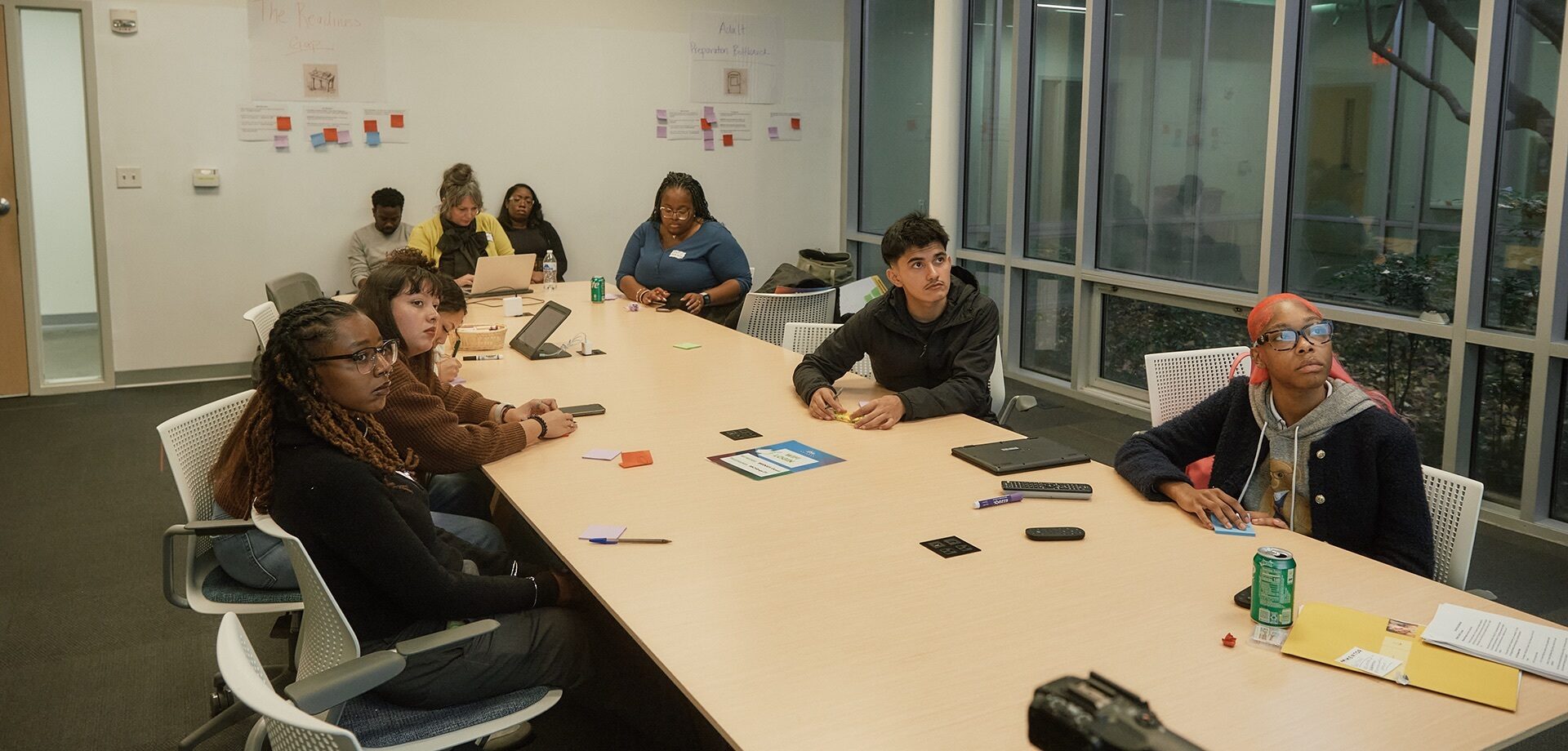
Intergentk groupconferenceroomcolor home 2026

Core Practices

Six Practices for Stronger Youth-Adult Partnerships

Building sustainable youth-adult partnerships requires clear expectations, reliable systems and shared decision-making practices. Organizations must create conditions where young people can contribute meaningfully, develop leadership skills and work alongside adults as partners.

Through the two-year Intergenerational Learning Collaborative, youth and adult leaders identified six core practices that help organizations turn their commitment to shared leadership into everyday action.

These practices offer practical ways to strengthen youth participation, build trust, improve organizational systems and sustain intergenerational partnerships.

Return to Core Insights

Practice 1: Compensate Young People Fairly and Consistently

Principal to Practice Guidance

Pay consistently and on time. Establish reliable payment processes that build trust and support youth participation.
Make payment systems accessible. Design youth-friendly onboarding and compensation processes that reduce administrative barriers.
Compensate all contributions. Recognize preparation, facilitation and other responsibilities as paid work.
Ensure pay equity. Establish fair and consistent compensation for comparable roles.
Plan for sustainable funding. Include youth compensation in ongoing organizational budgets.
Encourage open communication. Make it safe for young people to ask questions or raise concerns about compensation.

  1. Where do breakdowns in payment, access or clarity put trust at risk, and how are we addressing them at the system level?
  2. What structural changes would be required to make youth compensation reliable, equitable and sustainable— not dependent on individuals or short-term funding?
  3. How are we using compensation practices to reinforce  (or unintentionally undermine) our commitment to  shared leadership? 

One pilot organization co-created a youth-friendly payment guide that explained timelines, preparation expectations and technical troubleshooting. Automated reminders and cross-departmental coordination improved reliability. Youth reported feeling respected and more invested in leadership roles as payment systems stabilized.

Practice 2: Establish Shared Goals and Agreements for Youth-Adult Partnership

Principal to Practice Guidance

  • Co-create agreements. Involve young people directly in establishing shared expectations.
  • Define expected behaviors. Explain what agreements look like in everyday interactions and decisions.
  • Integrate agreements into operations. Include shared expectations in onboarding and organizational processes.
  • Use agreements during challenges. Return to established norms when disagreements or tensions arise.
  • Create accountability processes. Establish safe ways to address broken agreements and rebuild trust.
  • Review agreements regularly. Update expectations as the partnership evolves.

  1. To what extent do our agreements actively shape behavior and decision-making, rather than exist  as aspirational statements?
  2. Where do we see gaps between what our agreements say and how people operate, especially  under pressure?
  3. How are youth able to use agreements as tools for accountability in real time and what happens  when they do?
  4. What mechanisms ensure agreements evolve alongside the partnership rather than becoming  outdated? 

One pilot organization opened every major meeting with a “norm of the day,” chosen by a youth or adult, and reflected on how the group would embody it. This ritual deepened shared commitment and equipped youth with language to reference agreements during difficult conversations.

Practice 3: Recruit, Support and Retain Youth Leaders

Principal to Practice Guidance

  • Recruit broadly. Expand access to leadership opportunities and distribute responsibilities across participants.
  • Set clear expectations. Define roles and responsibilities that reflect young people's developmental needs.
  • Remove participation barriers. Address transportation, scheduling, technology and other logistical challenges.
  • Offer meaningful leadership roles. Give young people opportunities to influence organizational decisions.
  • Create leadership pathways. Support growth through mentorship, advancement opportunities and alumni roles.
  • Prepare adults to share authority. Ensure adults have the skills and support needed to work alongside youth leaders.

  1. Who has access to leadership in our organization, and whose perspectives are still missing or underrepresented?
  2. How intentionally are we building pathways that support youth growth, continuity and long-term leadership?
  3. What would need to change for youth retention to be driven by the support they receive and the impact they make, rather than their individual resilience? 

One pilot organization mapped a leadership progression from participant to facilitator to coordinator to alumni mentor, with clear competencies and supports for each stage. Youth reported a better understanding of how they could grow and what their roles meant within the organization.

Practice 4: Navigate Conflict to Strengthen Youth-Adult Partnerships

Principal to Practice Guidance

  • Address conflict directly. Encourage open conversations before tensions undermine trust.
  • Prepare adults to receive feedback. Help staff respond to disagreement without defensiveness.
  • Protect young people from retaliation. Ensure youth can raise concerns without risking relationships or opportunities.
  • Recognize identity dynamics. Consider how race, class, gender, language and age shape experiences of conflict.
  • Establish conflict protocols. Define responsibilities and consistent processes for addressing disagreements.

  1. To what extent is conflict identified, engaged with and resolved in ways that strengthen rather than erode partnership?
  2. How effective are our repair processes at restoring trust, accountability and relationships across differences?
  3. What would it take for conflict to be experienced as a normal and supported part of shared leadership in our organization? 

At one pilot organization, a youth member shared feeling dismissed during a technical discussion. Rather than moving forward, the group paused and activated their conflict protocol, redistributing facilitation roles, clarifying decision pathways and adjusting meeting design  so youth had time to prepare. 

Practice 5: Design Inclusive Meetings and Intergenerational Conversations

Principal to Practice Guidance

  • Share speaking opportunities. Encourage adults to make space for young people's perspectives.
  • Use plain language. Reduce jargon and allow time for participants to process information and respond.
  • Provide materials in advance. Share agendas, background information and decision points before meetings.
  • Offer multiple ways to participate. Use accessible formats, virtual options, small groups and written feedback.
  • Connect participation to decisions. Establish clear processes for incorporating youth input into organizational choices.

  • To what extent are our meetings designed to enable youth influence, rather than simply accommodate youth presence?
  • How do meeting structures, language and pacing either encourage or limit meaningful participation across generations?
  • What preparation, context and support do youth need to fully engage in complex or high-stakes conversations? 

One pilot organization redesigned its meetings to include youth-only prep sessions, time-stamped agendas, simplified language and rotating co-facilitation roles. Youth participation increased, and adults reported feeling more confident sharing facilitation responsibilities.

Practice 6: Measure Youth-Adult Partnership and Set Shared Learning Goals

Principal to Practice Guidance

  • Define success together. Involve young people in developing goals and measures that reflect their experiences.
  • Track youth influence. Document how young people's contributions shape decisions and organizational actions.
  • Set realistic goals. Align expectations with available staffing, resources and organizational capacity.
  • Use data for continuous learning. Maintain transparent records and regularly review progress to improve practices.

  1. How aligned are our definitions of success between youth and adults, and where do they differ?
  2. What do data reveal about gaps between our intention and young people’s personal experiences, and how are we  acting on it?
  3. What would it take for our metrics to drive continuous learning and accountability, rather than simply measuring progress?

One pilot organization implemented a monthly “You Said, We Did” report that connected youth feedback to specific organizational actions. This transparency strengthened trust and reinforced youth influence on decision making.

Is Your Organization Ready for Shared Leadership?

Putting the six Core Practices into action starts with understanding your organization's strengths and opportunities for growth. Use the Organizational Readiness Assessment to evaluate the systems, relationships and leadership conditions that support meaningful youth-adult partnership.
Assess Your Organization's Readiness