



Organizational readiness for youth-adult partnership means preparing young people, adults and organizational systems to share leadership meaningfully and effectively.
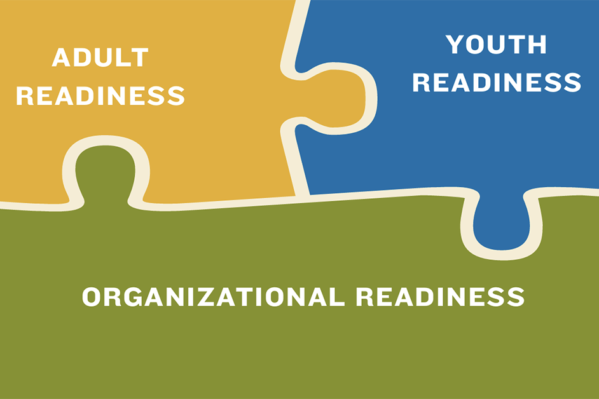
Young people develop readiness through experience and support, while adults must be prepared to share authority, create space for youth voices and navigate challenges.
Three interconnected conditions — leadership, structural and cultural — form the foundation of organizational readiness. Together, they help organizations build authentic, sustainable intergenerational partnerships through reliable compensation, clear onboarding, mentorship, leadership opportunities and a culture of shared responsibility.
Rather than placing responsibility for readiness on young people or adults alone, organizations must embed the support both groups need into their everyday operations.
Is Your Organization Ready for Shared Leadership?
Leaders model shared leadership, allocate resources, establish expectations and align organizational priorities.
Leadership commitment makes youth-adult partnership an organizational priority rather than an optional program.
Reliable compensation, accessible meetings, clear communication and effective onboarding systems.
Dependable systems make meaningful youth participation possible and help organizations consistently uphold their values.
Youth and adults build relationships grounded in trust, respect and shared expectations, with opportunities for honest dialogue, reflection and collaboration.
A supportive culture helps young people feel respected, safe and valued as partners in shared leadership.
Readiness is an ongoing organizational practice that evolves as youth roles change, adults grow in their partnership capacity and organizational structures shift. It allows the organization to develop alongside the partnership instead of falling behind it.
Assess whether systems, culture and communication remain supportive.
Assess your readiness >
Recalibrate roles, clarify expectations and strengthen structures.
Review your progress >
Show youth and adults how their insights are being used.
Strengthen feedback practices >
Intentionally onboard new youth and adults entering the work.
Prepare new partners >
Completed Your Readiness Assessment?
We hope you'll find value in this report. We’d love to get a little information from you, which we'll use to notify you about relevant new resources.
