


Authentic Youth Engagement Starts With Recognizing Firsthand Experience as Expertise
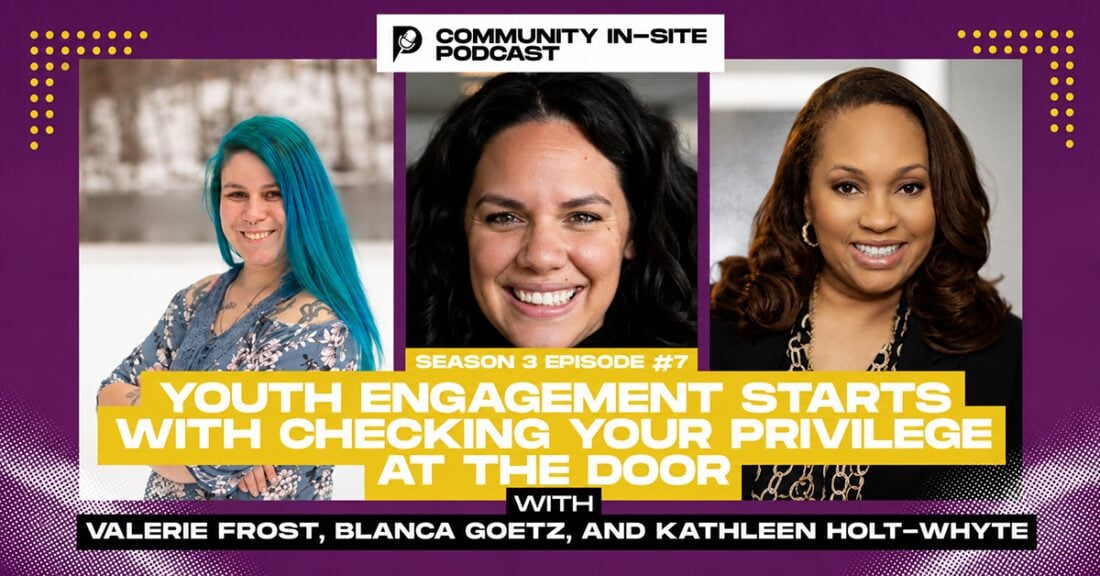
Authentic youth engagement requires more than giving young people a seat at the table. It means recognizing young people’s experience as expertise and acting on their insights and ideas for policy and practice change. For 25 years, the Annie E. Casey Foundation’s Jim Casey Youth Opportunities Initiative® has deeply invested in partnering with young people with foster care experience, helping them build skills, relationships and influence over decisions that affect their lives. A recent Community In-Site podcast episode explores what this looks like in practice.
In the episode, host Valerie Frost speaks with guests Blanca Goetz, a Jim Casey Fellow and youth advocate, and Kathleen Holt-Whyte, a senior youth engagement consultant with Cetera Inc. Both helped develop the Elevating Youth Engagement (EYE) training curriculum, a free training series created by the Casey Foundation and Cetera. The curriculum helps adult partners within public child welfare systems and community organizations build strong partnerships with young people who have experienced foster care.
The guests highlight a key shift: treating first-hand experience as its own form of credibility — not just supplement to professional expertise. Expertise is often defined by credentials and tenure. The EYE training curriculum emphasizes that knowledge gained from navigating systems is equally valuable and can help to identify gaps in practice, policy and programs and also improve decision making.
Goetz and Holt-Whyte emphasize that recognizing firsthand experience as expertise is only the starting point. Organizations must also create conditions that enable young people to participate fully through flexibility, clear roles and the financial, emotional and practical support needed to show up and contribute that expertise.
Clarity is a critical part of that support. Transparency is needed from adult partners, so that young people can be clear about their role, how their input will be used and how they can influence decisions. One tool in the EYE training curriculum, the Spectrum of Youth Participation, helps organizations identify how they currently engage young people, from surface-level involvement to shared decision making and youth-led action.
The EYE training curriculum also provides guidance for supporting participation at every stage. It features a checklist that helps adults prepare young people in advance, support them during opportunities and follow up afterward, with steps such as setting expectations, arranging compensation and travel to and from an event, practicing key messages and debriefing after the experience.
Co-designed and tested by young people with foster care experience, including Jim Casey Fellows, EYE draws on more than two decades of learning from the Jim Casey Initiative and its national network. Young people were involved throughout development, testing and revision, not just at the beginning or asked to validate a finished product. The result is a “how-to” guide reflecting what young people say they need to effectively share their ideas for how to improve outcomes for their peers.
Across the country, system leaders, youth-serving organizations and young leaders are putting the EYE training curriculum into practice. For example, it’s integrated into the Foundation’s Youth Leadership Institute, where young leaders associated with the Jim Casey Initiative build data-informed advocacy skills, increase their understanding of how systems change and learn how to share their stories safely and effectively. The EYE curriculum is also being used by municipalities and initiatives across the country, including the 16 Jim Casey Initiative partner sites and within the Thriving Families, Safer Children initiative, a national partnership focused on advancing community-driven solutions that strengthen families and reduce the need for child welfare involvement.
rEAD MORE: Training Strengthens Opportunities for Youth Participation in Systems Change