


State Lawmakers Share Strategies to Strengthen Youth Justice Systems
State lawmakers from across the country are exploring new ways to strengthen youth justice systems, including policies that help young people remain safely in their communities rather than being sent far from home.
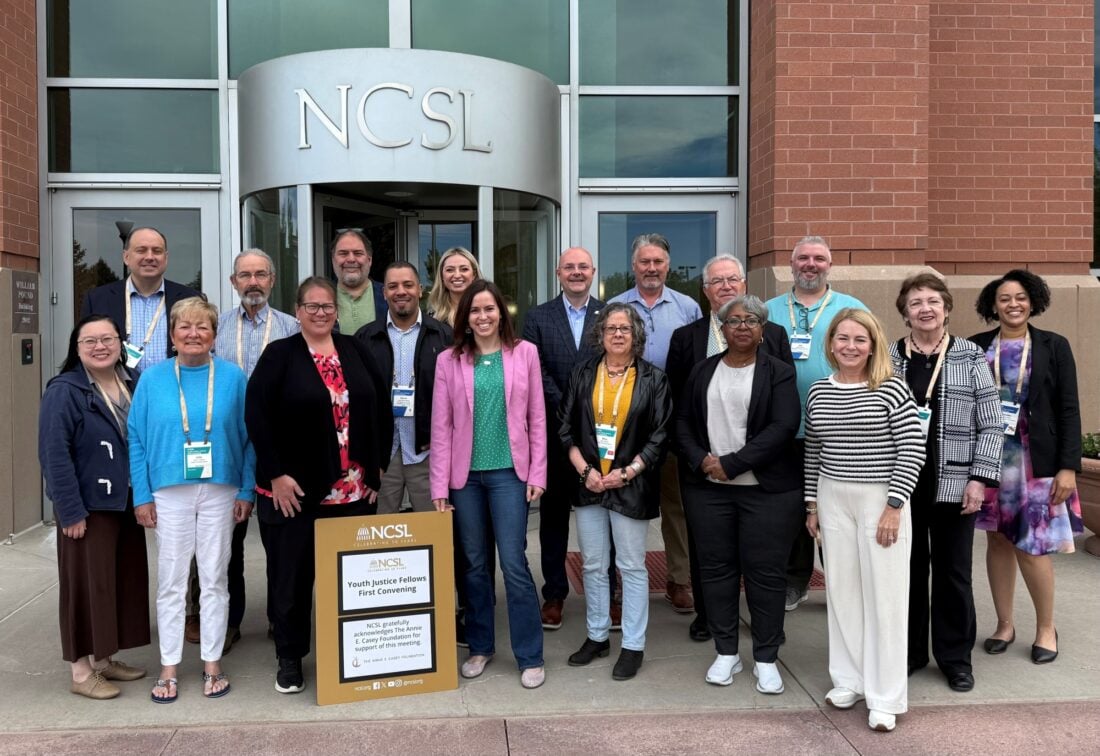
These ideas were central to the National Conference of State Legislatures’ (NCSL) Youth Justice Fellowship, a yearlong peer-learning initiative supported by the Annie E. Casey Foundation. The inaugural fellowship brought together 17 state legislators from across the political spectrum. Lawmakers examined what works in youth justice reform and how to apply those lessons in their home states. They also engaged in candid conversations about what improves — and does not improve — community safety and outcomes for young people.
Read Nate Balis’ Thoughts on Supporting Young People in the Juvenile Justice System
“Every state is in a different place with youth justice,” said Anne Teigen, associate director of NCSL’s Criminal and Civil Justice Program. “This is a crucial opportunity for legislators to come together and learn about innovations, programs and laws that could work in their own states.”
Investing in Behavioral Health Needs
The conference featured experts speaking on a range of topics, from adolescent brain development and behavioral health to due process, sentencing and incarceration. One session focused on New Hampshire’s efforts to integrate behavioral health services into its youth justice system and how the state has reduced its use of youth probation, detention and long-term commitment by prioritizing access to care.
Joe Ribsam serves as the Casey Foundation’s director of child welfare and juvenile justice policy. A former New Hampshire youth justice leader, Ribsam shared national data showing that 50% to 75% of young people in juvenile justice facilities have one or more psychiatric disorders. The discussion resonated with Montana Sen. Laura Smith, who is working with colleagues to strengthen behavioral health services for youth in her state’s justice system.
“If we are not investing early in children’s mental health, especially when they are in crisis and facing juvenile detention, we are simply pushing off the problem and potentially paying higher societal and incarceration costs farther down the line,” Smith said.
Smith plans to connect with peers in New Hampshire and other states to learn more about their approaches. She also intends to work closely with Montana’s Department of Corrections to identify gaps in services and improve support for young people.
Supporting Community-Based Early Intervention Services
Lawmakers also examined RECLAIM Ohio, an initiative of the Ohio Department of Youth Services. The program funds community-based, early intervention services while its structure creates incentives to keep young people from deeper involvement in the juvenile justice system.
Explore a Database That Analyzes Juvenile Probation Laws by State
RECLAIM has helped build a statewide network of 23 youth assessment centers operated by local juvenile courts. Staff assess young people’s needs and connect them with services that emphasize rehabilitation over incarceration.
The model piqued the interest of North Dakota Sen. Diane Larson. North Dakota’s smaller, largely rural population presents different challenges; the state has fewer than 900,000 residents compared with Ohio’s nearly 12 million. Even so, RECLAIM’s core principles resonated with the senator.
“I think that applying lessons at home sometimes means noticing what is working well and being willing to make changes when we can do better,” Larson said. “Sometimes it just means highlighting what we’re doing well and making sure that we don’t lose that.”
Building Systems that Better Serve Young People and Families
This first group of Fellows will reconvene in July 2026 at NCSL’s annual legislative summit to share updates from their states. Plans are underway for a second cohort.
By creating space for cross-party lawmakers to learn from one another and examine evidence-based strategies, the Youth Justice Fellowship is helping states build systems that better serve young people, strengthen families and keep communities safe.
“When it comes to best practices, there is a way to support and build strong futures for children that has nothing to do with where we land politically,” said Jennifer Ubiera, a senior policy associate at the Casey Foundation. “There’s clearly a need for more education.”
Discover What Southern Lawmakers Learned About Juvenile Justice Reform