Using Results Count to Help Kids Thrive in Forsyth County, North Carolina
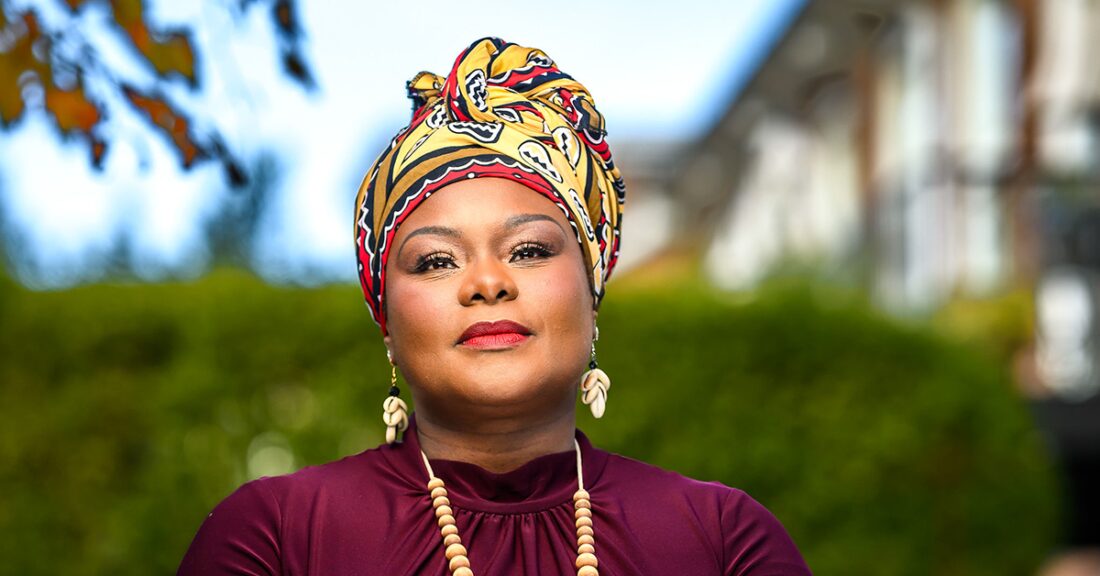
Photo: Courtesy of Action4Equity
Kellie Easton is the co-founder and co-CEO of Action4Equity, a North Carolina nonprofit working to ensure that every Black child in Winston-Salem and surrounding Forsyth County thrives. Applying tools and competencies from Results Count®, the Annie E. Casey Foundation’s unique approach to leadership development, Easton has been able to organize community and other local leaders to work toward improving outcomes for all the county’s children and families.
“Results Count has been transformational for me and the work of Action4Equity,” said Easton. “As co-CEO, I have leveraged every Results Count tool I have learned to ensure that every child in Forsyth County is supported from before birth to career.”
Among the tools and frameworks Easton has found particularly valuable are:
- the Iceberg Tool, which helps uncover the underlying systems, structures and assumptions that contribute to persistent inequities;
- the Theory of Aligned Contributions, which emphasizes the importance of coordinating the efforts of leaders, organizations and systems to achieve shared results;
- the High Action High Alignment Tool, which helps assess whether partners are taking meaningful action and working together toward common goals; and
- the Triage Tool, which helps leaders reassess assumptions, adapt strategies and make informed decisions when circumstances change.
Easton and Action4Equity have used these tools to strengthen partnerships and advance equitable outcomes for Black and Latino children and families in Forsyth County.
How Does Results Count Help Leaders Advance Systems Change?
Results Count equips leaders with tools to address systemic inequities, strengthen partnerships and improve outcomes for children and families. Founded in 2018, Action4Equity began as a grassroots organization advocating for educational equity in Forsyth County. With skills and tools gained through Results Count, Easton has expanded the organization’s focus beyond education. Today, Action4Equity works with communities across Winston-Salem and Forsyth County to advance equitable outcomes in education, health, housing and economic mobility.
Easton first encountered Results Count through the Foundation’s Explore Equitable Results program, which provides a broad overview of the methodology for promising social-sector leaders. After the program’s conclusion, Easton reported back with specific examples of how she had applied Results Count tools and skills in Forsyth County. For example, in a meeting with Action4Equity’s educational partners, she had used the Iceberg tool to identify the unseen systemic factors influencing Black students’ educational outcomes, pushing back on the stereotype that poor performance was inevitably the fault of parents.
These tools proved to be extremely valuable to Easton in her role as co-CEO. To further encourage her proficiency with these tools, the Foundation invited Easton to participate in a more intensive program, the Results Count Practitioners Program (RCP2). Early in RCP2, she determined that her most powerful contribution for improving the lives of all children and families in Forsyth County was organizing and influencing other leaders to align their actions.
How Is Action4Equity Advancing Economic Mobility in Forsyth County?
Easton’s realization reflected a fundamental Results Count framework: The Theory of Aligned Contributions, which posits that achieving a large-scale result for a defined population requires the leaders of many systems and organizations to work together and align their actions. “She’s a powerhouse of collaboration,” said Allison O’Donnell, a senior associate in the Foundation’s Leadership Development unit. “It’s her superpower.”
For example, in October 2026, Action4Equity was a co-lead of a policy forum focused on putting children and young adults in Forsyth County on a path to economic mobility. Bringing together more than 100 leaders from community organizations, education, business, government, healthcare and philanthropy, the forum concluded that economic mobility was shaped by the conditions children experience from before birth through early adulthood. Moreover, the interconnected challenges people of color face from before birth through early adulthood in the county required coordinated solutions.
“Our community had never had a forum like this before,” said Easton. “We had authentic community leadership in ways that we’ve never had before.”
To build a more inclusive economy and develop a multigenerational approach to increasing the economic mobility of Black and Latino families in Forsyth County, Action4Equity received grants in 2026 from the Kate B. Reynolds Charitable Trust. The Trust also provided support to Action4Equity’s efforts to promote equitable alignment of the county’s early childhood systems.
How Can Leaders Use Data and Collaboration to Drive Systems Change?
In evaluating the contributions of leaders to an agreed-upon goal, Easton cites the usefulness of the Results Count High Action High Alignment tool, a grid with four quadrants. The vertical axis of the grid assesses actions taken by a leader that contribute to a particular result. The horizontal axis assesses the alignment of the leader’s work with others. “The tool has been instrumental in terms of which partners are a good fit for us,” said Easton. “It helps us quickly assess whether or not this is someone who we can hit the ground running with or someone we need to take more time with.”
The Triage tool, which leaders can use to reexamine core assumptions and adapt if those assumptions have changed, has helped Easton explain to her partners when it’s necessary to pivot to a new strategy. “I do not take for granted the level of trust that the folks in our ecosystem have in my leadership,” said Easton. “Being able to articulate a pivot in a way that people can follow and understand has made a huge difference and increased trust in my leadership.”
A fundamental Results Count competency is the use of data to set goals and track progress toward them. In addition to applying this competency, Action4Equity is shifting the traditional approach to academic and government research in Forsyth County. The People’s Research Council, for which Action4Equity is a co-backbone organization, is rooted in the conviction that Black and Latino communities know what they need. Moreover, research should be conducted with these communities, not on them. For example, Black parents, trained in a collaborative approach to research, led the effort to gather and analyze data from families of color for an influential study of pre‑K quality standards in Forsyth County.
How Is Action4Equity Building a Community Where All Children Can Thrive?
Action4Equity is the coordinator and central support system for Thriving Together, an organization that combines advocacy, data and deep community connections to drive systems change in Forsyth County. Thriving Together embodies a fundamental principle of Results Count: All means all. People benefit when pursuing a result for a defined population. This, in turn, requires a relentless focus on those facing the most barriers to achieving that result. The work of Thriving Together is guided by seven vital conditions every child needs to thrive, which include a healthy environment; safe, affordable housing; and reliable transportation to school and work.
Action4Equity has established a donor-advised fund at The Winston-Salem Foundation to support projects addressing the seven vital conditions. Potential grantees will be able to submit an application that addresses one of these conditions. “What makes the fund truly unique,” said Easton, “is that the criteria for grants are based on system change outcomes. Will a project achieve policy change? Will it help shift mental models? Will it address power dynamics?”
Helping social-sector professionals develop the confidence and competence to lead major system reform efforts and community change initiatives is the goal of the Casey Foundation’s work in leadership development. By any measure, Easton has fulfilled this aspiration. “Kellie has taken up the call to action around systems change,” said O’Donnell. “She’s a different kind of leader now who will continue to advocate for and achieve better results for children and families in Forsyth County.”
Learn more about Casey’s leadership development strategy