

Probation orders with standardized terms of probation have five or fewer conditions of probation.

View a sample probation order from the National Council of Juvenile and Family Court Judges. Annotations explain each provision. (page 48)

Browse a 50-state study and accompanying tool kit from the Council on State Governments, focused on how state laws and court rules can can shape the policies, culture and practices of juvenile probation condition setting and enforcement. Policymakers and system leaders can draw upon the findings to consider how their own state laws can best support effective probation practices.
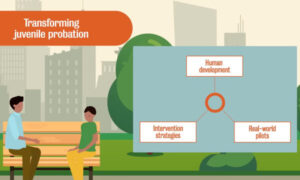
Watch a three-minute video that describes the vision for transforming juvenile probation. Viewers learn what works with young people to set them up for success as adults and effective ways to promote personal growth and positive behavior change in young people while still holding them accountable.
In collaboration with the court, probation orders limit the number of conditions to five or fewer.
Browse a 50-state study and accompanying tool kit from the Council on State Governments, focused on how state laws and court rules can can shape the policies, culture and practices of juvenile probation condition setting and enforcement. Policymakers and system leaders can draw upon the findings to consider how their own state laws can best support effective probation practices.
View a sample probation order from the National Council of Juvenile and Family Court Judges. Annotations explain each provision. (page 48)

Review ten core probation principles identified by the American Probation and Parole Association that help young people desist from delinquent behavior and achieve long-term success.

Read an order by the New Hampshire Supreme Court modifying court rules to reduce conditions of probation from 20 to 5.

Read about youth justice systems that have dramatically reduced the number of probation conditions as a component of broader transformation efforts. (page 44)
Probation orders are framed in terms of individualized expectations and goals, rather than boilerplate conditions.

Read the National Council on Juvenile and Family Court Judges guidance on minimizing court-ordered conditions. (page 36)

Urban Institute proposes a structure and six-month timeline for time-limited, community-centered probation: phase one is for introductions, relationship building, assessment and planning; phase two is for connecting with long-term community support; phase three is for transition and safe closure. (page 19)

Review an issue brief from the Gault Center about what they describe as a critical need to reform youth probation orders.
We hope you'll find value in this report. We’d love to get a little information from you, which we'll use to notify you about relevant new resources.
