

The probation department relies on data for accountability and transparency, using data to continually assess practice and make improvements that enhance and promote probation transformation.
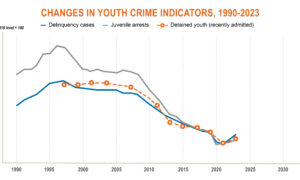
Youth crime is an addressable problem, according to Tom Woods, a senior associate at the Annie E. Casey Foundation. In a blog post for the Foundation’s website, he analyzes juvenile justice data over several decades and concludes that youth crime is trending downward. Woods cautions us not to conflate youth crime and violent crime. Violent crime is overwhelmingly an adult problem. Over decades of reducing youth crime, the field has learned a lot about what helps young people move forward to a safe, law-abiding, productive adulthood — and what holds them back. We don’t have to throw out that playbook. Rather, we need to recommit to doing more of what works and less of what doesn’t.
Start using Pro-DATA, a free resource created by the Annie E. Casey Foundation to support data-driven decision-making and data transparency in youth justice at the local and state levels. This secure, online tool makes it easy to collect and analyze your department's data, while also allowing comparisons to similar jurisdictions.

Explore a how-to guide about conducting focus groups with young people and their families. This guide was produced by Justice for Families, a family-led organization, and includes a facilitator's manual and other resources.
The juvenile probation department compiles annual statistics on basic measures, including incoming referrals, formal prosecutions, dispositions to probation and out-of-home placement, admissions to detention, and length of stay in detention, on supervision and in placement. Each of those basic measures is broken down in terms of race, ethnicity, gender, ZIP code and most serious alleged offense.
Start using Pro-DATA, a free resource created by the Annie E. Casey Foundation to support data-driven decision-making and data transparency in youth justice at the local and state levels. This secure, online tool makes it easy to collect and analyze your department's data, while also allowing comparisons to similar jurisdictions.

Browse Maryland's detailed data resource guides for examples of how one state system has followed through on compiling, disaggregating and publishing data about basic measures.
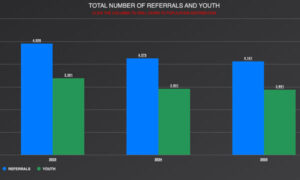
Browse Harris County's databoard for an example of how one local probation agency compiles, disaggregates and publishes data about basic measures.
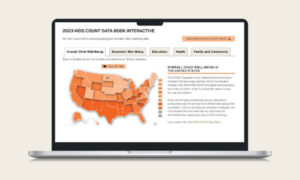
Explore national data on indicators that capture what children and youth need most across four domains: Family and Community; Economic Well-Being, Education and Health.

Explore an interactive dashboard with current data on youth detention across U.S. jurisdictions representing about 13% of the youth population.
In addition to quantitative data, the department uses surveys or focus groups to collect qualitative data from staff, family and young people. Qualitative data are reviewed, evaluated and used to inform policy, practice and programs.
Explore a how-to guide about conducting focus groups with young people and their families. This guide was produced by Justice for Families, a family-led organization, and includes a facilitator's manual and other resources.

Use the Casey Foundation's free Juvenile Probation Practice Survey and secure dashboard to gather information from probation officers, supervisors and leadership in 10 domains, including staff engagement, court conditions and family-centered practice. To date, more than 1,500 probation practitioners have taken the survey.
On an annual basis, the department conducts case reviews on a random sample of 10% of out-of-home placements to ask what policies, practices, programs or partnerships would have been required to avoid placement.

Read about the importance of case file reviews to understand how decisions are being made and identify opportunities for improvement.

This brief PowerPoint deck offers an overview of the steps and considerations necessary for a justice organization to conduct a case file review.
On an annual basis, the department leads or participates in a root-cause analysis to identify underlying causes for racial and ethnic disparities and devises strategies to address imbalances in the quality, availability and cultural responsiveness of programs and services.

Learn how to conduct a root-cause analysis as one of the seven steps your organization can take to address racial disparities and expand opportunity.
We hope you'll find value in this report. We’d love to get a little information from you, which we'll use to notify you about relevant new resources.
